
Datalogic QBT2500-BK vs Zebra LI2208-SR7U2100AZW: Specification Comparison
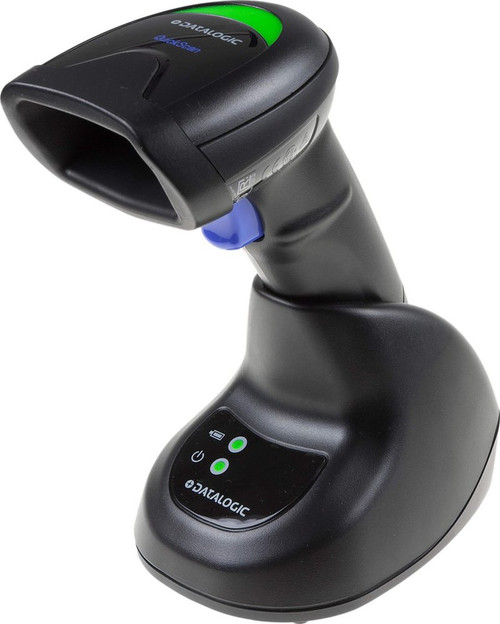
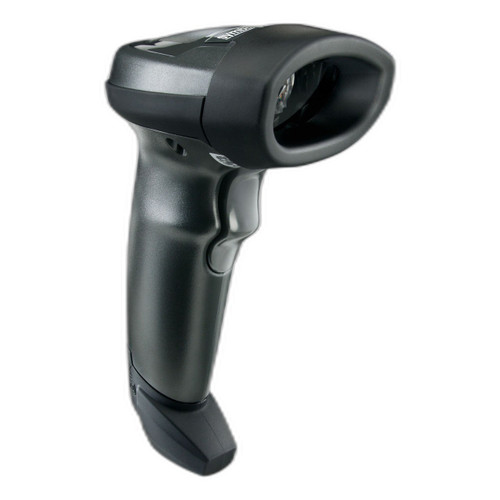
Both the Datalogic QBT2500-BK and the Zebra LI2208-SR7U2100AZW are handheld 1D linear imager barcode scanners aimed at retail and warehouse environments. The primary structural difference is connectivity: the QBT2500-BK operates wirelessly via Bluetooth, while the LI2208-SR7U2100AZW is a USB-wired, host-powered device. Buyers cross-shopping these two are typically weighing the freedom of cordless mobility against the simplicity and zero-battery-management of a tethered scanner at a similar 1D scan capability level.
In This Guide
- Does the scanner need to work untethered, or is a wired USB connection sufficient?
- Which scanner delivers faster throughput and broader barcode format support?
- Which unit is better suited to harsh or high-drop-risk environments?
- Which should you choose: the QBT2500-BK or the LI2208-SR7U2100AZW?
- Side-by-Side Specs
- FAQ
Does the scanner need to work untethered, or is a wired USB connection sufficient?
The QBT2500-BK connects via Bluetooth and also supports USB and RS-232 through its base station, giving workers the ability to move freely from a fixed point. The Zebra LI2208-SR7U2100AZW is strictly USB wired, drawing power directly from the host, which eliminates any concern over battery charging or pairing management.
The QBT2500-BK carries a 3,250 mAh lithium-ion battery rated at 5 VDC input, enabling sustained cordless operation across a shift. The LI2208 carries no battery; it is always powered and always ready as long as the USB host is active. Buyers deploying fixed checkout lanes benefit from the LI2208's zero-overhead wired model, while applications requiring mobility across a floor, stockroom, or dock favor the QBT2500-BK's wireless architecture.
Which scanner delivers faster throughput and broader barcode format support?
The Zebra LI2208-SR7U2100AZW specifies a scan rate of 547 scans per second on a single-pass scan pattern. The Datalogic QBT2500-BK does not list a numeric scan rate in the provided specifications.
On symbology coverage, the LI2208 supports Code 39, UPC, and EAN — the core retail 1D set. The QBT2500-BK's spec sheet lists Code 39, UPC, EAN, and additionally QR Code, Data Matrix, and PDF417, which are 2D formats. Note: the QBT2500-BK is marketed as a 1D scanner but its listed symbologies include 2D codes; buyers should verify with the datasheet whether 2D decode is operationally supported. For pure 1D throughput with a confirmed numeric benchmark, the LI2208's 547 scans/sec is the only quantified figure available.
Which unit is better suited to harsh or high-drop-risk environments?
The Zebra LI2208-SR7U2100AZW carries an IP42 ingress protection rating and a documented 1.8-meter drop tolerance to concrete, plus 1,000 tumble-test cycles (2,000 drops in half-meter increments) per its specifications. Operating temperature is listed as 0°C to 50°C, and ambient light tolerance reaches 108,000 lux.
The Datalogic QBT2500-BK carries an IP52 rating, which provides slightly better particulate ingress protection (dust-protected vs. no protection) at the first digit, while both share the same level-2 liquid ingress rating. No drop rating or tumble-test figure is provided for the QBT2500-BK in the available specifications. Weight is 159 g for the QBT2500-BK versus 140 g for the LI2208, making the Zebra marginally lighter.
Which should you choose: the QBT2500-BK or the LI2208-SR7U2100AZW?
Our take: The QBT2500-BK is the stronger choice when worker mobility is a hard requirement — its Bluetooth connectivity and 3,250 mAh battery untether operators from fixed cable runs in ways the wired-only LI2208 cannot match. Conversely, the LI2208-SR7U2100AZW holds clear advantages in three measurable areas: it specifies 547 scans/sec (no equivalent figure exists for the QBT2500-BK), it documents a 1.8m drop-to-concrete rating plus 1,000 tumble cycles (the QBT2500-BK lists no drop spec), and its host-powered USB design eliminates battery management entirely. The QBT2500-BK's IP52 rating edges the LI2208's IP42 on dust ingress. Buyers running fixed retail checkout lanes with high scan volume and no need for roaming should favor the LI2208. Buyers needing cordless flexibility across a warehouse floor or dock, and who can absorb the battery-management overhead, should favor the QBT2500-BK.
Side-by-Side Comparison
Spec-for-spec, from manufacturer data.
| Specification | Datalogic QBT2500-BK | Zebra LI2208-SR7U2100AZW |
|---|---|---|
| Product Type | Wireless Handheld Scanner | Wired Handheld Scanner |
| Scan Engine | 1D Linear Imager | 1D Linear Imager |
| Connectivity | Bluetooth; USB; RS-232 via base | USB Wired (host-powered) |
| Scan Rate | — | 547 scans/sec |
| Scan Pattern | — | Single-pass |
| Symbologies | Code 39; UPC; EAN; QR Code; Data Matrix; PDF417 | Code 39; UPC; EAN |
| IP Rating | IP52 | IP42 |
| Drop Rating | — | 1.8m to concrete |
| Tumble Testing | — | 1,000 cycles (2,000 drops) |
| Weight | 159 g | 140 g |
| Dimensions (H x W x L) | 127 x 69 x 124 mm | 6.30 in. H x 2.64 in. W x 3.90 in. L |
| Battery | Lithium-Ion 3,250 mAh | None (host-powered) |
| Input Voltage | 5 VDC | Host power or external power |
| Operating Temp | — | 0°C to 50°C |
| Ambient Light Max | — | 108,000 lux |
| Warranty | 3-Year Limited | 1-Year |
Frequently Asked Questions
Which should you choose: the QBT2500-BK or the LI2208-SR7U2100AZW?
The QBT2500-BK is the stronger choice when worker mobility is a hard requirement — its Bluetooth connectivity and 3,250 mAh battery untether operators from fixed cable runs in ways the wired-only LI2208 cannot match. Conversely, the LI2208-SR7U2100AZW holds clear advantages in three measurable areas: it specifies 547 scans/sec (no equivalent figure exists for the QBT2500-BK), it documents a 1.8m drop-to-concrete rating plus 1,000 tumble cycles (the QBT2500-BK lists no drop spec), and its host-powered USB design eliminates battery management entirely. The QBT2500-BK's IP52 rating edges the LI2208's IP42 on dust ingress. Buyers running fixed retail checkout lanes with high scan volume and no need for roaming should favor the LI2208. Buyers needing cordless flexibility across a warehouse floor or dock, and who can absorb the battery-management overhead, should favor the QBT2500-BK.
Which scanner is better for a fixed retail checkout lane?
The Zebra LI2208-SR7U2100AZW is better suited to a fixed checkout lane. It is host-powered over USB, so there is no battery to charge or wireless connection to manage. It also specifies 547 scans/sec and a 1.8m drop tolerance, both of which are documented performance and durability benchmarks the QBT2500-BK does not list.
Can the QBT2500-BK read 2D barcodes like QR codes where the LI2208 cannot?
The QBT2500-BK's provided specifications list QR Code, Data Matrix, and PDF417 among its supported symbologies, while the LI2208-SR7U2100AZW is limited to 1D symbologies (Code 39, UPC, EAN). However, the QBT2500-BK is described as a 1D scanner in its product type field; buyers should confirm 2D decode capability directly against the Datalogic datasheet before relying on it for 2D applications.
Which unit has better drop and dust protection for warehouse use?
The LI2208-SR7U2100AZW has a documented 1.8m drop rating to concrete and 1,000 tumble-test cycles. The QBT2500-BK has no drop rating listed in its specifications. On dust ingress, the QBT2500-BK's IP52 rating (dust-protected) is marginally stronger than the LI2208's IP42 (no dust protection). For overall shock and drop resilience based on available specs, the LI2208 has the verifiable advantage.
More Barcode Scanner Comparisons
- Datalogic PM9100-910RB vs CipherLab A1000ACBU0001
- Datalogic PM9100-910RB vs CipherLab A1000ACWU0001
- Datalogic PM9100-910RB vs Zebra LI2208-SR7U2100AZW
- Datalogic PM9100-910RB vs CipherLab A8001RSC00025
- Datalogic PM9100-910RB vs Datalogic PM9100-D910RB
- Datalogic PM9100-910RB vs Datalogic QBT2500-BK
Barcode Scanner Buying Guides
Get a Second Opinion on Your Camera Choice
Share your site layout, coverage goals, and budget. Our team will validate the camera selection, flag anything we would change, and recommend products that match the use case.