
Comelit 909020116 vs Comelit 909020111: Specification Comparison
Both products are Comelit GS3-LF series PoE+-powered proximity readers designed for access control deployments. The 909020116 is the vandal-resistant variant built from grade 304 stainless steel with an IP67 rating, while the 909020111 is the standard variant in UL-rated polycarbonate with an IP65 rating. Buyers evaluating door or gate access points will cross-shop these two on the basis of enclosure durability, physical footprint, and integration feature sets. Neither unit lists a reader technology (e.g., HID, MIFARE) explicitly, so comparison rests on the provided specs.
In This Guide
- Which reader offers stronger physical and environmental protection for the installation site?
- How do the physical dimensions and mounting form factor affect installation at the rough-in?
- Which reader provides broader integration options for VMS and access control platforms?
- Which should you choose: the 909020116 or the 909020111?
- Side-by-Side Specs
- FAQ
Which reader offers stronger physical and environmental protection for the installation site?
The 909020116 is explicitly rated Vandal Resistant and constructed from grade 304 stainless steel — a metal alloy that resists denting, surface scoring, and corrosive attack far better than polycarbonate. Its IP67 rating certifies complete dust ingress protection and temporary immersion up to 1 metre, making it appropriate for exposed perimeter doors, parking structures, and wash-down areas subject to direct water jets or temporary flooding.
The 909020111 uses UL-rated polycarbonate and carries an IP65 rating, which guarantees full dust protection and resistance to low-pressure water jets from any direction but does not cover immersion. No vandal-resistance rating is listed for the 909020111. The polycarbonate housing is lighter (0.290 kg vs 0.442 kg) but provides less resistance to deliberate physical attack. IP65 is adequate for sheltered outdoor overhangs, covered entry vestibules, or interior lobbies with cleaning crews.
How do the physical dimensions and mounting form factor affect installation at the rough-in?
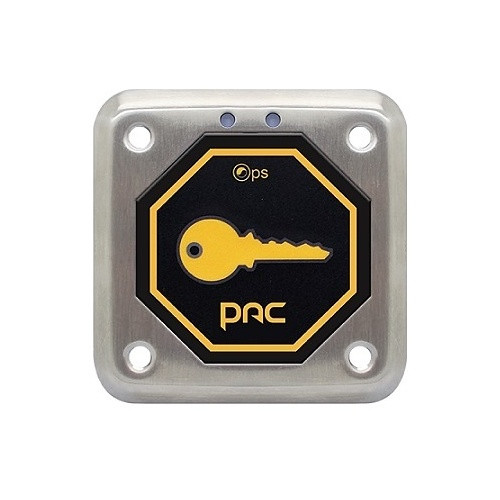
The 909020116 measures 100 × 100 × 16 mm and is categorised as an enclosure form factor. Its shallow 16 mm depth suits flush or near-flush surface mounting on metal door frames, mullions, or wall plates where a low-profile footprint is required. The square 100 × 100 mm face aligns with standard single-gang back-box dimensions common in commercial access control rough-ins.
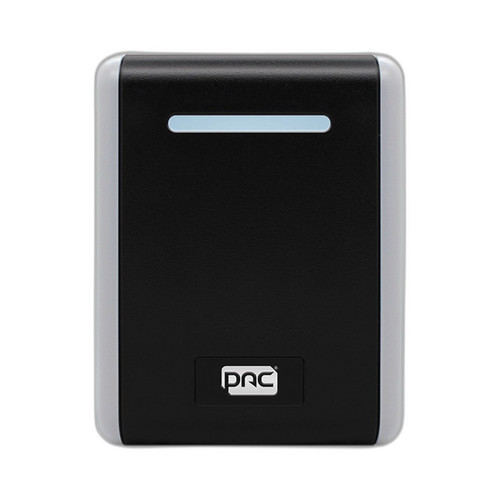
The 909020111 measures 89 × 115 × 28 mm and is categorised as a mount form factor. Its greater depth (28 mm vs 16 mm) means more clearance is needed behind the wall surface, which can matter in pre-cast concrete or thin-panel installations. The asymmetric 89 × 115 mm footprint is slightly taller than wide, which may influence aesthetic alignment on portrait-oriented door frames. No surface-material detail (e.g., back-box compatibility) is specified for either unit beyond these dimensions.
Which reader provides broader integration options for VMS and access control platforms?
The 909020111 lists ONVIF compliance and explicitly states compatibility with ONVIF-compliant VMS systems. ONVIF support allows the reader's onboard video capture (referenced in Card Bullet 1 as 4MP / 2560 × 1440) to be ingested by any conformant VMS without proprietary drivers, which is significant for multi-vendor enterprise deployments or migrations.
The 909020116 does not list an ONVIF rating or VMS compatibility in the provided specifications. Its 'Compatible With' field reads 'secure', which is not a defined platform name in the supplied data. Both units share the same audible sounder and red/green LED credential-feedback indicators, and both are powered via PoE+ (802.3at). Beyond ONVIF, no access control panel compatibility list (Wiegand, OSDP, RS-485) is specified for either model, so platform-level wiring compatibility cannot be confirmed from the provided specs alone.
Which should you choose: the 909020116 or the 909020111?
Our take: The 909020116 is the stronger choice when the installation demands maximum physical hardening — exposed exterior doors, transit hubs, correctional facilities, or any site where deliberate tampering is a credible threat. Its grade 304 stainless steel construction, IP67 immersion rating, and explicit vandal-resistance designation outperform the 909020111's IP65 polycarbonate housing on all durability axes. The 909020111, however, is the better fit when VMS integration breadth matters: it is the only model with a confirmed ONVIF rating and listed VMS compatibility, and its 4MP 2560 × 1440 onboard capture is specified where the 909020116's camera resolution is absent from the provided data. The 909020111 is also 152 g lighter and 12 mm shallower in its longer dimension, easing installation in tight or finished-wall locations. Buyers on ONVIF-based enterprise platforms should favour the 909020111; buyers prioritising outdoor durability and vandal resistance should favour the 909020116.
Side-by-Side Comparison
Spec-for-spec, from manufacturer data.
| Specification | Comelit 909020116 | Comelit 909020111 |
|---|---|---|
| Product Type | GS3-LF Vandal Resistant Proximity Reader | GS3-LF Proximity Reader |
| SKU / MPN | 909020116 | 909020111 |
| Enclosure Material | Grade 304 stainless steel | UL-rated polycarbonate |
| Vandal Resistance | Yes (rated) | — |
| IP Rating | IP67 | IP65 |
| Dimensions (W × H × D) | 100 × 100 × 16 mm | 89 × 115 × 28 mm |
| Weight | 0.442 kg / 0.974 lb | 0.290 kg / 0.639 lb |
| Form Factor | Enclosure | Mount |
| Power Method | PoE+ (802.3at) | PoE+ (802.3at) |
| Rated Wattage | 15.4 W | — |
| Visual / Audio Feedback | Red/Green LEDs + audible sounder | Red/Green LEDs + audible sounder |
| ONVIF | — | Yes |
| VMS Compatibility | — | ONVIF-compliant systems |
| Connectivity | Ethernet | — |
| Housing Color (listed) | White | White |
| Warranty | 2-Year | 2-Year |
Frequently Asked Questions
Which should you choose: the 909020116 or the 909020111?
The 909020116 is the stronger choice when the installation demands maximum physical hardening — exposed exterior doors, transit hubs, correctional facilities, or any site where deliberate tampering is a credible threat. Its grade 304 stainless steel construction, IP67 immersion rating, and explicit vandal-resistance designation outperform the 909020111's IP65 polycarbonate housing on all durability axes. The 909020111, however, is the better fit when VMS integration breadth matters: it is the only model with a confirmed ONVIF rating and listed VMS compatibility, and its 4MP 2560 × 1440 onboard capture is specified where the 909020116's camera resolution is absent from the provided data. The 909020111 is also 152 g lighter and 12 mm shallower in its longer dimension, easing installation in tight or finished-wall locations. Buyers on ONVIF-based enterprise platforms should favour the 909020111; buyers prioritising outdoor durability and vandal resistance should favour the 909020116.
Is the 909020116 or 909020111 better for an exposed exterior entrance with a high vandalism risk?
The 909020116 is the appropriate choice. It carries an explicit Vandal Resistant rating, is constructed from grade 304 stainless steel (versus polycarbonate on the 909020111), and is rated IP67 versus IP65 — meaning it also withstands temporary immersion, not just water jets. The 909020111 has no vandal-resistance rating listed in the provided specifications.
Can either reader feed video into a third-party VMS like Milestone or Genetec?
Only the 909020111 lists ONVIF compliance and VMS compatibility with ONVIF-compliant systems in the provided specifications. The 909020116 does not list an ONVIF rating or any VMS compatibility detail, so its direct integration with third-party VMS platforms cannot be confirmed from the available spec data.
Both units say PoE+ (802.3at) — is there any power difference between them?
The 909020116 specifies a maximum draw of 15.4 W (matching the 802.3at ceiling) and lists a separate '_Power: 4W' field, though the relationship between those two figures is not explained in the provided data. The 909020111 lists PoE+ (802.3at) as its power type but does not specify a wattage figure. Neither unit requires a separate 24 V DC power run; a single Cat6 cable to an 802.3at-capable switch or injector suffices for both.
More Access Control Reader Comparisons
- HID 5365EGP00 vs Comelit 909020116
- HID 5365EGP00 vs Speco Technologies AP500HA
- HID 5365EGP00 vs Comelit 909020113
- HID 5365EGP00 vs HID 20NKS-00-000000
- HID 5365EGP00 vs HID 40NKS-00-000000
- Comelit 909020116 vs Speco Technologies AP500HA
Access Control Reader Buying Guides
Get a Second Opinion on Your Camera Choice
Share your site layout, coverage goals, and budget. Our team will validate the camera selection, flag anything we would change, and recommend products that match the use case.