
CipherLab A8001RSC00025 vs Zebra LI2208-SR7U2100AZW: Specification Comparison
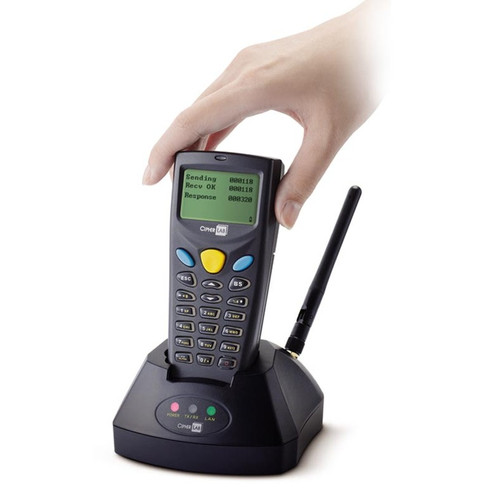
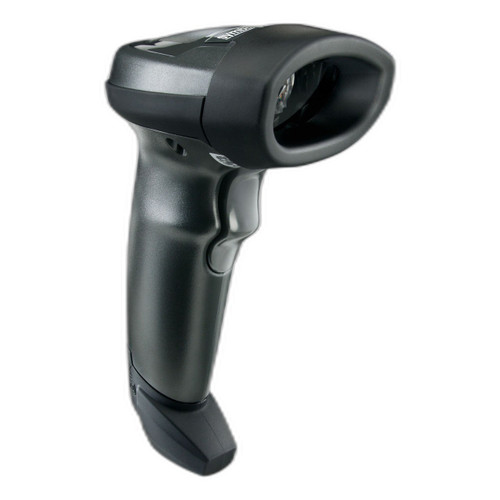
Both the CipherLab A8001RSC00025 and the Zebra LI2208-SR7U2100AZW are corded, handheld 1D barcode scanners targeting light-industrial and retail environments. The CipherLab unit ships as a USB kit with a laser scan engine, onboard batch memory, and a built-in LCD display, making it suited to store-and-forward workflows. The Zebra LI2208 is a host-powered USB linear imager built around high-speed continuous scanning for point-of-sale checkout lanes. Both are 1D, wired, handheld form factors a buyer would legitimately cross-shop.
In This Guide
- Which scanner delivers faster, more reliable barcode reads for high-throughput environments?
- Which unit is built to survive the physical demands of the deployment site?
- Which scanner better fits the intended data-capture workflow — real-time USB tethered or batch offline collection?
- Which should you choose: the A8001RSC00025 or the LI2208-SR7U2100AZW?
- Side-by-Side Specs
- FAQ
Which scanner delivers faster, more reliable barcode reads for high-throughput environments?
The Zebra LI2208 publishes a scan rate of 547 scans per second using a single-pass linear imager engine, a spec that directly addresses checkout-lane throughput. Supported symbologies are explicitly listed as Code 39, UPC, and EAN — the dominant retail barcode families.
The CipherLab A8001RSC00025 uses a 1D laser engine. No scan rate in scans-per-second is provided in the available specifications, so a direct throughput comparison cannot be made on that dimension. The laser engine is well-proven for linear barcodes in warehouse and retail contexts, but buyers requiring a published scans-per-second figure must rely on the Zebra's documented 547 scans/sec.
Symbology coverage for the CipherLab is not enumerated in the provided specifications beyond '1D Laser,' whereas the Zebra lists three named symbologies. Buyers needing confirmed support for specific codes such as Code 128 or Interleaved 2-of-5 should verify against each manufacturer's full datasheet before purchasing.
Which unit is built to survive the physical demands of the deployment site?
The Zebra LI2208 carries an IP42 ingress-protection rating, certifying resistance to solid objects larger than 1 mm and protection against dripping water. Its drop specification is 1.8 m (approximately 5.9 ft) to concrete. The spec sheet also references 1,000 tumble cycles (2,000 drops at one-half meter) and an operating temperature range of 0 °C to 50 °C (32 °F to 122 °F). Maximum ambient light tolerance is 108,000 lux.
The CipherLab A8001RSC00025 is rated for a 1.2 m (4 ft) drop to concrete on all sides, tested at five drops per side. No IP ingress-protection rating is stated in the provided specifications. Operating temperature range and ambient-light tolerance are also absent from the available data.
In environments with water, dust, or debris exposure, the Zebra's IP42 rating provides a documented baseline that the CipherLab specifications do not match. For dry indoor warehouse batch collection where drop height is the primary concern, the Zebra's 1.8 m rating exceeds the CipherLab's 1.2 m, though the CipherLab's five-drops-per-side test protocol details a more exhaustive impact sequence than the Zebra's single-drop figure alone.
Which scanner better fits the intended data-capture workflow — real-time USB tethered or batch offline collection?
The Zebra LI2208 is designed exclusively for real-time, tethered operation. It draws power from the USB host, eliminating battery management entirely. There is no onboard memory for batch storage mentioned in its specifications, making it dependent on a live host connection for every scan.
The CipherLab A8001RSC00025 is architected around batch data collection. It carries 2 MB of onboard RAM for storing scan data offline and supports USB as well as IrDA serial (up to 115.2 Kbps) for synchronization. A built-in 100 x 64 LCD with LED backlight lets operators view stored records or status without a connected host. Rated battery life is 100 hours, enabling extended cordless operation in the field before a sync session is required.
These two scanners serve fundamentally different workflow models. The Zebra suits always-connected point-of-sale lanes; the CipherLab suits roaming warehouse workers who collect data in batch and sync periodically. A buyer running a checkout lane benefits from the Zebra's host-powered simplicity. A buyer managing inventory in areas without a live network connection benefits from the CipherLab's 2 MB batch memory, display, and 100-hour battery life.
Which should you choose: the A8001RSC00025 or the LI2208-SR7U2100AZW?
Our take: The A8001RSC00025 is the stronger choice when the deployment requires offline batch data collection, extended mobile operation, or an operator-facing display without a live network connection. The CipherLab provides 2 MB of onboard batch storage, a 100 x 64 LCD with LED backlight, and a 100-hour rated battery life — capabilities entirely absent from the Zebra LI2208 specification set. Conversely, the LI2208 is the stronger choice for high-velocity, always-connected point-of-sale environments: its 547 scans/sec published throughput, IP42 environmental rating, 1.8 m drop tolerance (versus the CipherLab's 1.2 m), and host-powered USB design reduce setup complexity and maintenance overhead at a fixed checkout station. Warranty terms also differ — CipherLab provides a 2-year warranty against Zebra's 1-year coverage. Buyers should align the selection to workflow first: real-time checkout lane favors the Zebra; roaming offline warehouse capture favors the CipherLab.
Side-by-Side Comparison
Spec-for-spec, from manufacturer data.
| Specification | CipherLab A8001RSC00025 | Zebra LI2208-SR7U2100AZW |
|---|---|---|
| Product Type | Handheld 1D Laser Barcode Scanner | Handheld 1D Wired Barcode Scanner |
| Scan Engine | 1D Laser | 1D Linear Imager |
| Scan Rate | — | 547 scans/sec |
| Symbologies | — | Code 39, UPC, EAN |
| Connectivity | USB + IrDA Serial (115.2 Kbps) | USB (host-powered) |
| Batch Memory | 2 MB onboard RAM | — |
| Display | 100 x 64 LCD with LED backlight | — |
| Battery Life | 100 hours | Host-powered (no battery) |
| Drop Rating | 1.2 m (4 ft), 5 drops/side to concrete | 1.8 m to concrete |
| IP Rating | — | IP42 |
| Operating Temp | — | 0 °C to 50 °C (32 °F to 122 °F) |
| Ambient Light Max | — | 108,000 lux |
| CPU | 16-bit | — |
| Weight | — | 140 g (4.95 oz) |
| Warranty | 2 years | 1 year |
| Color Options | — | Twilight Black, Nova White |
Frequently Asked Questions
Which should you choose: the A8001RSC00025 or the LI2208-SR7U2100AZW?
The A8001RSC00025 is the stronger choice when the deployment requires offline batch data collection, extended mobile operation, or an operator-facing display without a live network connection. The CipherLab provides 2 MB of onboard batch storage, a 100 x 64 LCD with LED backlight, and a 100-hour rated battery life — capabilities entirely absent from the Zebra LI2208 specification set. Conversely, the LI2208 is the stronger choice for high-velocity, always-connected point-of-sale environments: its 547 scans/sec published throughput, IP42 environmental rating, 1.8 m drop tolerance (versus the CipherLab's 1.2 m), and host-powered USB design reduce setup complexity and maintenance overhead at a fixed checkout station. Warranty terms also differ — CipherLab provides a 2-year warranty against Zebra's 1-year coverage. Buyers should align the selection to workflow first: real-time checkout lane favors the Zebra; roaming offline warehouse capture favors the CipherLab.
Is the A8001RSC00025 or the LI2208-SR7U2100AZW better for a grocery checkout lane?
The Zebra LI2208-SR7U2100AZW is better suited to a grocery checkout lane. It delivers a documented 547 scans per second, is host-powered over USB eliminating battery concerns, and carries an IP42 rating for spill and dust resistance. The CipherLab A8001RSC00025 is designed for batch offline capture with onboard memory and a display — features that add cost and complexity not needed at a fixed, always-connected checkout station.
Can either scanner work without being connected to a computer the whole time?
Yes, but only the CipherLab A8001RSC00025 is designed for it. It stores scanned data in 2 MB of onboard RAM and runs on an internal battery rated at 100 hours, allowing operators to roam and scan without a live host connection, then sync via USB or IrDA serial later. The Zebra LI2208 draws power from the USB host and has no onboard batch storage listed in its specifications — it requires a continuous host connection to function.
Which unit has better drop and environmental protection?
The Zebra LI2208 has a higher stated drop rating at 1.8 m to concrete and an IP42 ingress-protection rating covering solid-particle and drip-water resistance. The CipherLab A8001RSC00025 is rated to 1.2 m on concrete with a five-drops-per-side test protocol, but no IP rating is provided in the available specifications. For environments with moisture, dust, or taller drop risks, the Zebra's specifications document stronger protection on both dimensions.
More Barcode Scanner Comparisons
- Datalogic PM9100-910RB vs CipherLab A1000ACBU0001
- Datalogic PM9100-910RB vs CipherLab A1000ACWU0001
- Datalogic PM9100-910RB vs Zebra LI2208-SR7U2100AZW
- Datalogic PM9100-910RB vs CipherLab A8001RSC00025
- Datalogic PM9100-910RB vs Datalogic PM9100-D910RB
- Datalogic PM9100-910RB vs Datalogic QBT2500-BK
Barcode Scanner Buying Guides
Get a Second Opinion on Your Camera Choice
Share your site layout, coverage goals, and budget. Our team will validate the camera selection, flag anything we would change, and recommend products that match the use case.