
Camden CV-WTX2-H26 vs Camden CV-WTX2H-H26: Specification Comparison
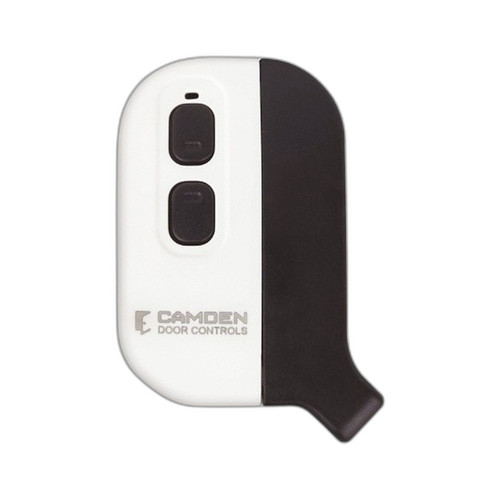
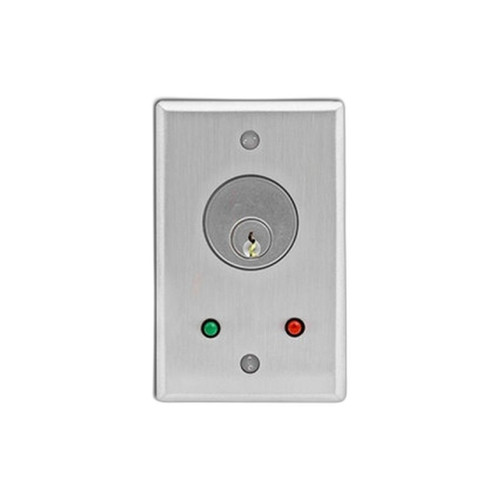
The Camden CV-WTX2-H26 and CV-WTX2H-H26 are both dual-channel 125 kHz proximity readers from Camden's CV-WTX2 line, each capable of simultaneous Wiegand and OSDP output from a single device. Both target access-control installers who need to bridge legacy Wiegand panels and modern OSDP controllers without doubling reader hardware. The key decision points are credential format support, environmental rating, and operating voltage range — differences that determine suitability for indoor-only versus outdoor or harsh-environment deployments.
In This Guide
- Which credential formats does each reader support, and does that match your existing card stock?
- What operating environment and power supply requirements does each model impose on the installation?
- How does each reader's output architecture and compatibility affect panel integration and multi-door deployments?
- Which should you choose: the CV-WTX2-H26 or the CV-WTX2H-H26?
- Side-by-Side Specs
- FAQ
Which credential formats does each reader support, and does that match your existing card stock?
The CV-WTX2-H26 specifies HID 125 kHz Prox and AWID 34-bit as its supported credential types. This covers the most common legacy HID Prox cards and AWID-encoded fobs in 34-bit format — a common pairing in U.S. commercial installs that have accumulated HID-branded card stock over many years.
The CV-WTX2H-H26 lists HID 37-bit, AWID 34-bit, and 125 kHz as its credential types. The addition of HID 37-bit (H10304 and related formats) meaningfully broadens compatibility for sites that have migrated to or standardized on HID's 37-bit card families, which are prevalent in larger enterprise and government deployments. If your existing card population is exclusively 26-bit or 34-bit HID Prox, the CV-WTX2-H26 covers that use case; if any doors carry 37-bit credentials, only the CV-WTX2H-H26 confirms support.
What operating environment and power supply requirements does each model impose on the installation?
The CV-WTX2-H26 specifies an operating voltage range of 5–16 VDC, with 16 VDC listed as the nominal voltage. This wider input band accommodates a broader range of panel power outputs and longer wire runs where voltage drop is a concern — installers can wire from a 5 V logic supply or a standard 12 V/16 V panel supply without adding a voltage regulator.
The CV-WTX2H-H26 lists only 16 VDC as its voltage specification; no operating range is stated in the provided specs. On environmental protection, the CV-WTX2H-H26 is the clear differentiator: its spec card explicitly states an IP67 rating and an operating temperature range of −35 °C to +66 °C. The CV-WTX2-H26 spec provides no IP rating and no temperature range. IP67 means the housing is dust-tight and can withstand temporary immersion, making the CV-WTX2H-H26 suitable for outdoor vestibules, parking structures, loading docks, and cold-storage facilities where the CV-WTX2-H26's suitability cannot be confirmed from the available data.
How does each reader's output architecture and compatibility affect panel integration and multi-door deployments?
Both models share the same dual-output architecture: simultaneous Wiegand and OSDP signals from a single reader head. This allows one physical device to feed a legacy Wiegand input and a modern OSDP-capable controller at the same time, which is valuable during phased panel upgrades or in mixed-controller environments. The two-channel design reduces panel port consumption and simplifies wiring in multi-door clusters for both models equally.
The CV-WTX2-H26 spec notes compatibility with 'door' applications and explicitly calls out its two-channel architecture as a tool for cutting panel port usage in multi-door clusters. The CV-WTX2H-H26 spec lists compatibility with 'access' applications broadly. Neither spec documents specific panel brand certifications, maximum cable run distances, or OSDP version (v1 vs. v2) beyond what is stated. Installers requiring those details should consult the respective datasheets at the paths provided.
Which should you choose: the CV-WTX2-H26 or the CV-WTX2H-H26?
Our take: The CV-WTX2H-H26 is the stronger choice when the installation includes outdoor, harsh-environment, or temperature-extreme locations and when the site carries HID 37-bit credentials. Three concrete spec deltas support this: first, the CV-WTX2H-H26 carries an IP67 environmental rating while no IP rating is documented for the CV-WTX2-H26; second, the CV-WTX2H-H26 specifies an operating range of −35 °C to +66 °C versus no stated temperature range for the CV-WTX2-H26; third, the CV-WTX2H-H26 adds HID 37-bit to its credential roster, broadening compatibility beyond the 34-bit-and-below formats confirmed for the CV-WTX2-H26. Conversely, the CV-WTX2-H26 specifies a 5–16 VDC operating input range versus only 16 VDC stated for the CV-WTX2H-H26, giving it an advantage in low-voltage or variable-supply wiring scenarios. For purely indoor, climate-controlled installs with 26-bit or 34-bit HID Prox card stock and variable panel voltages, the CV-WTX2-H26 is a documented fit; for anything outdoor or carrying 37-bit credentials, choose the CV-WTX2H-H26.
Side-by-Side Comparison
Spec-for-spec, from manufacturer data.
| Specification | Camden CV-WTX2-H26 | Camden CV-WTX2H-H26 |
|---|---|---|
| SKU | CV-WTX2-H26 | CV-WTX2H-H26 |
| Product Type | Two-Channel Wiegand Proximity Reader | Dual-Channel Wiegand Proximity Reader |
| Reader Technology | Proximity | Proximity |
| Communication Protocols | Wiegand; OSDP | Wiegand; OSDP |
| Dual-Channel Output | Yes | Yes |
| Credential: HID 125 kHz Prox | Yes | Yes |
| Credential: AWID 34-bit | Yes | Yes |
| Credential: HID 37-bit | — | Yes |
| Operating Voltage | 5–16 VDC (nominal 16 VDC) | 16 VDC (range not stated) |
| IP Rating | — | IP67 |
| Operating Temperature | — | −35 °C to +66 °C |
| Mount Type | Wall; Rack | Wall; Rack |
| Warranty | 3 Year(s) | 3 Year(s) |
| Compatible With | Door | Access (general) |
| Datasheet | /content/product-datasheets/CV-WTX2-H26.pdf | /content/product-datasheets/CV-WTX2H-H26.pdf |
Frequently Asked Questions
Which should you choose: the CV-WTX2-H26 or the CV-WTX2H-H26?
The CV-WTX2H-H26 is the stronger choice when the installation includes outdoor, harsh-environment, or temperature-extreme locations and when the site carries HID 37-bit credentials. Three concrete spec deltas support this: first, the CV-WTX2H-H26 carries an IP67 environmental rating while no IP rating is documented for the CV-WTX2-H26; second, the CV-WTX2H-H26 specifies an operating range of −35 °C to +66 °C versus no stated temperature range for the CV-WTX2-H26; third, the CV-WTX2H-H26 adds HID 37-bit to its credential roster, broadening compatibility beyond the 34-bit-and-below formats confirmed for the CV-WTX2-H26. Conversely, the CV-WTX2-H26 specifies a 5–16 VDC operating input range versus only 16 VDC stated for the CV-WTX2H-H26, giving it an advantage in low-voltage or variable-supply wiring scenarios. For purely indoor, climate-controlled installs with 26-bit or 34-bit HID Prox card stock and variable panel voltages, the CV-WTX2-H26 is a documented fit; for anything outdoor or carrying 37-bit credentials, choose the CV-WTX2H-H26.
Can either the CV-WTX2-H26 or CV-WTX2H-H26 be used outdoors?
Based on the provided specifications, only the CV-WTX2H-H26 documents an IP67 rating and a −35 °C to +66 °C operating temperature range, which qualify it for outdoor and harsh-environment use. The CV-WTX2-H26 spec includes no IP rating and no temperature range, so its suitability for outdoor installation cannot be confirmed from the available data.
Will either reader work with my existing HID 37-bit cards?
The CV-WTX2H-H26 explicitly lists HID 37-bit as a supported credential type. The CV-WTX2-H26 lists HID 125 kHz Prox and AWID 34-bit but does not mention 37-bit. If your card population includes HID 37-bit credentials, the CV-WTX2H-H26 is the confirmed choice based on the specs provided.
Do both readers support OSDP, and can they feed a Wiegand panel and an OSDP controller at the same time?
Yes — both the CV-WTX2-H26 and CV-WTX2H-H26 list Wiegand and OSDP as communication protocols and both are described as dual-channel or two-channel devices. The specs indicate each reader can output on both interfaces simultaneously, allowing a single reader to serve a legacy Wiegand panel and a modern OSDP controller concurrently. Neither spec documents the OSDP version (v1 or v2); consult the individual datasheets for that detail.
More Access Control Reader Comparisons
- HID 5365EGP00 vs Comelit 909020116
- HID 5365EGP00 vs Speco Technologies AP500HA
- HID 5365EGP00 vs Comelit 909020113
- HID 5365EGP00 vs HID 20NKS-00-000000
- HID 5365EGP00 vs HID 40NKS-00-000000
- Comelit 909020116 vs Speco Technologies AP500HA
Access Control Reader Buying Guides
Get a Second Opinion on Your Camera Choice
Share your site layout, coverage goals, and budget. Our team will validate the camera selection, flag anything we would change, and recommend products that match the use case.