
Bosch NBE-7702-ALX vs Bosch NBE-7702-ALXT: Specification Comparison
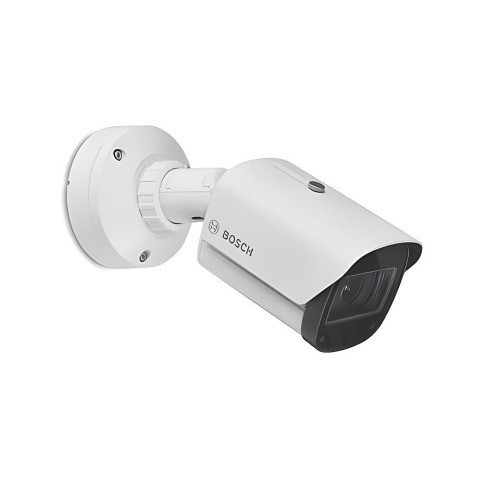
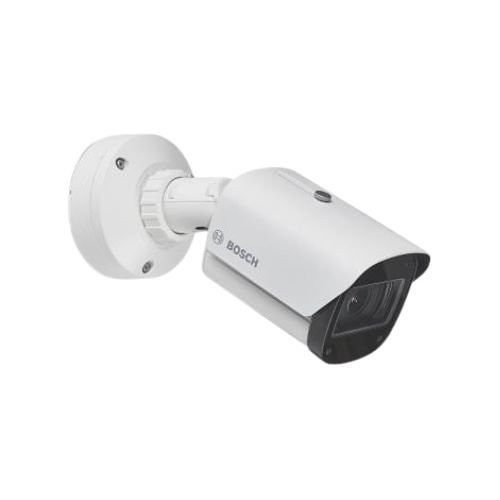
Both products are 2MP outdoor bullet cameras from Bosch's DINION 7100i IR line, sharing the same sensor platform, frame rate, codec support, and environmental hardening. The NBE-7702-ALX and NBE-7702-ALXT are distinguished primarily by their lens range and resulting IR throw distance, making them direct cross-shop candidates for installers sizing a deployment between medium-range and long-range coverage zones. This comparison draws solely from the specifications provided for each SKU.
In This Guide
How do the imaging specs compare?
Both cameras use the same 1/1.8" CMOS sensor delivering 2MP resolution at 1920×1080 and a maximum frame rate of 60 fps at 1080p. Wide dynamic range is identical at 146 dB, and both operate in Day/Night mode using 940 nm invisible IR illumination. Minimum illumination is nearly equal — 0.0061 lux color for both — with a slight B/W difference: 0.001 lux for the NBE-7702-ALX versus 0.0011 lux for the NBE-7702-ALXT. Neither camera holds a meaningful low-light advantage at the sensor level.
The defining imaging difference is the lens and IR range. The NBE-7702-ALX carries a 4.7–10 mm varifocal lens suited for wide-to-medium angles, paired with an 80 m IR throw. The NBE-7702-ALXT uses a 10.5–47 mm varifocal lens — roughly a 4.5× telephoto range — and extends IR illumination to 140 m, a 75% increase over the ALX. This lens range difference directly determines which camera is appropriate for a given scene: wide-area coverage versus long-corridor or perimeter standoff applications.
What about installation and environment?
Both cameras share identical environmental and mechanical profiles. Each is IP67 rated for dust and water ingress, IK10 impact rated, and carries a NEMA 4X (250) rating. Operating temperature spans -50 °C to +60 °C (-58 °F to +140 °F) for both units. Physical dimensions are identical at 148 mm × 115 mm (Ø × H) and both weigh 2.95 kg. Mounting options — wall, pole, corner, and rack — are the same across both models.
Power input is specified as PoE+ (802.3at) in both products' specs, though the datasheet tagline for the ALX references 802.3af. Installers should verify final PoE class with the Bosch datasheet prior to switch port planning. Network connectivity is via shielded RJ45 on both. Encryption support — TLS 1.2, TLS 1.3, AES-256, AES-128 — is identical, with the ALXT spec truncating at 'TLS' without listing TLS 1.3 explicitly; this should be confirmed against the ALXT datasheet.
Which fits your VMS and analytics better?
Both cameras are ONVIF Profile T and Profile M compliant, support four simultaneous video streams, and encode in H.265, H.264, and MJPEG. Edge analytics are identical: IVA Pro Buildings, IVA Pro Perimeter, and IVA Pro Privacy are listed for both. On-board storage via microSD/SDHC/SDXC is present on both, and both include a built-in microphone (Audio In: Built-in) and alarm input/output capability. Cloud connectivity is supported on both. Neither model holds a differentiated advantage in VMS compatibility, analytics capability, or integration features — the integration story is functionally equivalent across the two SKUs.
Which should you choose: the NBE-7702-ALX or the NBE-7702-ALXT?
Our take: The NBE-7702-ALX is the stronger choice when the scene requires a wide-to-medium field of view at distances up to 80 m, while the NBE-7702-ALXT is the correct selection for long-range or narrow-angle applications demanding coverage out to 140 m. The three concrete spec deltas are: (1) lens focal length — 4.7–10 mm on the ALX versus 10.5–47 mm on the ALXT; (2) IR range — 80 m versus 140 m, a 75% increase on the ALXT; and (3) B/W minimum illumination — 0.001 lux on the ALX versus 0.0011 lux on the ALXT, a marginal ALX advantage that is unlikely to be operationally significant. All other specs — sensor, WDR, codecs, analytics, environmental ratings, physical dimensions, and power — are equivalent. Platform choice should be driven entirely by scene geometry and standoff distance requirements rather than any integration or environmental consideration.
Side-by-Side Comparison
Spec-for-spec, from manufacturer data.
| Specification | Bosch NBE-7702-ALX | Bosch NBE-7702-ALXT |
|---|---|---|
| Resolution | 2MP (1920×1080) | 2MP (1920×1080) |
| Image Sensor | 1/1.8" CMOS | 1/1.8" CMOS |
| Lens / Focal Length | Varifocal 4.7–10 mm | Varifocal 10.5–47 mm |
| Min. Illumination (Color) | 0.0061 lux | 0.0061 lux |
| Min. Illumination (B/W) | 0.001 lux | 0.0011 lux |
| IR Range | 80 m | 140 m |
| IR Wavelength | 940 nm (invisible) | 940 nm (invisible) |
| Wide Dynamic Range | 146 dB | 146 dB |
| Max Frame Rate | 60 fps @ 1080p | 60 fps @ 1080p |
| Video Compression | H.265, H.264, MJPEG | H.265, H.264, MJPEG |
| IP Rating | IP67 | IP67 |
| Impact Rating | IK10 | IK10 |
| NEMA Rating | 4X (250) | 4X (250) |
| Operating Temperature | -50 °C to +60 °C | -50 °C to +60 °C |
| Power Input | PoE+ (802.3at) | PoE+ (802.3at) |
| ONVIF | Profile T; Profile M | Profile T; Profile M |
| Edge Analytics | IVA Pro Buildings, Perimeter, Privacy | IVA Pro Buildings, Perimeter, Privacy |
| Multi-Streaming | 4 streams | 4 streams |
| Audio | Built-in mic | Built-in mic |
| Alarm I/O | Yes | Yes |
| Local Storage | microSD/SDHC/SDXC | microSD/SDHC/SDXC |
| Encryption | TLS 1.2, TLS 1.3, AES-256, AES-128 | TLS 1.2, AES-256, AES-128, TLS (see datasheet) |
| Dimensions (Ø × H) | 148 mm × 115 mm | 148 mm × 115 mm |
| Weight | 2.95 kg | 2.95 kg |
| NDAA Compliant | Yes | Yes |
| Warranty | Manufacturer Warranty | Manufacturer Warranty |
Frequently Asked Questions
Which should you choose: the NBE-7702-ALX or the NBE-7702-ALXT?
The NBE-7702-ALX is the stronger choice when the scene requires a wide-to-medium field of view at distances up to 80 m, while the NBE-7702-ALXT is the correct selection for long-range or narrow-angle applications demanding coverage out to 140 m. The three concrete spec deltas are: (1) lens focal length — 4.7–10 mm on the ALX versus 10.5–47 mm on the ALXT; (2) IR range — 80 m versus 140 m, a 75% increase on the ALXT; and (3) B/W minimum illumination — 0.001 lux on the ALX versus 0.0011 lux on the ALXT, a marginal ALX advantage that is unlikely to be operationally significant. All other specs — sensor, WDR, codecs, analytics, environmental ratings, physical dimensions, and power — are equivalent. Platform choice should be driven entirely by scene geometry and standoff distance requirements rather than any integration or environmental consideration.
Is the NBE-7702-ALX or NBE-7702-ALXT better for low-light performance?
The two cameras are essentially equivalent in low light. Both use the same 1/1.8" CMOS sensor with 0.0061 lux color minimum illumination and 940 nm invisible IR. The ALX specifies 0.001 lux B/W versus 0.0011 lux B/W for the ALXT — a difference too small to be operationally meaningful. The more relevant low-light factor is IR range: the ALXT's 140 m IR throw illuminates targets at greater distances, which matters more than the marginal lux difference.
Can I use the NBE-7702-ALXT to cover a long parking lot or perimeter fence line?
Yes — the ALXT's 10.5–47 mm varifocal lens and 140 m IR range are specifically suited for long standoff distances such as parking lots, fence lines, and approach roads where the ALX's 4.7–10 mm lens and 80 m IR would fall short. Both cameras carry IP67, IK10, and -50 °C to +60 °C ratings, so environmental suitability is not a differentiator.
Do both cameras support the same video analytics and VMS integration?
Yes. Both the NBE-7702-ALX and NBE-7702-ALXT list identical analytics packages — IVA Pro Buildings, IVA Pro Perimeter, and IVA Pro Privacy — and both are ONVIF Profile T and Profile M compliant. Codec support (H.265, H.264, MJPEG), multi-streaming (4 streams), on-board microSD storage, and alarm I/O are identical across both models.
Get a Second Opinion on Your Camera Choice
Share your site layout, coverage goals, and budget. Our team will validate the camera selection, flag anything we would change, and recommend products that match the use case.