
Axis S2208 vs Vivotek ND9323P: Specification Comparison
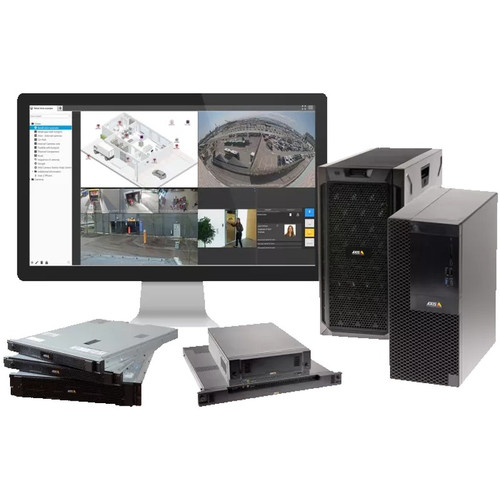
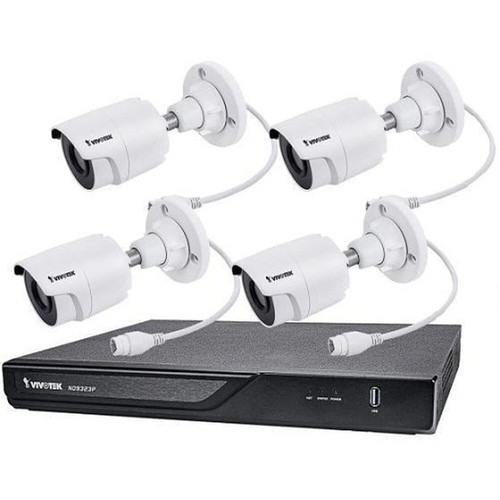
Both the Axis S2208 Mk II and the Vivotek ND9323P are 8-channel PoE-powered network video recorders aimed at small-to-medium surveillance deployments. The Axis unit is a standalone recording server sold without cameras, emphasizing cybersecurity certification and VMS integration. The Vivotek is a bundled kit (SKU ND9323P-2TB-4IB69) that includes four 2MP IR turret cameras, RAID-capable dual-drive storage, and local display outputs. Buyers cross-shopping these are typically evaluating whether to invest in a higher-security, camera-agnostic platform or a camera-inclusive starter kit with broader I/O and codec flexibility.
In This Guide
- How do the two NVRs compare on storage capacity, recording throughput, and channel headroom?
- Which unit delivers more PoE power, and how do their physical build and environmental ratings differ?
- How do the two NVRs differ in VMS compatibility, cybersecurity posture, and management software?
- Which should you choose: the S2208 or the ND9323P?
- Side-by-Side Specs
- FAQ
How do the two NVRs compare on storage capacity, recording throughput, and channel headroom?
The Axis S2208 Mk II ships with a single 4 TB surveillance-class hard drive in a 2-bay enclosure (one bay free for expansion), giving 4 TB of ready-to-record storage out of the box. No recording throughput figure is published in the provided specifications.
The Vivotek ND9323P bundle includes 2 TB across dual 3.5-inch SATA bays with RAID 0 or RAID 1 support, so the buyer can choose performance or redundancy. Vivotek publishes a maximum recording throughput of 64 Mbps and a network input/output total of 88 Mbps. Pre-record buffer is up to 10 seconds; post-record is up to 300 seconds.
On raw pre-installed capacity the Axis unit has a 2 TB advantage (4 TB vs 2 TB). The Vivotek's RAID 1 option trades half that capacity for disk redundancy — a meaningful operational difference in always-on installations. Axis does not specify throughput in the provided data, so a direct Mbps comparison cannot be made.
Which unit delivers more PoE power, and how do their physical build and environmental ratings differ?
The Axis S2208 Mk II provides PoE+ (802.3at) across 8 ports with a published total PoE budget of 135 W, supporting both cameras and door controllers. It operates in a fanless, silent enclosure rated for 0 °C to 40 °C indoor use with a rack-mount form factor.
The Vivotek ND9323P specifies PoE+ power delivery and a maximum system power draw of 175 W total (NVR plus PoE output). The provided specifications list the PoE standard as 802.3af for the bundled cameras, though the NVR itself is described as PoE+. Operating temperature is identically rated at 0 °C to 40 °C; humidity tolerance is listed as 0–95%. Unit weight without HDD is 2.5 kg; dimensions are 366 × 320.3 × 46 mm. The Vivotek carries safety certifications including CE, FCC, UL, CB, and others. Axis safety certifications are not listed in the provided specifications.
The Axis 135 W PoE budget is a confirmed figure across 8 ports. The Vivotek's per-port PoE budget cannot be calculated from the provided data (175 W is total system draw, not net PoE output). Axis's fanless design eliminates a mechanical failure point; Vivotek's fan status is not specified.
How do the two NVRs differ in VMS compatibility, cybersecurity posture, and management software?
The Axis S2208 Mk II is tightly coupled to AXIS Camera Station Pro and ships with 8 pre-licensed seats. Its cybersecurity stack includes FIPS 140-2 Level 2 certified TPM, Secure Boot, signed firmware, and a published Software Bill of Materials (SBOM). Smart Search 2 analytics are included. No ONVIF conformance is stated in the provided specifications.
The Vivotek ND9323P supports ONVIF Profile S, making it interoperable with third-party cameras beyond Vivotek's own lineup. Management options include the VAST 2 VMS, Shepherd NVR utility, VIVOCloud remote access, and the iViewer mobile app for Android and iOS. Trend Micro IoT Security integration is listed. VCA features include counting, event search, crowd control, motion detection, smart VCA events, PIR detection, and tampering detection. No FIPS certification or TPM is mentioned in the provided specifications.
The Axis platform offers a verifiably stronger published cybersecurity posture (FIPS 140-2 Level 2, TPM, SBOM) and a bundled enterprise VMS license. The Vivotek offers broader camera-agnostic interoperability via ONVIF, richer on-box analytics, local HDMI/VGA display outputs (not present on the Axis per provided specs), and alarm I/O (4 inputs, 1 output) that the Axis specifications do not list.
Which should you choose: the S2208 or the ND9323P?
Our take: The S2208 Mk II is the stronger choice when cybersecurity compliance, VMS seat cost, and fanless reliability are the primary drivers. Its FIPS 140-2 Level 2 TPM, Secure Boot, signed firmware, and SBOM meet enterprise and government procurement requirements that the Vivotek does not address in its published specifications; it also includes 8 AXIS Camera Station Pro licenses valued separately in most deployments, and its 135 W PoE budget is a confirmed per-chassis figure. The ND9323P is the stronger choice for integrators who need a camera-inclusive starter kit: it bundles four 2MP IR turret cameras, offers RAID 0/1 across dual 3.5-inch bays, publishes a 64 Mbps recording throughput, provides HDMI and VGA local display outputs, includes 4 alarm inputs and 1 alarm output, and is ONVIF Profile S compliant for mixed-camera environments. Axis S2208 suits compliance-sensitive, camera-agnostic enterprise rollouts on the Axis ecosystem; ND9323P suits budget-conscious small-site deployments requiring a complete out-of-box solution with local monitoring capability.
Side-by-Side Comparison
Spec-for-spec, from manufacturer data.
| Specification | Axis S2208 | Vivotek ND9323P |
|---|---|---|
| Product Type | 8-CH PoE Recording Server (NVR) | 8-CH NVR + 4x Camera Kit |
| Channels | 8 | 8 |
| Pre-installed Storage | 4 TB HDD (1 of 2 bays used) | 2 TB HDD (dual 3.5" SATA) |
| RAID Support | — | RAID 0, RAID 1 |
| PoE Standard | PoE+ (802.3at) | PoE+ (NVR); 802.3af (bundled cameras) |
| Total PoE Budget | 135 W across 8 ports | Not specified (175 W = total system draw) |
| Recording Throughput | — | 64 Mbps |
| Video Codecs | — | H.265, H.264, MJPEG |
| Local Display Outputs | — | HDMI x1, VGA x1 |
| Alarm I/O | — | 4 inputs / 1 output |
| ONVIF | — | Profile S |
| VMS / Software | AXIS Camera Station Pro (8 licenses included) | VAST 2, Shepherd, VIVOCloud, iViewer |
| Cybersecurity Certifications | FIPS 140-2 Level 2, TPM, Secure Boot, Signed Firmware, SBOM | Trend Micro IoT Security; no FIPS listed |
| Analytics | Smart Search 2 | VCA: motion, counting, crowd control, PIR, tampering |
| Operating Temperature | 0 °C to 40 °C | 0 °C to 40 °C |
| Form Factor / Mount | Box / Rack | Box / Rack (366 × 320.3 × 46 mm, 2.5 kg w/o HDD) |
Frequently Asked Questions
Which should you choose: the S2208 or the ND9323P?
The S2208 Mk II is the stronger choice when cybersecurity compliance, VMS seat cost, and fanless reliability are the primary drivers. Its FIPS 140-2 Level 2 TPM, Secure Boot, signed firmware, and SBOM meet enterprise and government procurement requirements that the Vivotek does not address in its published specifications; it also includes 8 AXIS Camera Station Pro licenses valued separately in most deployments, and its 135 W PoE budget is a confirmed per-chassis figure. The ND9323P is the stronger choice for integrators who need a camera-inclusive starter kit: it bundles four 2MP IR turret cameras, offers RAID 0/1 across dual 3.5-inch bays, publishes a 64 Mbps recording throughput, provides HDMI and VGA local display outputs, includes 4 alarm inputs and 1 alarm output, and is ONVIF Profile S compliant for mixed-camera environments. Axis S2208 suits compliance-sensitive, camera-agnostic enterprise rollouts on the Axis ecosystem; ND9323P suits budget-conscious small-site deployments requiring a complete out-of-box solution with local monitoring capability.
Does either NVR support cameras from other manufacturers?
The Vivotek ND9323P declares ONVIF Profile S conformance, which allows integration with third-party ONVIF-compatible cameras. The Axis S2208 Mk II specifications provided do not state ONVIF support; its listed VMS compatibility is AXIS Camera Station Pro, suggesting primary optimization for Axis cameras.
Which unit is better suited for a site that requires cybersecurity compliance documentation?
The Axis S2208 Mk II is the only unit of the two with a published FIPS 140-2 Level 2 certified TPM, Secure Boot, signed firmware, and a Software Bill of Materials (SBOM). No equivalent cybersecurity certifications are listed in the Vivotek ND9323P's provided specifications.
Can either NVR protect recorded footage if a hard drive fails?
The Vivotek ND9323P supports RAID 1 mirroring across its two 3.5-inch SATA bays, which provides drive-failure redundancy at the cost of half the usable capacity. The Axis S2208 Mk II includes a 2-bay enclosure with one free bay, but no RAID capability is stated in its provided specifications.
Get a Second Opinion on Your Camera Choice
Share your site layout, coverage goals, and budget. Our team will validate the camera selection, flag anything we would change, and recommend products that match the use case.