
Axis P5654-E vs Axis Q8752-E: Specification Comparison
Both the Axis P5654-E Mk II and the Axis Q8752-E Mk II are outdoor, wired PTZ IP cameras delivering 1080p visual resolution with pan/tilt/zoom capability, IP66 weatherproofing, Forensic WDR, H.265/H.264/Zipstream compression, ONVIF Profile G/M/S compliance, and a 5-year warranty. The comparison focuses on how their optical zoom range, sensor architecture, power requirements, operating temperature envelope, edge analytics, and audio I/O differentiate them for installers choosing between a high-frame-rate perimeter PTZ and a bispectral thermal-plus-visual surveillance platform.
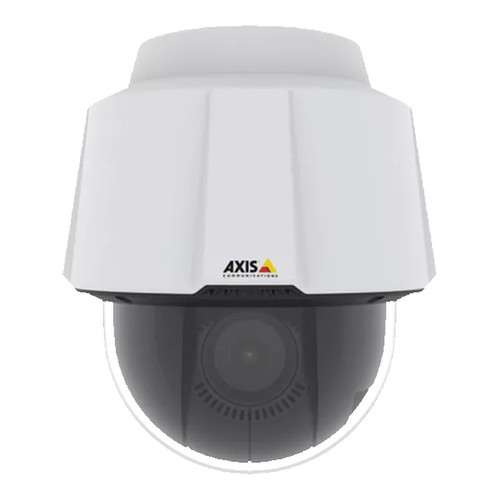
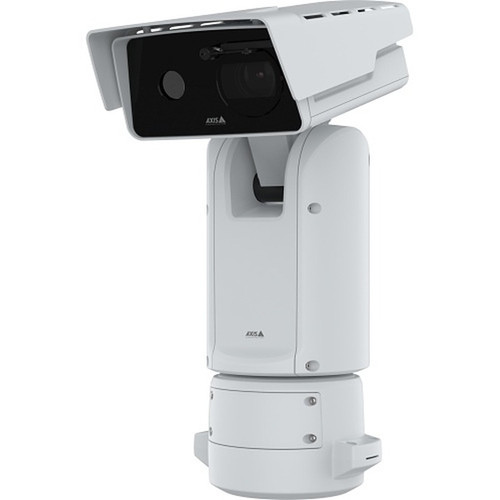
In This Guide
How do the imaging specs compare?
The P5654-E Mk II uses a 1/2.8-inch progressive-scan CMOS sensor with a 4.0–84.6 mm varifocal lens delivering 21x optical zoom and a 12x digital zoom, producing full 1080p at up to 60 fps. Its horizontal field of view spans 77.0° (wide) to 3.6° (full tele), and minimum color illumination is 0.10 lux at F1.2 (B/W: 0.02 lux). Lightfinder 2.0 and a Day/Night filter support low-light color performance. IR illumination distance is not specified in the provided data. IK10 vandal resistance is confirmed.
The Q8752-E Mk II is a bispectral camera with two distinct imaging channels. The visual channel uses a 1/2.8-inch sensor with a varifocal 4.3–137.6 mm lens at 32x optical zoom, achieving a minimum color illumination of 0.06 lux at F1.4, with Lightfinder 2.0 and Day/Night operation. The thermal channel adds a 640×480 microbolometer (17 µm pixel pitch) with either a 35 mm fixed or 35–105 mm athermalized lens and a 3x thermal zoom, providing detection independent of visible light or scene contrast. Built-in IR illumination reaches 31 m. Frame rate on the visual channel is 8.3 fps or 30 fps depending on variant. IK rating is not specified in the provided data.
What about installation and environment?
Both cameras carry IP66 ingress protection. The P5654-E Mk II operates from −30 °C to +50 °C and draws up to 37 W via PoE+ (802.3at), meaning a standard PoE+ midspan or switch port is sufficient. It supports a 1/4"-20 tripod screw mount and has an IK10 vandal rating. Physical dimensions are 214 × 80 × 57 mm at 750 g.
The Q8752-E Mk II has a wider operating temperature range of −40 °C to +65 °C, making it suitable for more extreme climates. Its higher power demand requires PoE++ (802.3bt) infrastructure. Mounting options include wall, pole, corner, and rack configurations. An IK vandal rating is not listed in the provided specifications. The camera also supports electronic image stabilization and microSD card storage, which are absent or unconfirmed on the P5654-E.
Which fits your VMS and analytics better?
Both cameras support ONVIF Profile G, M, and S, and both run H.265, H.264, and Axis Zipstream. The P5654-E Mk II adds Autotracking 2 for autonomous subject-following, and offers a richer audio I/O complement: external microphone input, line input, digital input, and two audio outputs, enabling two-way audio or PA integration. On-board storage is limited to 512 MB Flash; no microSD slot is listed in the provided specifications.
The Q8752-E Mk II integrates a dedicated Deep Learning Processing Unit (DLPU) supporting Perimeter Defender and Video Motion Detection analytics running at the edge. Autotracking is not listed in its specification set. Audio capability is limited to a single audio input. On-board storage includes 512 MB Flash plus a microSD card slot for local recording. The thermal channel enables detection-in-darkness and smoke/fog penetration scenarios that the P5654-E cannot address.
Which should you choose: the P5654-E or the Q8752-E?
Our take: The P5654-E Mk II is the stronger choice when smooth real-time tracking and full-frame-rate monitoring are the priority: it delivers up to 60 fps at 1080p versus the Q8752-E's 8.3–30 fps (variant-dependent), includes Autotracking 2 for autonomous PTZ subject-following, and offers a substantially richer audio I/O set (microphone input, line input, digital input, two outputs) for two-way communication or PA use. It also carries a confirmed IK10 vandal rating and requires only PoE+ (37 W max) infrastructure. The Q8752-E Mk II is the correct specification when detection under zero-light, smoke, or fog conditions is required: its thermal 640×480 microbolometer channel operates independently of scene illumination, built-in IR reaches 31 m, its DLPU runs Perimeter Defender analytics at the edge, its operating envelope extends to −40 °C and +65 °C, and its 32x optical zoom outreaches the P5654-E's 21x. Choose the P5654-E for high-frame-rate PTZ tracking with audio; specify the Q8752-E for bispectral perimeter detection in harsh or low-visibility environments.
Side-by-Side Comparison
Spec-for-spec, from manufacturer data.
| Specification | Axis P5654-E | Axis Q8752-E |
|---|---|---|
| Visual Resolution | 1920×1080 (2 MP) | 1920×1080 (visual); 640×480 (thermal) |
| Sensor Type | 1/2.8" progressive-scan CMOS | 1/2.8" CMOS (visual); 640×480 microbolometer 17 µm (thermal) |
| Optical Zoom | 21x | 32x (visual); 3x (thermal) |
| Focal Length | 4.0–84.6 mm | 4.3–137.6 mm (visual); 35 mm fixed or 35–105 mm athermalized (thermal) |
| Max Frame Rate | 50/60 fps @ 1080p | 8.3 fps or 30 fps (variant-dependent) |
| Min Color Illumination | 0.10 lux @ F1.2 | 0.06 lux @ F1.4 (visual channel) |
| IR Illumination Range | — | 31 m |
| Wide Dynamic Range | Forensic WDR | Forensic WDR |
| Operating Temperature | −30 °C to +50 °C | −40 °C to +65 °C |
| PoE Standard | PoE+ (802.3at), 37 W max | PoE++ (802.3bt) |
| IP Rating | IP66 | IP66 |
| IK Vandal Rating | IK10 | — |
| Pan / Tilt Range | 360° endless / ±90° | 360° endless / −90° to +45° |
| Edge Analytics | Autotracking 2 | Perimeter Defender; VMD; DLPU |
| Audio I/O | Mic input; line input; digital input; 2 outputs | Audio input only |
| On-Board Storage | 512 MB Flash (no microSD listed) | 512 MB Flash + microSD |
Frequently Asked Questions
Which should you choose: the P5654-E or the Q8752-E?
The P5654-E Mk II is the stronger choice when smooth real-time tracking and full-frame-rate monitoring are the priority: it delivers up to 60 fps at 1080p versus the Q8752-E's 8.3–30 fps (variant-dependent), includes Autotracking 2 for autonomous PTZ subject-following, and offers a substantially richer audio I/O set (microphone input, line input, digital input, two outputs) for two-way communication or PA use. It also carries a confirmed IK10 vandal rating and requires only PoE+ (37 W max) infrastructure. The Q8752-E Mk II is the correct specification when detection under zero-light, smoke, or fog conditions is required: its thermal 640×480 microbolometer channel operates independently of scene illumination, built-in IR reaches 31 m, its DLPU runs Perimeter Defender analytics at the edge, its operating envelope extends to −40 °C and +65 °C, and its 32x optical zoom outreaches the P5654-E's 21x. Choose the P5654-E for high-frame-rate PTZ tracking with audio; specify the Q8752-E for bispectral perimeter detection in harsh or low-visibility environments.
Can either camera track moving subjects automatically without operator input?
Yes — the P5654-E Mk II includes Axis Autotracking 2, which autonomously pans, tilts, and zooms to follow detected moving subjects. The Q8752-E Mk II's provided specifications do not list autotracking; its edge analytics focus on Perimeter Defender and VMD via its onboard DLPU.
Do I need a special PoE switch to power either of these cameras?
The P5654-E Mk II requires PoE+ (802.3at), drawing up to 37 W — a PoE+ capable switch port or midspan injector is sufficient. The Q8752-E Mk II requires PoE++ (802.3bt), which delivers higher wattage and is not interchangeable with PoE+ ports; verify your switch supports 802.3bt before specifying the Q8752-E.
Which camera is better suited for detecting intruders in complete darkness or through smoke?
The Q8752-E Mk II is the appropriate choice. Its thermal imaging channel — a 640×480 microbolometer operating independently of visible light — detects heat signatures through darkness, light fog, and smoke where visible-light cameras including the P5654-E Mk II cannot form a usable image. The P5654-E relies on its Lightfinder 2.0 sensor and Day/Night filter, which require at least trace ambient or supplemental IR illumination.
Get a Second Opinion on Your Camera Choice
Share your site layout, coverage goals, and budget. Our team will validate the camera selection, flag anything we would change, and recommend products that match the use case.