
Axis P5654-E vs Axis Q6225-LE: Specification Comparison
Both the Axis P5654-E Mk II (02915-001) and the Axis Q6225-LE (02317-004) are 2MP (1920×1080) outdoor PTZ IP cameras aimed at professional perimeter and wide-area surveillance deployments. They share the same resolution class, PTZ form factor, IP66/IK10 environmental ratings, and Forensic WDR. The comparison centers on meaningful differentiators: optical zoom reach, low-light sensitivity, IR capability, operating temperature range, PoE power class, and cybersecurity depth.
In This Guide
How do the imaging specs compare?
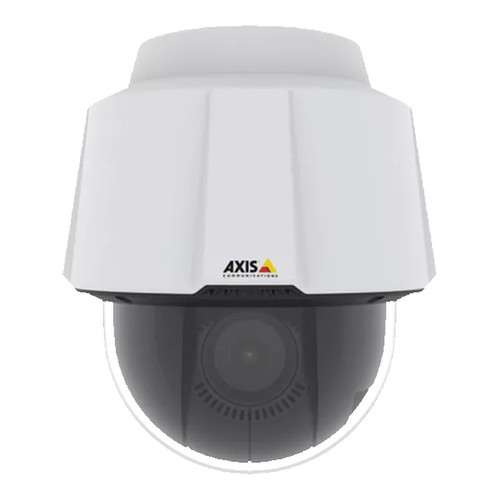
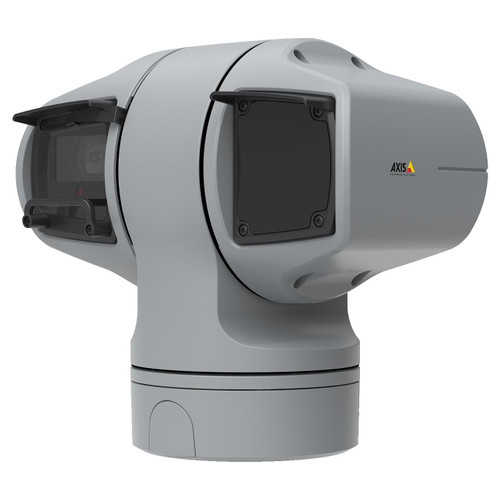
The P5654-E uses a 1/2.8" CMOS sensor with a 4.0–84.6 mm lens delivering 21x optical zoom and a horizontal field of view of 77.0°–3.6°. Minimum color illumination is 0.1 lux (B/W: 0.02 lux). It supports Lightfinder 2.0, Forensic WDR, and IR night vision. The Q6225-LE uses a larger 1/2" CMOS sensor with a 6.91–214.64 mm lens delivering 31x optical zoom and a horizontal field of view of 63.8°–2.2°. Minimum color illumination is rated at 0.06 lux (B/W: 0.008 lux @ F1.36; 0 lux with IR active), making it meaningfully more sensitive in low light.
Both cameras output 1920×1080 at up to 50/60 fps and support H.264, H.265, Zipstream, and Motion JPEG. Both include Forensic WDR and Lightfinder 2.0. The Q6225-LE adds OptimizedIR at 850 nm with an auto-adjusting IR illuminator scaled to zoom level, explicitly rated for long-range IR coverage and 0 lux operation. The P5654-E includes IR night vision but lacks a published IR wavelength, OptimizedIR designation, or a stated 0 lux rating in the provided specs. Digital zoom is 12x on both models.
What about installation and environment?
Both cameras carry IP66 and IK10 ratings. The P5654-E operates from -30°C to +50°C. The Q6225-LE extends that range significantly to -50°C to +55°C, making it the clear choice for arctic, high-altitude, or desert environments. The P5654-E is PoE Class 4 (802.3at, max 37 W). The Q6225-LE requires PoE++ Class 8 (802.3bt), which demands a compatible switch or midspan injector — an infrastructure cost and compatibility check installers must confirm before deployment.
The P5654-E mounts via a ¼"-20 tripod screw thread and measures 214×80×57 mm at 750 g, suggesting a compact dome-style PTZ enclosure. The Q6225-LE measures 210×330×313 mm and uses a pendant PTZ mount, indicating a larger, column- or arm-mount installation footprint. The Q6225-LE additionally holds MIL-STD-810G and NEMA TS 2 certifications not listed for the P5654-E, relevant for traffic and roadway installations.
Which fits your VMS and analytics better?
Both cameras support ONVIF Profile G, M, S, and T. The Q6225-LE's spec explicitly lists AXIS Camera Station Edge, Pro, and 5, plus axis.com VMS partner systems; the P5654-E lists the same ONVIF profiles but does not enumerate specific VMS platform certifications beyond ONVIF in the provided data. The Q6225-LE includes AXIS Object Analytics on-board; no equivalent edge analytics package is listed for the P5654-E. Both support Autotracking 2. The Q6225-LE specifies a preset position guard tour; the P5654-E is listed as supporting only a 'limited guard tour.'
For audio, the P5654-E lists microphone support, external microphone input, line input, digital input, and 2 outputs — a richer I/O set per the provided specs. The Q6225-LE lists audio detection and audio clip playback but does not enumerate physical audio I/O ports in the provided data. The Q6225-LE adds a TPM chip alongside signed firmware and Secure Boot; the P5654-E lists signed firmware and Secure Boot but no TPM. On-board storage specs are not explicitly stated for either model in the provided data beyond flash memory references on the P5654-E (512 MB Flash).
Which should you choose: the P5654-E or the Q6225-LE?
Our take: The Q6225-LE is the stronger choice when maximum zoom reach, extreme-temperature operation, and long-range IR are primary requirements. It delivers 31x optical zoom versus the P5654-E's 21x — a 48% increase in reach — and sees color at 0.06 lux versus 0.1 lux, with 0 lux capability when IR is active. Its operating range of -50°C to +55°C eclipses the P5654-E's -30°C to +50°C, and it adds a TPM chip and AXIS Object Analytics not present on the P5654-E. However, the Q6225-LE requires PoE++ 802.3bt (Class 8) infrastructure, which may require switch upgrades. The P5654-E suits sites with existing 802.3at PoE infrastructure, tighter budgets, or where its richer physical audio I/O is a system requirement. Confirm PoE plant compatibility before specifying the Q6225-LE.
Side-by-Side Comparison
Spec-for-spec, from manufacturer data.
| Specification | Axis P5654-E | Axis Q6225-LE |
|---|---|---|
| Resolution | 2MP (1920×1080) | 2MP (1920×1080) |
| Image Sensor Size | 1/2.8" CMOS | 1/2" CMOS |
| Focal Length | 4.0–84.6 mm | 6.91–214.64 mm |
| Optical Zoom | 21x | 31x |
| Digital Zoom | 12x | 12x |
| Min Illumination (Color) | 0.1 lux | 0.06 lux |
| Min Illumination (B/W) | 0.02 lux | 0.008 lux |
| Min Illumination (IR on) | Not specified | 0 lux |
| IR / Night Vision | IR (wavelength not specified) | OptimizedIR, 850 nm |
| Wide Dynamic Range | Forensic WDR | Forensic WDR |
| Max Frame Rate | 50/60 fps @ 1080p | 50/60 fps @ 1080p |
| Video Compression | H.265; H.264; Zipstream; Motion JPEG | H.265; H.264; Zipstream; Motion JPEG |
| IP Rating | IP66 | IP66 |
| IK / Impact Rating | IK10 | IK10 |
| Operating Temperature | -30°C to +50°C | -50°C to +55°C |
| Power / PoE Class | PoE+ 802.3at, Class 4, 37W max | PoE++ 802.3bt, Class 8 |
| Pan Range | 360° endless | 360° endless |
| Tilt Range | ±90° | -90° to +90° |
| Guard Tour | Limited guard tour | Preset position tour |
| Autotracking | Autotracking 2 | Autotracking 2 |
| Edge Analytics | Not specified | AXIS Object Analytics |
| Audio I/O | Mic input; line input; digital input; 2 outputs | Audio detection; audio clip playback |
| Cybersecurity | Signed firmware; Secure Boot | Signed firmware; Secure Boot; TPM chip |
| ONVIF Profiles | Profile G, M, S, T | Profile G, M, S, T |
| Additional Certifications | EN55032 Class A; ICES-003 Class A; VCCI Class A; RCM | MIL-STD-810G; NEMA TS 2 |
| Dimensions | 214×80×57 mm | 210×330×313 mm |
| Weight | 750 g | Not specified |
| Warranty | 5-year | 5-year |
Frequently Asked Questions
Which should you choose: the P5654-E or the Q6225-LE?
The Q6225-LE is the stronger choice when maximum zoom reach, extreme-temperature operation, and long-range IR are primary requirements. It delivers 31x optical zoom versus the P5654-E's 21x — a 48% increase in reach — and sees color at 0.06 lux versus 0.1 lux, with 0 lux capability when IR is active. Its operating range of -50°C to +55°C eclipses the P5654-E's -30°C to +50°C, and it adds a TPM chip and AXIS Object Analytics not present on the P5654-E. However, the Q6225-LE requires PoE++ 802.3bt (Class 8) infrastructure, which may require switch upgrades. The P5654-E suits sites with existing 802.3at PoE infrastructure, tighter budgets, or where its richer physical audio I/O is a system requirement. Confirm PoE plant compatibility before specifying the Q6225-LE.
Is the P5654-E or Q6225-LE better for low-light performance?
The Q6225-LE outperforms the P5654-E in low light. It achieves 0.06 lux in color mode (versus 0.1 lux for the P5654-E) and reaches 0 lux with its OptimizedIR 850 nm illuminator active. The P5654-E includes IR night vision and Lightfinder 2.0 but does not carry a 0 lux or OptimizedIR designation in the provided specifications.
Can I power both cameras from a standard 802.3at PoE switch?
No. The P5654-E is PoE Class 4 (802.3at, 37 W max) and works with standard PoE+ switches. The Q6225-LE requires PoE++ Class 8 (802.3bt), which demands a PoE++ capable switch or midspan injector. Deploying the Q6225-LE on a non-802.3bt plant will require infrastructure upgrades or a dedicated injector at each camera drop.
Which camera is better suited for extreme cold environments like northern climates or high-altitude sites?
The Q6225-LE is rated from -50°C to +55°C, compared to the P5654-E's -30°C to +50°C. For installations in arctic, subarctic, or high-altitude locations where ambient temperatures can fall below -30°C, only the Q6225-LE is rated to operate. The Q6225-LE also holds MIL-STD-810G certification, which is not listed for the P5654-E.
Get a Second Opinion on Your Camera Choice
Share your site layout, coverage goals, and budget. Our team will validate the camera selection, flag anything we would change, and recommend products that match the use case.