
APC by Schneider Electric SUG5100S90UL vs APC by Schneider Electric SUG5100A90UL: Specification Comparison
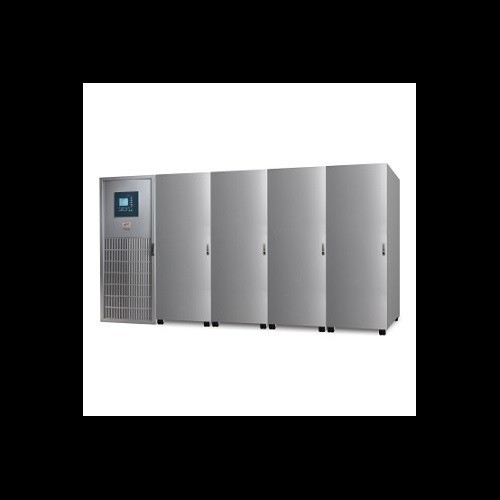
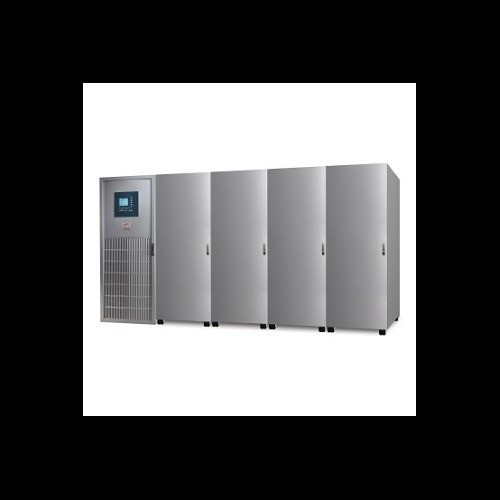
Both units are APC by Schneider Electric Galaxy 5000 (G5K) three-phase, double-conversion online UPS systems rated at 100 kVA / 90 kW, designed for medium-to-large critical power applications in the 41–225 kVA class. The comparison centers on the distinction between the two output-voltage adjustment schemes implied by their suffixes—'SA' (Static Adjustment) on the SUG5100S90UL versus 'ADJ' (Adjustable) on the SUG5100A90UL—along with minor dimensional and environmental specification differences reported in the provided data.
In This Guide
- Do the SUG5100S90UL and SUG5100A90UL deliver the same power capacity and electrical performance?
- Are there meaningful differences in the physical dimensions, weight, or operating environment between the two models?
- What is the practical difference between the 'SA' (Static Adjustment) and 'ADJ' (Adjustable) output voltage designations, and which matters for a given installation?
- Which should you choose: the SUG5100S90UL or the SUG5100A90UL?
- Side-by-Side Specs
- FAQ
Do the SUG5100S90UL and SUG5100A90UL deliver the same power capacity and electrical performance?
Both models are electrically identical across every primary power specification. Each delivers 100 kVA / 90,000 W of output in a double-conversion (online) topology with a true sine waveform. Input voltage range is 408–600 V (three-phase), output voltage range is 480–600 V (three-phase), and maximum output current is 190 A. Input frequency acceptance spans 45–65 Hz.
Efficiency is specified at 92.9% for both units. Output voltage total harmonic distortion (THD) is 1% and input current THD is 3% on both models. Crest factor is 3:1 on both. Neither model offers integral AC receptacles; both use terminal connections for input and output. Both support up to four external battery strings and are specified with an LCD display.
From a pure power-delivery standpoint, no differentiator exists between the two SKUs. Buyers selecting on kVA, efficiency, waveform quality, or THD will find the models equivalent.
Are there meaningful differences in the physical dimensions, weight, or operating environment between the two models?
Width and depth are identical on both units: 5,646 mm wide and 813 mm deep. Height differs slightly—the SUG5100S90UL is specified at 1,905 mm versus 1,900 mm for the SUG5100A90UL, a 5 mm delta that is unlikely to be installation-significant but is present in the provided specs.
Weight diverges more noticeably. The SUG5100S90UL is listed at 8,883.6 kg versus the SUG5100A90UL at 8,974.5 kg—a difference of approximately 90.9 kg. Installers should verify floor-loading calculations against the specific unit being deployed, as this delta may affect structural requirements in some facilities.
Operating temperature (0–40 °C) and operating relative humidity (5–90%) are identical. Storage temperature ranges also match (−20 to 45 °C). One spec-level difference appears in storage relative humidity: the SUG5100S90UL lists 0–95% while the SUG5100A90UL lists 5–95%. Operating and non-operating altitude specs are identical (0–999.9 m and 0–9,000 m respectively). Both carry IP20 ingress protection and UL 1778 / UL 924 certifications.
What is the practical difference between the 'SA' (Static Adjustment) and 'ADJ' (Adjustable) output voltage designations, and which matters for a given installation?
The SKU suffixes 'S90UL' (SA = Static/fixed output adjustment) and 'A90UL' (ADJ = field-adjustable output) indicate how the output voltage setpoint is configured. The provided specifications do not enumerate the specific adjustment range or fixed-output voltage options for either unit beyond the shared 480–600 V min/max envelope. Buyers should consult APC's published configuration guides or request factory documentation for the precise step increments or fixed-tap values available on each variant.
For installations with a fixed, well-characterized load voltage—such as a dedicated 480 V distribution panel feeding known equipment—the SA variant may be adequate and potentially simpler to commission. For sites with mixed or evolving load voltage requirements within the 480–600 V band, or where field re-configuration without factory intervention is required, the ADJ variant provides greater operational flexibility.
Neither the output voltage adjustment mechanism nor its range is numerically quantified in the specifications provided. Installers specifying to a particular output voltage setpoint or requiring documented field-adjustment procedures should obtain the APC technical data sheet for each suffix before finalizing the bill of materials.
Which should you choose: the SUG5100S90UL or the SUG5100A90UL?
Our take: The SUG5100S90UL is the stronger choice when installation conditions favor a lighter unit and slightly taller cabinet, while the SUG5100A90UL is preferable when field-adjustable output voltage is a commissioning or future-flexibility requirement. Three concrete spec deltas: (1) weight—SUG5100S90UL is 8,883.6 kg versus SUG5100A90UL at 8,974.5 kg, a ~90.9 kg difference relevant to floor-loading calculations; (2) height—1,905 mm vs. 1,900 mm, a 5 mm delta; (3) storage relative humidity lower bound—0% vs. 5%, a minor logistical distinction for long-term warehousing. All power-performance specs—100 kVA/90 kW, 92.9% efficiency, 1% output THD, 3% input THD, 190 A max current—are identical. Platform qualifier: both require external battery cabinets (no internal batteries) and use terminal connections only, so neither suits applications requiring integral battery or receptacle outputs.
Side-by-Side Comparison
Spec-for-spec, from manufacturer data.
| Specification | APC by Schneider Electric SUG5100S90UL | APC by Schneider Electric SUG5100A90UL |
|---|---|---|
| UPS Topology | Double-conversion (Online) | Double-conversion (Online) |
| Output Power Capacity | 100 kVA | 100 kVA |
| Output Power | 90,000 W | 90,000 W |
| Waveform | Sine | Sine |
| Input Voltage Range | 408–600 V | 408–600 V |
| Output Voltage Range | 480–600 V | 480–600 V |
| Input Frequency | 45–65 Hz | 45–65 Hz |
| Maximum Output Current | 190 A | 190 A |
| Efficiency | 92.9% | 92.9% |
| Output Voltage THD | 1% | 1% |
| Input Current THD | 3% | 3% |
| Battery Type | External | External |
| Height | 1,905 mm | 1,900 mm |
| Weight | 8,883.6 kg | 8,974.5 kg |
| Storage Relative Humidity | 0–95% | 5–95% |
| Certifications | UL 1778, UL 924 | UL 1778, UL 924 |
Frequently Asked Questions
Which should you choose: the SUG5100S90UL or the SUG5100A90UL?
The SUG5100S90UL is the stronger choice when installation conditions favor a lighter unit and slightly taller cabinet, while the SUG5100A90UL is preferable when field-adjustable output voltage is a commissioning or future-flexibility requirement. Three concrete spec deltas: (1) weight—SUG5100S90UL is 8,883.6 kg versus SUG5100A90UL at 8,974.5 kg, a ~90.9 kg difference relevant to floor-loading calculations; (2) height—1,905 mm vs. 1,900 mm, a 5 mm delta; (3) storage relative humidity lower bound—0% vs. 5%, a minor logistical distinction for long-term warehousing. All power-performance specs—100 kVA/90 kW, 92.9% efficiency, 1% output THD, 3% input THD, 190 A max current—are identical. Platform qualifier: both require external battery cabinets (no internal batteries) and use terminal connections only, so neither suits applications requiring integral battery or receptacle outputs.
Is there any difference in power output or efficiency between the SUG5100S90UL and SUG5100A90UL?
No. Both models are rated identically at 100 kVA / 90,000 W with 92.9% efficiency, 1% output voltage THD, 3% input current THD, and a 190 A maximum output current. All electrical performance specifications in the provided data are the same.
Which model is heavier, and does it matter for installation planning?
The SUG5100A90UL is heavier at 8,974.5 kg versus the SUG5100S90UL at 8,883.6 kg—approximately 90.9 kg more. For most reinforced data-center or industrial floors this delta will not change the structural outcome, but installers performing formal floor-load analysis should use the weight specific to the model being procured.
When should I choose the ADJ variant over the SA variant?
Choose the ADJ (SUG5100A90UL) when your project requires the ability to adjust the output voltage setpoint in the field—for example, if the downstream distribution voltage may change, or if commissioning flexibility across multiple output voltage levels within the 480–600 V range is needed. Choose the SA (SUG5100S90UL) when the output voltage is fixed and known at design time. The specific adjustment increments or fixed-tap values are not enumerated in the provided specifications; consult APC's technical data sheet for each suffix to confirm suitability before ordering.
Get a Second Opinion on Your Camera Choice
Share your site layout, coverage goals, and budget. Our team will validate the camera selection, flag anything we would change, and recommend products that match the use case.