
APC by Schneider Electric SRT8KXLT-5KTF vs APC by Schneider Electric DLRT8KRMXLT: Specification Comparison
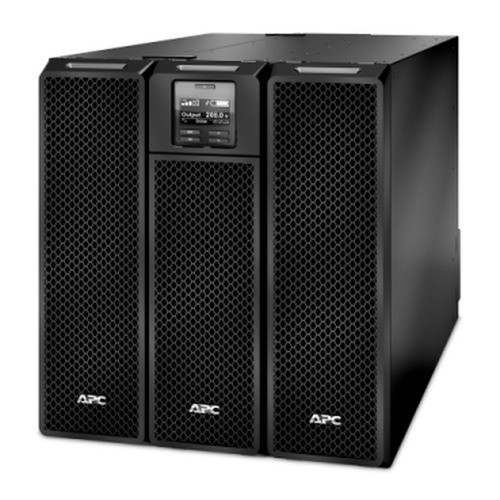
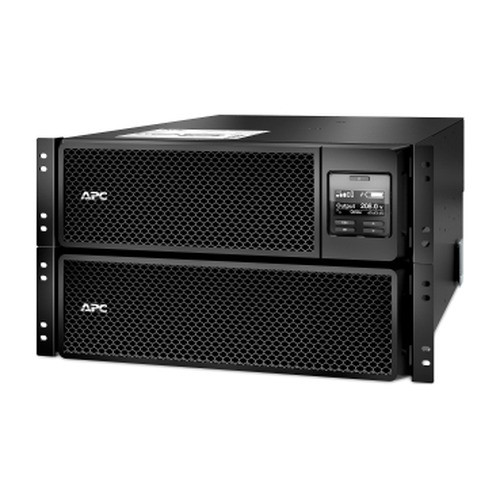
Both units are 8000VA / 8000W double-conversion (online) sine-wave UPS systems from APC by Schneider Electric's Smart-UPS SRT line, squarely in the same power class and topology. The SRT8KXLT-5KTF includes an integrated 208/240V-to-120V step-down transformer, targeting mixed-voltage environments, while the DLRT8KRMXLT is a Dell-badged tower/rack model designed for native 208V output loads. Buyers comparing these are typically evaluating output voltage compatibility, form-factor flexibility, outlet configuration, and efficiency characteristics against their specific data center or equipment room requirements.
In This Guide
Which UPS matches your load voltage and outlet requirements?
Output voltage is the sharpest differentiator between these two units. The SRT8KXLT-5KTF delivers an output voltage range of 120V–240V, enabled by its integrated step-down transformer. This makes it suitable for environments where legacy 120V IT equipment must be powered from a 208/240V feed — a common need in retrofitted data closets or mixed North American deployments.
The DLRT8KRMXLT outputs at 208V–240V only, with no step-down capability specified. It provides 6 AC outlets configured as NEMA L6-20R and NEMA L6-30R — locking 20A and 30A twist-lock receptacles standard for 208V rack-mounted IT loads. Outlet type and quantity are not specified for the SRT8KXLT-5KTF in the provided data. Buyers powering exclusively 208V servers, storage, or networking gear will find the DLRT8KRMXLT's outlet complement directly usable, while those requiring 120V output need the transformer-equipped SRT8KXLT-5KTF.
How do the two units compare on efficiency and output power quality?
Efficiency figures are provided only for the DLRT8KRMXLT: 94% in online double-conversion mode and 98% in ECO mode. These are solid benchmarks for an 8kVA online UPS. No efficiency data is available in the provided specifications for the SRT8KXLT-5KTF, so a direct numerical comparison cannot be made.
On output power quality, the SRT8KXLT-5KTF specifies a 2% Total Harmonic Distortion (THD) figure and a 3:1 crest factor, both indicative of clean sine-wave output well-suited to sensitive electronics. Neither THD nor crest factor is specified for the DLRT8KRMXLT in the provided data. Both units share an identical 480J surge energy rating and sine-wave waveform, providing a common baseline for power quality protection.
What management and operational capabilities does each UPS provide?
The SRT8KXLT-5KTF specifies web-based management as a supported feature, enabling remote monitoring and configuration without requiring a dedicated management card to be assumed — though the exact implementation details are not elaborated in the provided specs. It also specifies an audible alarm and auto-restart.
The DLRT8KRMXLT lists audible alarm and auto-restart as well, but web-based management is not listed in its provided specifications. This absence should be verified with the full product datasheet before ruling it out, as the SRT line typically supports network management cards. Both units share the same input voltage window (100V–275V) and frequency range (40–70Hz for the SRT8KXLT-5KTF; listed as 40/70Hz for the DLRT8KRMXLT — interpreted as the same 40–70Hz range, though the notation differs). Noise level is specified only for the SRT8KXLT-5KTF at 55 dB; no acoustic data is provided for the DLRT8KRMXLT.
Which should you choose: the SRT8KXLT-5KTF or the DLRT8KRMXLT?
Our take: The SRT8KXLT-5KTF is the stronger choice when your installation requires powering 120V equipment from a 208/240V facility feed, whereas the DLRT8KRMXLT is better suited to pure 208V native-load environments with defined locking-outlet requirements. Three concrete spec deltas drive this: first, output voltage — the SRT8KXLT-5KTF covers 120V–240V via its integrated step-down transformer versus the DLRT8KRMXLT's 208V–240V-only range; second, output THD — the SRT8KXLT-5KTF specifies 2% THD and a 3:1 crest factor while the DLRT8KRMXLT provides no THD figure; third, efficiency — the DLRT8KRMXLT documents 94% online / 98% ECO mode efficiency while the SRT8KXLT-5KTF offers no published efficiency figure for comparison. Platform qualifier: the DLRT8KRMXLT's Dell branding and NEMA L6-20R/L6-30R outlet complement align it to Dell server rack deployments, while the SRT8KXLT-5KTF targets voltage-bridging scenarios in mixed or transitional infrastructure.
Side-by-Side Comparison
Spec-for-spec, from manufacturer data.
| Specification | APC by Schneider Electric SRT8KXLT-5KTF | APC by Schneider Electric DLRT8KRMXLT |
|---|---|---|
| UPS Topology | Double-conversion (Online) | Double-conversion (Online) |
| Output Power Capacity | 8 kVA | 8 kVA |
| Output Power | 8000 W | 8000 W |
| Waveform | Sine | Sine |
| Input Voltage Range | 100V – 275V | 100V – 275V |
| Input Frequency | 40 – 70 Hz | 40 / 70 Hz |
| Output Voltage Range | 120V – 240V | 208V – 240V |
| Step-down Transformer | Yes (208/240V to 120V) | — |
| Output Frequency | 50/60 Hz | 50/60 Hz |
| Surge Energy Rating | 480 J | 480 J |
| Output THD | 2% | — |
| Crest Factor | 3:1 | — |
| Efficiency (Online Mode) | — | 94% |
| Efficiency (ECO Mode) | — | 98% |
| Noise Level | 55 dB | — |
| AC Outlet Types | — | NEMA L6-20R, NEMA L6-30R |
| AC Outlets Quantity | — | 6 |
| Web-based Management | Yes | — |
| Audible Alarm | Yes | Yes |
| Auto-restart | Yes | Yes |
| Surge Protection | Yes | Yes |
Frequently Asked Questions
Which should you choose: the SRT8KXLT-5KTF or the DLRT8KRMXLT?
The SRT8KXLT-5KTF is the stronger choice when your installation requires powering 120V equipment from a 208/240V facility feed, whereas the DLRT8KRMXLT is better suited to pure 208V native-load environments with defined locking-outlet requirements. Three concrete spec deltas drive this: first, output voltage — the SRT8KXLT-5KTF covers 120V–240V via its integrated step-down transformer versus the DLRT8KRMXLT's 208V–240V-only range; second, output THD — the SRT8KXLT-5KTF specifies 2% THD and a 3:1 crest factor while the DLRT8KRMXLT provides no THD figure; third, efficiency — the DLRT8KRMXLT documents 94% online / 98% ECO mode efficiency while the SRT8KXLT-5KTF offers no published efficiency figure for comparison. Platform qualifier: the DLRT8KRMXLT's Dell branding and NEMA L6-20R/L6-30R outlet complement align it to Dell server rack deployments, while the SRT8KXLT-5KTF targets voltage-bridging scenarios in mixed or transitional infrastructure.
Can the DLRT8KRMXLT power 120V equipment like the SRT8KXLT-5KTF can?
No. Based on the provided specifications, the DLRT8KRMXLT outputs at 208V–240V only, with no step-down transformer listed. The SRT8KXLT-5KTF includes an integrated 208/240V-to-120V step-down transformer and specifies an output voltage range of 120V–240V. If your load includes 120V equipment fed from a 208V source, only the SRT8KXLT-5KTF addresses that requirement as specified.
Which unit is more energy-efficient?
Only the DLRT8KRMXLT has efficiency figures in the provided specifications: 94% in online double-conversion mode and 98% in ECO mode. No efficiency percentage is listed for the SRT8KXLT-5KTF in the data provided, so a direct comparison cannot be made from specs alone. Consult APC's full datasheet for the SRT8KXLT-5KTF to obtain its efficiency rating before making an energy-cost decision.
Does the SRT8KXLT-5KTF or DLRT8KRMXLT offer better remote management?
The SRT8KXLT-5KTF explicitly lists web-based management in its provided specifications. Web-based management is not listed in the DLRT8KRMXLT's provided specifications. However, this absence may reflect incomplete spec data rather than a missing feature — both models are from the same Smart-UPS SRT platform family, which typically supports APC network management cards. Verify the DLRT8KRMXLT's management options against its full datasheet before drawing conclusions.
More UPS Comparisons
- APC by Schneider Electric SRT8KXLT30 vs Vertiv GXT5LI-8000MVRT4UXLN
- APC by Schneider Electric SRT8KXLT30 vs Vertiv GXT5LI-8000GVRT3UXLN
- APC by Schneider Electric SRT8KXLT30 vs APC by Schneider Electric SRT8KRMXLT-IEC
- APC by Schneider Electric DLRT8KRMXLT vs Vertiv GXT5LI-8000MVRT4UXLN
- APC by Schneider Electric DLRT8KRMXLT vs Vertiv GXT5LI-8000GVRT3UXLN
- APC by Schneider Electric DLRT8KRMXLT vs APC by Schneider Electric SRT8KRMXLT-IEC
UPS Buying Guides
Get a Second Opinion on Your Camera Choice
Share your site layout, coverage goals, and budget. Our team will validate the camera selection, flag anything we would change, and recommend products that match the use case.