
APC by Schneider Electric BN450M-CA vs APC by Schneider Electric BN450M: Specification Comparison
Both units are APC Back-UPS NS 450VA / 255W standby UPS devices sharing the same NEMA 5-15P input, 120V AC output, square-wave topology, and six-outlet configuration. The BN450M-CA carries a "-CA" suffix conventionally associated with Canadian market packaging or regulatory certification variants, while the BN450M is the standard retail SKU. A buyer choosing between these two would be evaluating whether any regional compliance, bundling, or packaging difference justifies a price delta — because the published electrical and mechanical specifications are, point for point, identical across all provided data.
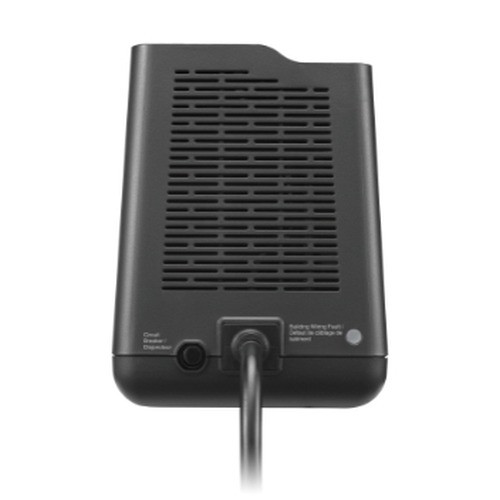
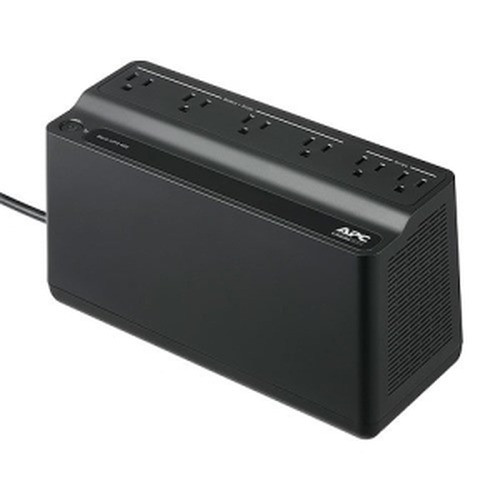
In This Guide
- Do the BN450M-CA and BN450M differ in power capacity, output quality, or transfer performance?
- Are there any differences in physical form factor, environmental ratings, or installation requirements between the two models?
- Does the "-CA" designation on the BN450M-CA indicate a meaningful regulatory, outlet, or feature difference relevant to Canadian or US deployments?
- Which should you choose: the BN450M-CA or the BN450M?
- Side-by-Side Specs
- FAQ
Do the BN450M-CA and BN450M differ in power capacity, output quality, or transfer performance?
Both models are rated identically at 450 VA / 255 W, representing a power factor of approximately 0.57 — typical for standby desktop UPS units in this class. Neither model is specified with a higher power factor or sine-wave output; both deliver a square wave during battery operation, which is adequate for most switching power supplies but may be incompatible with active PFC power supplies found in some modern servers or workstations.
Transfer time is specified as 6 ms typical and 10 ms maximum on both units — within the tolerances of virtually all double-conversion-tolerant loads and sufficient for standard IT peripherals and networking gear. No runtime curves or battery capacity (Ah) figures appear in the provided specifications for either model, so a load-based runtime comparison cannot be made from the available data.
Output frequency tracks the mains at 50/60 Hz ±3 Hz on both, with input auto-sensing across the same 88–139 V window. There is no spec-level differentiation in power capacity or output quality between these two SKUs.
Are there any differences in physical form factor, environmental ratings, or installation requirements between the two models?
Weight, dimensions, and packaging data are identical across both SKUs: 5.7 lb (2.6 kg) unit weight, a single cited dimension of 5.51 in (14 cm), and package dimensions of 8.66 × 5.51 × 12.40 in at 6.6 lb (3 kg) shipped weight. Both are specified as not rack-mountable with no mounting preference, positioning them as desktop or floor-standing installations only.
Environmental operating limits are the same: 0–95% relative humidity (operating and storage), 0–10,000 ft operating altitude, and a storage temperature range of -4 to 122 °F (-20 to 50 °C). No operating temperature range is listed in the provided specifications for either model.
The SCC14 barcode value (10731304329388) is identical on both products as listed, which is notable — divergent SCC14 codes would normally distinguish retail configurations. Installers should verify actual carton markings, as regional variants sometimes carry distinct UPC/EAN codes not captured in distributor spec feeds.
Does the "-CA" designation on the BN450M-CA indicate a meaningful regulatory, outlet, or feature difference relevant to Canadian or US deployments?
The "-CA" suffix in APC's naming convention typically denotes a Canadian market variant, which may include CSA or cUL certification alongside UL listing, French-language documentation, or country-specific packaging. However, none of the provided specifications explicitly state a different safety certification, outlet configuration, or regulatory listing for the BN450M-CA versus the BN450M.
Both models specify NEMA 5-15P input plugs — a North American standard — and the electrical parameters (120 V / 60 Hz primary, 50 Hz auto-sensed) are identical. No spec field distinguishes outlet type, certification body, or included accessories between the two SKUs.
Buyers deploying into Canadian facilities that require cUL or CSA certification must independently verify the BN450M-CA's certification marks through APC's official documentation, as this data is not present in the specifications provided. The BN450M's certification status for Canadian use is similarly unconfirmed from the provided data alone.
Which should you choose: the BN450M-CA or the BN450M?
Our take: The BN450M-CA and BN450M are specification-identical across every provided data point — 450 VA / 255 W capacity, 120 V in/out, NEMA 5-15P input, 6 ms typical transfer time, square-wave output, identical physical dimensions, identical package weight, and even an identical SCC14 barcode value. No spec delta exists in the supplied data to justify choosing one over the other on technical grounds. The practical differentiator is almost certainly regional compliance documentation or packaging language (the "-CA" suffix conventionally signals a Canadian market variant), but neither certification body nor included accessories are specified here. Buyers in Canada requiring cUL/CSA certification should request APC's official compliance documentation for the BN450M-CA before purchase; US buyers should confirm the BN450M carries UL listing. For purely technical infrastructure decisions, both units are functionally interchangeable as specified.
Side-by-Side Comparison
Spec-for-spec, from manufacturer data.
| Specification | APC by Schneider Electric BN450M-CA | APC by Schneider Electric BN450M |
|---|---|---|
| SKU | BN450M-CA | BN450M |
| Market Variant | CA (Canadian market suffix) | Standard retail |
| Rated Power (VA) | 450 VA | 450 VA |
| Rated Power (W) | 255 W | 255 W |
| UPS Type | Standby | Standby |
| Wave Type | Square wave | Square wave |
| Input Voltage | 120 V | 120 V |
| Output Voltage | 120 V | 120 V |
| Input Connector | NEMA 5-15P | NEMA 5-15P |
| Input Voltage Range | 88–139 V | 88–139 V |
| Transfer Time | 6 ms typical / 10 ms max | 6 ms typical / 10 ms max |
| Network Frequency | 50/60 Hz ±3 Hz auto-sensing | 50/60 Hz ±3 Hz auto-sensing |
| Maximum Input Current | 5 A | 5 A |
| Unit Weight | 5.7 lb (2.6 kg) | 5.7 lb (2.6 kg) |
| Rack-Mountable | No | No |
| SCC14 | 10731304329388 | 10731304329388 |
Frequently Asked Questions
Which should you choose: the BN450M-CA or the BN450M?
The BN450M-CA and BN450M are specification-identical across every provided data point — 450 VA / 255 W capacity, 120 V in/out, NEMA 5-15P input, 6 ms typical transfer time, square-wave output, identical physical dimensions, identical package weight, and even an identical SCC14 barcode value. No spec delta exists in the supplied data to justify choosing one over the other on technical grounds. The practical differentiator is almost certainly regional compliance documentation or packaging language (the "-CA" suffix conventionally signals a Canadian market variant), but neither certification body nor included accessories are specified here. Buyers in Canada requiring cUL/CSA certification should request APC's official compliance documentation for the BN450M-CA before purchase; US buyers should confirm the BN450M carries UL listing. For purely technical infrastructure decisions, both units are functionally interchangeable as specified.
Is the BN450M-CA or BN450M better for a Canadian facility that requires CSA or cUL certification?
The "-CA" suffix on the BN450M-CA conventionally indicates a Canadian market variant, which may carry CSA or cUL certification, but neither the BN450M-CA nor the BN450M includes explicit certification body information in the provided specifications. You must request APC's official compliance documentation for whichever SKU you intend to deploy in a jurisdiction with mandatory CSA or cUL requirements before committing to a purchase.
Will either the BN450M-CA or BN450M work with a server that has an active PFC power supply?
Both units deliver a square-wave output during battery operation, not a sine wave. Active PFC power supplies — common in many rack servers and higher-end workstations — can be incompatible with square-wave UPS output and may shut down or behave erratically during a transfer event. Neither SKU is specified with sine-wave or simulated sine-wave output. For active PFC loads, a UPS with sine-wave output is the appropriate choice; neither of these models is confirmed suitable for that application based on the provided specs.
Are the BN450M-CA and BN450M electrically interchangeable if I order one instead of the other by mistake?
Based on the provided specifications, every electrical and physical parameter — 450 VA / 255 W rating, 120 V / NEMA 5-15P input, six outlets, 6 ms typical transfer time, square-wave output, and identical dimensions and weight — is the same across both SKUs. The only plausible distinction is regional packaging or certification documentation tied to the "-CA" suffix. If your facility has no specific regional certification requirement, the units appear functionally interchangeable as specified, but you should verify the actual retail box contents and included documentation with your distributor before substituting SKUs.
Get a Second Opinion on Your Camera Choice
Share your site layout, coverage goals, and budget. Our team will validate the camera selection, flag anything we would change, and recommend products that match the use case.