
ACTi E911 vs Geovision MDR1200-0100: Specification Comparison
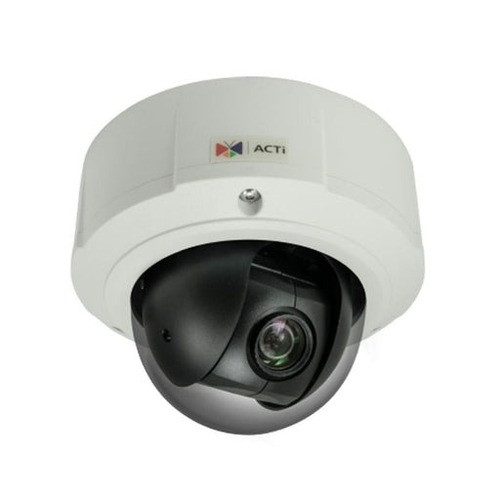
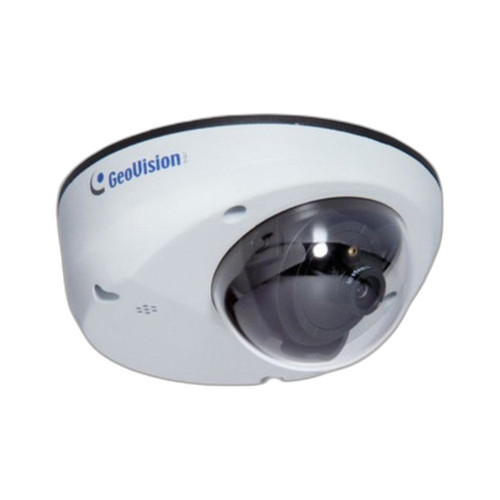
Both the ACTi E911 and Geovision MDR1200-0100 are fixed-lens, 802.3af PoE indoor mini dome cameras intended for ceiling or wall installation in commercial environments. They share the same form factor, mount options, and ONVIF compliance, making them genuine cross-shop candidates for integrators evaluating entry-level to mid-range indoor surveillance. The comparison focuses on resolution, imaging capability, impact resistance, compression efficiency, analytics, and edge storage—the practical differentiators for a B2B buyer selecting between these two platforms.
In This Guide
How do the imaging specs compare?
The ACTi E911 delivers 3 MP resolution at up to 1080p/60 fps, paired with a 2.1 mm fixed lens at F1.8 providing a 117.5° horizontal field of view. Its Extreme WDR capability is explicitly specified, making it suited for scenes with mixed bright and dark zones such as lobbies or retail floors. The Geovision MDR1200-0100 is rated at 1.3 MP with a 4.05 mm fixed lens; no WDR capability, minimum illumination figure, or frame-rate specification is provided in the supplied data.
On compression, the E911 supports both H.265 and H.264, offering bandwidth and storage savings through H.265 encoding. The MDR1200-0100 is specified for H.264 only. Neither product's data sheet provides a minimum illumination value (lux), IR range, or image sensor size in the provided specifications, so low-light performance cannot be numerically compared.
What about installation and environment?
The ACTi E911 carries an IK08 impact rating, meaning it is tested to withstand 5-joule impacts—relevant for semi-public corridors or areas with incidental contact risk. The Geovision MDR1200-0100 has no IK rating listed in the provided specifications. Neither product includes an IP ingress-protection rating, operating temperature range, or dimensions in the supplied data, so environmental suitability beyond indoor use cannot be confirmed from specs alone.
Both cameras are powered via 802.3af PoE. The E911 draws less than 13 W; the MDR1200-0100 is specified at 13 W maximum. Both are compatible with standard 802.3af switch ports or midspan injectors, requiring no high-power PoE infrastructure. Both support ceiling and wall mounting in a dome form factor, and both use an RJ-45 Ethernet connection (the MDR1200-0100 explicitly lists RJ-45; the E911 is PoE-connected and implied similarly).
Which fits your VMS and analytics better?
The ACTi E911 specifies ONVIF compatibility with 'standard ONVIF IP platforms' and additionally lists Video Analytics as an on-board capability. It also supports MicroSD/MicroSDXC edge storage, enabling local recording independent of NVR availability. The Geovision MDR1200-0100 is listed as ONVIF-compliant with no further VMS compatibility detail beyond ONVIF; no edge storage or on-board analytics are listed in the provided specifications.
Neither camera lists audio input/output capability in the provided data. The E911's Video Analytics spec is noted as-stated but no detail on specific analytic functions (e.g., motion detection, line crossing, intrusion) is provided in the supplied specifications. Buyers requiring verified analytic feature sets should consult full ACTi E911 technical documentation.
Which should you choose: the E911 or the MDR1200-0100?
Our take: The E911 is the stronger choice when image detail, WDR performance, impact resilience, or edge storage are requirements. On resolution alone, the E911's 3 MP sensor outresolves the MDR1200-0100's 1.3 MP by a factor of roughly 2.3×, delivering materially more detail per frame for license-plate or facial-recognition use cases. The E911 also adds H.265 compression—reducing storage and bandwidth versus the MDR1200-0100's H.264-only output—and carries a documented IK08 impact rating that the MDR1200-0100 lacks entirely. On-board MicroSD/MicroSDXC storage provides a local recording fallback not available on the Geovision unit. The MDR1200-0100 may suit installations where 1.3 MP resolution is sufficient, H.264-only VMS pipelines are already in place, and budget or infrastructure constraints favor its lower maximum power draw at exactly 13 W. Both integrate via ONVIF, but verify specific profile support (Profile S/G/T) with each manufacturer before deployment.
Side-by-Side Comparison
Spec-for-spec, from manufacturer data.
| Specification | ACTi E911 | Geovision MDR1200-0100 |
|---|---|---|
| Resolution | 3 MP | 1.3 MP |
| Lens / Focal Length | 2.1 mm fixed, F1.8 | 4.05 mm fixed |
| Horizontal FOV | 117.5° | — |
| WDR | Extreme WDR | — |
| Max Frame Rate | 1080p / 60 fps | — |
| Video Compression | H.265; H.264 | H.264 |
| ONVIF | Yes (standard ONVIF IP platforms) | Yes |
| Edge Analytics | Video Analytics | — |
| Edge Storage | MicroSD / MicroSDXC | — |
| Power Input | PoE 802.3af | PoE 802.3af |
| PoE Draw | < 13 W | 13 W max |
| IK / Impact Rating | IK08 | — |
| Connector | RJ-45 (PoE) | RJ-45 |
| Mount Type | Ceiling; Wall | Ceiling; Wall |
| Form Factor | Mini Dome | Mini Dome |
Frequently Asked Questions
Which should you choose: the E911 or the MDR1200-0100?
The E911 is the stronger choice when image detail, WDR performance, impact resilience, or edge storage are requirements. On resolution alone, the E911's 3 MP sensor outresolves the MDR1200-0100's 1.3 MP by a factor of roughly 2.3×, delivering materially more detail per frame for license-plate or facial-recognition use cases. The E911 also adds H.265 compression—reducing storage and bandwidth versus the MDR1200-0100's H.264-only output—and carries a documented IK08 impact rating that the MDR1200-0100 lacks entirely. On-board MicroSD/MicroSDXC storage provides a local recording fallback not available on the Geovision unit. The MDR1200-0100 may suit installations where 1.3 MP resolution is sufficient, H.264-only VMS pipelines are already in place, and budget or infrastructure constraints favor its lower maximum power draw at exactly 13 W. Both integrate via ONVIF, but verify specific profile support (Profile S/G/T) with each manufacturer before deployment.
Is the E911 or MDR1200-0100 better for scenes with high contrast lighting?
Based on the provided specifications, only the ACTi E911 lists a WDR capability—described as Extreme WDR—which is designed to handle scenes with simultaneous bright and dark areas. The Geovision MDR1200-0100 has no WDR specification in the supplied data, so WDR performance cannot be confirmed for that model.
Can either camera record locally without an NVR?
The ACTi E911 specifies MicroSD/MicroSDXC edge storage, supporting local recording without a network recorder. The Geovision MDR1200-0100 does not list any edge storage capability in the provided specifications.
Do both cameras work with third-party VMS platforms like Milestone or Genetec?
Both cameras are listed as ONVIF-compliant, which is the primary interoperability standard supported by Milestone, Genetec, and most other major VMS platforms. The E911 additionally notes compatibility with 'standard ONVIF IP platforms.' Neither listing confirms specific ONVIF profile levels (S, G, or T), so buyers should verify profile compatibility with their chosen VMS vendor before procurement.
Get a Second Opinion on Your Camera Choice
Share your site layout, coverage goals, and budget. Our team will validate the camera selection, flag anything we would change, and recommend products that match the use case.