
ACTi A88 vs Geovision VD3400-001U: Specification Comparison
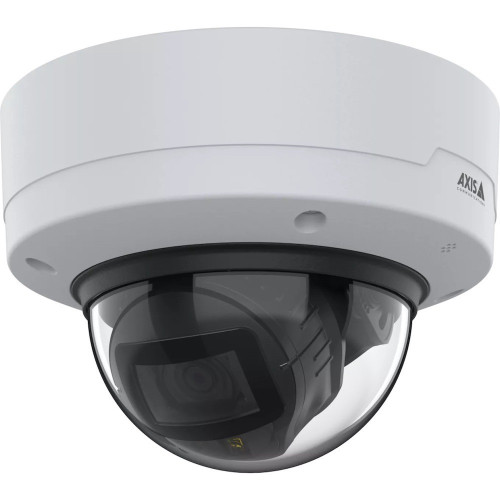
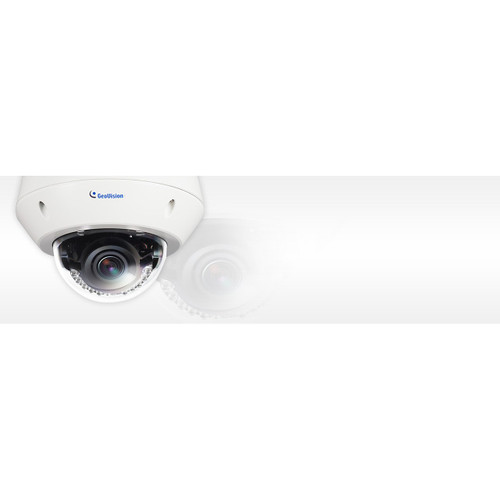
This comparison covers two 3MP outdoor-rated fixed-lens dome cameras: the ACTi A88 mini zoom dome and the Geovision 84-VD3400-001U vandal proof dome. Both target perimeter, entry, and general surveillance roles where a compact dome form factor is preferred. Neither unit is a PTZ; the A88's pan and tilt figures describe installation adjustment ranges on its motorized varifocal optic, not continuous pan/tilt tracking. The Geovision data sheet provided here is sparse on environmental, codec, analytics, and certification details, so several direct comparisons cannot be made from spec alone. We compare what is documented for each model and flag every gap explicitly.
In This Guide
How do the imaging specs compare?
Both cameras share a 3MP resolution class, with the A88 documented at 2065x1553 native and the Geovision listed only as 3 MP without a stated pixel grid. The A88 specifies a 1/2.8 inch sensor, a 2.8 to 8.0 mm motorized varifocal lens (2.85x optical zoom), and a minimum illumination of 0.003 lux in color at F1.6 and 0 lux in B/W with the IR LED on, with a stated IR range of 30 m. The Geovision uses a 3 to 9 mm varifocal lens with a wider zoom span on paper, but sensor size, minimum illumination, and IR range are not specified in the provided data.
On wide dynamic range, the A88 documents Advanced WDR at 120 dB, while the Geovision lists WDR Pro without a dB figure in the provided specs, so the two cannot be compared numerically. The A88 also documents codecs (H.265, H.264 Baseline/Main/High, MJPEG) and a maximum 30 fps at 2048x1536, 1920x1080, and 1280x720. The Geovision data provided here does not specify compression formats or maximum frame rate, so codec efficiency and recording bandwidth planning against the Geovision cannot be confirmed from spec.
What about installation and environment?
The A88 documents IP66 and IK10 ratings, an operating temperature range of -20°C to 50°C, a weight of 363 g, and supported mounts of wall, pole, pendant, and corner. Power is DC 12V or PoE Class 3 (IEEE 802.3af) over a single 10/100 RJ-45 pigtail. Certifications listed include CE (EN 55032 Class A; EN 55024), FCC Class A, EAC, IP66, and IK10. Installation-adjustment travel on the gimbal is pan ±120° and tilt 30°–90°.
The Geovision is rated IP67, which is a higher ingress rating than the A88's IP66 for the water column test. However, the provided Geovision specs do not state an IK impact rating, operating temperature range, weight, PoE class, or any regulatory certifications, and list only ceiling and wall mounting. For installers specifying conduit runs, PoE budget per port, cold-weather enclosures, or compliance documentation, those Geovision values would need to be confirmed against the manufacturer data sheet before bid.
Which fits your VMS and analytics better?
The A88 documents ONVIF Profile S, G, T, and Q, which covers streaming, recording/edge storage retrieval, configuration, and advanced security across most major VMS platforms. It also lists on-camera analytics for video motion detection and people counting. The Geovision is described as ONVIF compatible but the specific profile level is not stated in the provided data, and no on-camera analytics are listed.
For an integrator standardizing on a third-party VMS such as Milestone, Genetec, or Exacqvision, the A88's stated Profile T support is the more defensible spec for H.265 streaming and PTZ-style control messaging, and Profile G is relevant if edge recording retrieval is part of the design. If the deployment is built around Geovision's own GV-VMS or GV-Edge Recording Manager, native integration with the 84-VD3400-001U will likely be tighter than ONVIF alone, but that is a platform choice rather than a spec comparison.
Which should you choose: the A88 or the VD3400-001U?
Our take: The A88 is the stronger choice when the specification sheet itself has to justify the bid, because nearly every environmental, codec, and integration field is documented. Three concrete deltas from the provided data: the A88 states WDR at 120 dB while the Geovision lists WDR Pro with no dB figure; the A88 documents IK10 impact rating, -20°C to 50°C operating range, and PoE Class 3 (802.3af) while the Geovision provides none of those values; and the A88 lists ONVIF Profile S, G, T, Q plus VMD and people counting analytics, while the Geovision is noted only as ONVIF compatible with no profile level and no analytics specified. The Geovision does carry a higher IP67 ingress rating versus IP66. Choose the Geovision when the site is standardized on GV-VMS and the missing fields are confirmed acceptable by the manufacturer data sheet.
Side-by-Side Comparison
Spec-for-spec, from manufacturer data.
| Specification | ACTi A88 | Geovision VD3400-001U |
|---|---|---|
| Resolution | 3MP (2065x1553) | 3 MP |
| Sensor Size | 1/2.8" | — |
| Lens | 2.8–8.0 mm motorized varifocal (2.85x) | 3–9 mm varifocal |
| Max FPS | 30 fps at 2048x1536 / 1920x1080 / 1280x720 | — |
| WDR | Advanced WDR, 120 dB | WDR Pro (dB not specified) |
| Min Illumination | 0.003 lux color @ F1.6; 0 lux B/W (IR on) | — |
| IR Range | 30 m | Not specified |
| Compression | H.265; H.264 (Baseline/Main/High); MJPEG | — |
| ONVIF | Profile S, G, T, Q | ONVIF compatible (profile not specified) |
| On-Camera Analytics | VMD; People Counting | — |
| IP Rating | IP66 | IP67 |
| IK Rating | IK10 | — |
| Operating Temp | -20°C to 50°C | — |
| PoE | PoE Class 3 (IEEE 802.3af); also DC 12V | PoE (class not specified) |
| Mount Types | Wall; Pole; Pendant; Corner | Ceiling; Wall |
| Certifications | CE (EN 55032 Class A; EN 55024); FCC Class A; EAC; IP66; IK10 | — |
| Weight | 363 g (0.8 lb) | — |
| Form Factor | Outdoor mini zoom dome (fixed, motorized varifocal) | Vandal proof dome |
Frequently Asked Questions
Which should you choose: the A88 or the VD3400-001U?
The A88 is the stronger choice when the specification sheet itself has to justify the bid, because nearly every environmental, codec, and integration field is documented. Three concrete deltas from the provided data: the A88 states WDR at 120 dB while the Geovision lists WDR Pro with no dB figure; the A88 documents IK10 impact rating, -20°C to 50°C operating range, and PoE Class 3 (802.3af) while the Geovision provides none of those values; and the A88 lists ONVIF Profile S, G, T, Q plus VMD and people counting analytics, while the Geovision is noted only as ONVIF compatible with no profile level and no analytics specified. The Geovision does carry a higher IP67 ingress rating versus IP66. Choose the Geovision when the site is standardized on GV-VMS and the missing fields are confirmed acceptable by the manufacturer data sheet.
Is the ACTi A88 a PTZ camera?
No. The A88 is a fixed-position dome with a motorized 2.8–8.0 mm varifocal lens (2.85x optical zoom). The pan ±120° and tilt 30°–90° figures are installation-adjustment ranges on the gimbal, not continuous PTZ movement for tracking.
Can both cameras run on standard 802.3af PoE?
The A88 explicitly documents PoE Class 3 (IEEE 802.3af) and also accepts DC 12V. The Geovision data provided lists PoE support but does not specify the class, so the PoE budget per port should be confirmed against the manufacturer data sheet before specifying switches or midspans.
Which camera will integrate more cleanly with a third-party VMS?
Based on the provided specs, the A88 lists ONVIF Profile S, G, T, and Q, which covers streaming, edge recording retrieval, configuration, and advanced security. The Geovision is noted as ONVIF compatible without a stated profile level, so feature parity in a non-Geovision VMS cannot be confirmed from spec alone.
Get a Second Opinion on Your Camera Choice
Share your site layout, coverage goals, and budget. Our team will validate the camera selection, flag anything we would change, and recommend products that match the use case.