
ACTi B64 vs Geovision MDR1200-0100: Specification Comparison
Both the ACTi B64 and Geovision MDR1200-0100 are 1.3MP indoor IP dome cameras intended for interior surveillance in commercial and institutional environments. This comparison examines how they differ across imaging performance, physical installation requirements, and integration with VMS platforms and analytics engines—giving installers and IT buyers a spec-driven basis for selection between a feature-rich motorized-zoom dome and a fixed-lens mini dome.
In This Guide
How do the imaging specs compare?
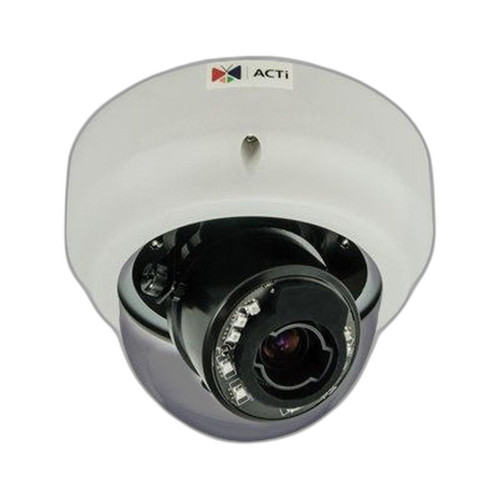
The ACTi B64 uses a 1/3-inch sensor delivering 1.3MP (1280×960) at up to 30 fps, or 60 fps at 1280×720. Its most significant imaging differentiator is a 3.0–9mm motorized varifocal lens providing 3× optical zoom, allowing post-installation focal adjustment without lens changes. The B64 also specifies Basic WDR at 88 dB and a minimum illumination of 0.003 lux (color, F1.2) dropping to 0 lux in B/W with IR active. An 850nm IR illuminator is rated to 40m range, making it usable in fully darkened environments.
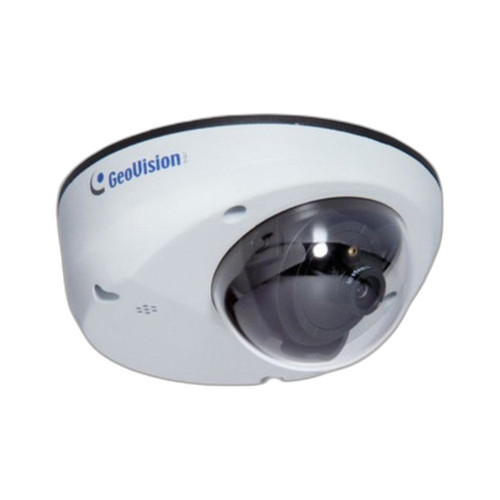
The Geovision MDR1200-0100 is also a 1.3MP camera but is fitted with a 4.05mm fixed lens—no zoom adjustment is available post-installation, so field-of-view must be determined entirely at mounting. The MDR1200-0100 specifications do not list a WDR rating, minimum illumination figure, IR illuminator, or IR range. Buyers requiring low-light capability or scene-brightness compensation cannot confirm these features from the provided spec data for the Geovision unit.
What about installation and environment?
The ACTi B64 is rated IK09 (withstands a 5 kg ball impact per EN 62262), carries CE Class B, FCC Class B, EAC, and UL approvals, and operates from −10°C to 50°C (14°F to 122°F). It draws 10W typical via PoE+ (802.3at, Class 3). Mount options span wall, pole, pendant, corner, and rack. No IP ingress-protection rating is specified in the provided data, consistent with its indoor-only classification. Weight is 720g (1.587 lb).
The Geovision MDR1200-0100 supports ceiling and wall mounting. It draws up to 13W via standard PoE (802.3af). The 3W higher max-draw figure versus the B64's 10W typical is notable: the MDR1200-0100's 802.3af budget (≤15.4W) is compatible with entry-level unmanaged PoE switches, but the actual headroom is narrower than the lower-wattage B64. No IK impact rating, operating temperature range, ingress protection rating, certifications, or weight are present in the MDR1200-0100 spec data provided.
Which fits your VMS and analytics better?
The ACTi B64 is ONVIF Profile S, G, T, and Q compliant and is listed as tested with Milestone XProtect, Genetec Security Center, and Axis Camera Station. It supports H.264 (Baseline/Main/High profile) and MJPEG compression. Edge analytics include VMD, People Counting, and Smoke Detection. Two-way audio is supported with line-in and line-out connections. PTZ control is available via Visca, Pelco-D, Pelco-P, and ACTi URL command protocols over the motorized zoom mechanism (pan 0°–350°, tilt 5°–175°).
The Geovision MDR1200-0100 is ONVIF compliant (profile level not specified) and uses H.264 compression. The spec data does not list specific tested VMS platforms beyond ONVIF, nor does it specify edge analytics, audio capability, on-board storage, or SD card support. The lens is fixed with no pan, tilt, or zoom. Buyers relying on named VMS certifications, edge analytics, or two-way audio should note these are absent from the MDR1200-0100 spec data provided.
Which should you choose: the B64 or the MDR1200-0100?
Our take: The B64 is the stronger choice when imaging flexibility, low-light performance, and VMS breadth are decision criteria. Three concrete spec deltas drive this: first, the B64 offers a 3×motorized zoom (3.0–9mm) versus the MDR1200-0100's fixed 4.05mm lens, enabling far-field scene coverage without camera repositioning; second, the B64 specifies 88 dB WDR and 0.003 lux color sensitivity with a 40m IR illuminator, while the MDR1200-0100 provides no equivalent low-light or WDR data; third, the B64 carries verified ONVIF Profile S/G/T/Q certification and named compatibility with Milestone, Genetec, and Axis Camera Station, whereas the MDR1200-0100 lists ONVIF compliance without profile or VMS detail. The MDR1200-0100 may suit cost-constrained, fixed-scene deployments on standard 802.3af infrastructure where zoom, IR, and analytics are unnecessary—but buyers cannot confirm environmental or low-light suitability from the available spec data.
Side-by-Side Comparison
Spec-for-spec, from manufacturer data.
| Specification | ACTi B64 | Geovision MDR1200-0100 |
|---|---|---|
| Resolution | 1.3MP (1280×960) | 1.3MP |
| Image Sensor | 1/3 inch | — |
| Lens / Focal Length | 3.0–9mm motorized zoom (3× optical) | 4.05mm fixed |
| Min. Illumination | 0.003 lux (color, F1.2); 0 lux (B/W, IR on) | — |
| IR Illuminator | 850nm, 40m range | — |
| WDR | Basic WDR, 88 dB | — |
| Max Frame Rate | 30 fps @ 1280×960; 60 fps @ 1280×720 | — |
| Video Compression | H.264 (Baseline/Main/High); MJPEG | H.264 |
| ONVIF | Profile S, G, T, Q | Yes (profile not specified) |
| IK / Impact Rating | IK09 | — |
| Operating Temperature | −10°C to 50°C (14°F to 122°F) | — |
| Power Input / PoE Class | PoE+ 802.3at, Class 3; 10W typical | PoE 802.3af; 13W max |
| Mount Type | Wall; Pole; Pendant; Corner; Rack | Ceiling; Wall |
| Audio | Two-way; Line-in; Line-out | — |
| Edge Analytics | VMD; People Counting; Smoke Detection | — |
| Weight | 720g (1.587 lb) | — |
Frequently Asked Questions
Which should you choose: the B64 or the MDR1200-0100?
The B64 is the stronger choice when imaging flexibility, low-light performance, and VMS breadth are decision criteria. Three concrete spec deltas drive this: first, the B64 offers a 3×motorized zoom (3.0–9mm) versus the MDR1200-0100's fixed 4.05mm lens, enabling far-field scene coverage without camera repositioning; second, the B64 specifies 88 dB WDR and 0.003 lux color sensitivity with a 40m IR illuminator, while the MDR1200-0100 provides no equivalent low-light or WDR data; third, the B64 carries verified ONVIF Profile S/G/T/Q certification and named compatibility with Milestone, Genetec, and Axis Camera Station, whereas the MDR1200-0100 lists ONVIF compliance without profile or VMS detail. The MDR1200-0100 may suit cost-constrained, fixed-scene deployments on standard 802.3af infrastructure where zoom, IR, and analytics are unnecessary—but buyers cannot confirm environmental or low-light suitability from the available spec data.
Is the B64 or MDR1200-0100 better for low-light or no-light conditions?
The ACTi B64 specifies an 850nm IR illuminator rated to 40m, a minimum illumination of 0.003 lux in color and 0 lux in B/W with IR active. The Geovision MDR1200-0100 provides no IR illuminator, no minimum illumination figure, and no low-light rating in the available specifications. Based on provided data, only the B64 can be confirmed as capable in low-light or zero-light environments.
Can either camera run on a basic 802.3af PoE switch?
The Geovision MDR1200-0100 requires up to 13W and is powered by 802.3af, which falls within the 802.3af 15.4W budget and is compatible with standard PoE switches. The ACTi B64 is rated PoE+ (802.3at, Class 3) at 10W typical; while the wattage is lower, it nominally requires an 802.3at-capable port or injector. Installers should verify switch port capability before deploying the B64 on older 802.3af-only infrastructure.
Which camera integrates more reliably with Milestone XProtect or Genetec Security Center?
The ACTi B64 explicitly lists tested compatibility with Milestone XProtect and Genetec Security Center alongside ONVIF Profile S, G, T, and Q certification. The Geovision MDR1200-0100 lists ONVIF compliance without specifying which profiles are supported or naming any tested VMS platforms. For Milestone or Genetec deployments where named validation matters, the B64 has documented compatibility; the MDR1200-0100's VMS interoperability would need to be verified directly with Geovision or tested in the target environment.
Get a Second Opinion on Your Camera Choice
Share your site layout, coverage goals, and budget. Our team will validate the camera selection, flag anything we would change, and recommend products that match the use case.