
ACTi B64 vs ACTi E911: Specification Comparison
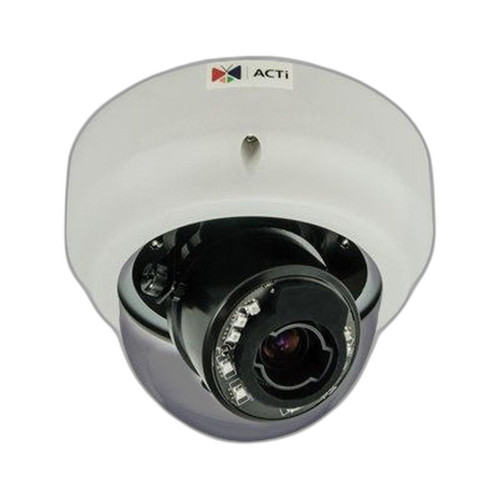
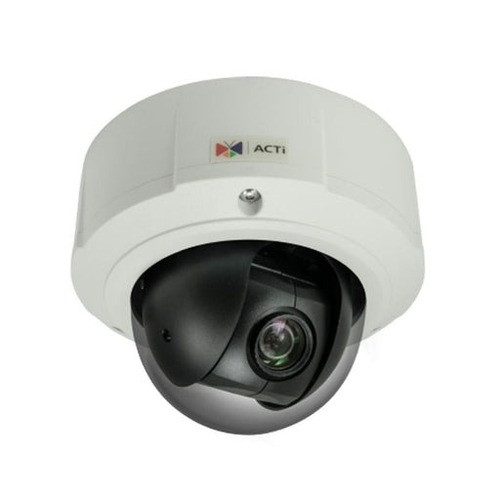
The ACTi B64 and ACTi E911 are both 3MP indoor dome cameras designed for ceiling or wall deployment in commercial environments. The comparison covers two distinct design philosophies within the same resolution class: the B64 is a motorized zoom dome with IR night vision and two-way audio, while the E911 is a fixed wide-angle mini dome emphasizing Extreme WDR and H.265 compression. Buyers choosing between them are typically weighing optical flexibility and low-light performance against wide-field coverage and high-contrast scene handling.
In This Guide
How do the imaging specs compare?
The B64 uses a 1/3-inch sensor delivering 1280×960 resolution at up to 30 fps, with a motorized 3.0–9mm varifocal lens providing 3× optical zoom. Its minimum illumination is 0.003 lux in color mode (F1.2) and 0 lux in B/W with IR active, backed by 850nm IR LEDs rated to 40m range. WDR is specified as Basic WDR at 88 dB. The E911 is rated at 3MP with a fixed 2.1mm F1.8 lens delivering a 117.5° horizontal field of view, and reaches up to 1080p/60fps. Its WDR is classified as Extreme WDR, though a dB value is not provided in the available specs. No minimum illumination figure or IR capability is listed for the E911.
The B64's motorized zoom enables post-installation focal adjustment to recover facial detail at distance—useful in corridors, parking structures, or reception areas where subject range varies. The E911's 2.1mm fixed lens is optimized for wide-area coverage at close to medium range, making it better suited to open spaces like lobbies or retail floors where Extreme WDR performance in mixed lighting is the primary concern. IR capability is confirmed only for the B64; the E911 spec does not document any IR emitter or low-light illumination rating.
What about installation and environment?
The B64 is powered by PoE+ (802.3at, Class 3) drawing 10W typical, and carries an IK09 impact rating—capable of withstanding a 5 kg ball impact per EN 62262. Its operating temperature range is −10°C to 50°C (14°F to 122°F). Mounting options include wall, pole, pendant, corner, and rack configurations. Certifications include CE Class B, FCC Class B, EAC, IK09, and UL (for optional PoE injector and power adapter). Unit weight is 720g (1.587 lb).
The E911 operates on standard PoE (802.3af) drawing less than 13W, making it compatible with a wider range of existing PoE switches without requiring 802.3at ports. Its impact rating is IK08, one step below the B64. Mounting options are listed as ceiling and wall. Operating temperature range, IP rating, certifications, and physical dimensions are not provided in the available E911 specs. The E911's lower power draw simplifies retrofit installs where 802.3at budget may be constrained.
Which fits your VMS and analytics better?
The B64 explicitly supports ONVIF Profiles S, G, T, and Q, and lists verified VMS compatibility with Milestone XProtect, Genetec Security Center, and Axis Camera Station. Its edge analytics include VMD, People Counting, and Smoke Detection. Two-way audio is supported via line-in and line-out connections. No on-board storage specification is documented for the B64.
The E911 is described as compatible with standard ONVIF IP platforms, but specific profile letters (S, G, T, Q) are not listed in the available specs. Analytics are noted as 'Video Analytics' without further enumeration. Audio support is not documented for the E911. The E911 includes MicroSD/MicroSDXC edge storage, which the B64 spec does not mention. H.265 compression on the E911 reduces bandwidth and storage consumption compared to the B64's H.264/MJPEG output—a meaningful advantage in multi-camera deployments with bandwidth constraints.
Which should you choose: the B64 or the E911?
Our take: The B64 is the stronger choice when scenes require optical zoom, confirmed IR night vision, or granular analytics—its 3×motorized zoom (3.0–9mm), 40m IR range at 0 lux B/W, IK09 impact resistance, two-way audio, People Counting, and Smoke Detection analytics, and verified ONVIF Profile S/G/T/Q compatibility with named VMS platforms make it the more fully documented option for complex deployments. The E911 has a meaningful edge in three areas: Extreme WDR (versus Basic WDR at 88 dB on the B64), H.265 compression reducing storage and bandwidth footprint, and standard 802.3af PoE (<13W) easing compatibility with existing switch infrastructure. The E911's 117.5° wide-angle fixed lens and on-board MicroSD storage add flexibility for open-area and edge-recording use cases. Where night-time coverage, zoom, or specific VMS certification matter, the B64 is better documented; where high-contrast daytime scenes, bandwidth efficiency, or 802.3af-only infrastructure are the constraints, the E911 warrants selection.
Side-by-Side Comparison
Spec-for-spec, from manufacturer data.
| Specification | ACTi B64 | ACTi E911 |
|---|---|---|
| Resolution | 1.3MP (1280×960) | 3MP |
| Image Sensor | 1/3 inch | — |
| Lens / Focal Length | 3.0–9mm motorized zoom, 3× optical | 2.1mm fixed, F1.8 |
| Horizontal FOV | — | 117.5° |
| Min Illumination | 0.003 lux (color, F1.2); 0 lux (B/W, IR on) | — |
| IR Range | 40m (850nm) | — |
| WDR | Basic WDR (88 dB) | Extreme WDR (dB not specified) |
| Max Frame Rate | 30 fps @ 1280×960; 60 fps @ 1280×720 | 1080p / 60 fps |
| Video Compression | H.264 (Baseline/Main/High); MJPEG | H.265; H.264 |
| IK / Impact Rating | IK09 | IK08 |
| Operating Temperature | −10°C to 50°C (14°F to 122°F) | — |
| Power Input / PoE Class | PoE+ 802.3at, Class 3; 10W typical | PoE 802.3af; <13W |
| Edge Storage | — | MicroSD / MicroSDXC |
| Audio | Two-way; Line-in; Line-out | — |
| ONVIF Profiles | S, G, T, Q | ONVIF (profiles not specified) |
| Edge Analytics | VMD; People Counting; Smoke Detection | Video Analytics (detail not specified) |
| Weight | 720g (1.587 lb) | — |
Frequently Asked Questions
Which should you choose: the B64 or the E911?
The B64 is the stronger choice when scenes require optical zoom, confirmed IR night vision, or granular analytics—its 3×motorized zoom (3.0–9mm), 40m IR range at 0 lux B/W, IK09 impact resistance, two-way audio, People Counting, and Smoke Detection analytics, and verified ONVIF Profile S/G/T/Q compatibility with named VMS platforms make it the more fully documented option for complex deployments. The E911 has a meaningful edge in three areas: Extreme WDR (versus Basic WDR at 88 dB on the B64), H.265 compression reducing storage and bandwidth footprint, and standard 802.3af PoE (<13W) easing compatibility with existing switch infrastructure. The E911's 117.5° wide-angle fixed lens and on-board MicroSD storage add flexibility for open-area and edge-recording use cases. Where night-time coverage, zoom, or specific VMS certification matter, the B64 is better documented; where high-contrast daytime scenes, bandwidth efficiency, or 802.3af-only infrastructure are the constraints, the E911 warrants selection.
Is the B64 or E911 better for low-light or nighttime coverage?
Based on available specs, the B64 is the documented choice for low light. It includes 850nm IR LEDs with a 40m range, a minimum illumination of 0.003 lux in color and 0 lux in B/W with IR active. The E911 spec does not list any IR emitter, IR range, or minimum illumination figure, so its low-light capability cannot be confirmed from the provided data.
Does it matter that the B64 needs PoE+ (802.3at) while the E911 uses standard PoE (802.3af)?
Yes, it can matter during retrofits. The B64 requires an 802.3at PoE+ port or a compatible injector; existing 802.3af-only switches will not power it without an upgrade or injector. The E911 draws less than 13W on standard 802.3af, so it works with a broader range of existing switch infrastructure. If your installation uses 802.3af-only switches and upgrading is not planned, the E911 is the more practical fit.
Which camera is better for a mixed-vendor NVR or VMS environment?
The B64 has more extensively documented VMS compatibility—ONVIF Profiles S, G, T, and Q are confirmed, and named integrations with Milestone XProtect, Genetec Security Center, and Axis Camera Station are listed. The E911 states compatibility with 'standard ONVIF IP platforms' but does not specify which ONVIF profiles are supported in the available specs. For environments requiring verified named-VMS integration, the B64 offers more certainty; for generic ONVIF platforms, both should be evaluated against your specific VMS vendor's compatibility list.
Get a Second Opinion on Your Camera Choice
Share your site layout, coverage goals, and budget. Our team will validate the camera selection, flag anything we would change, and recommend products that match the use case.