
ACTi E911 vs Geovision FD320-D01U: Specification Comparison
The ACTi E911 and Geovision FD320-D01U are both 3MP indoor PoE dome cameras targeting fixed-installation surveillance in commercial facilities. Both support ONVIF, ceiling/pendant mounting, and H.264 compression. The comparison is relevant for buyers evaluating an Extreme WDR fixed-lens dome against a varifocal IR dome at the same resolution class — a genuine cross-shop decision for lobby, access-control, and general interior coverage applications.
In This Guide
How do the imaging specs compare?
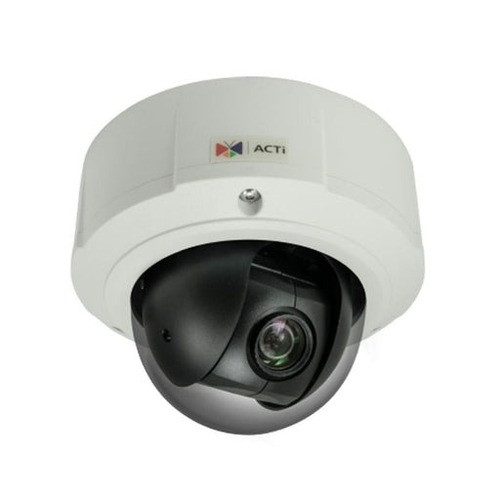
The ACTi E911 leads on wide-dynamic-range performance, specifying Extreme WDR — a manufacturer-designated high-performance WDR tier — paired with a fixed 2.1mm F1.8 lens delivering a 117.5° horizontal field of view. That wide angle and bright aperture favor high-contrast environments such as lobbies, entryways, and retail floors where simultaneous bright and shadowed zones must be resolved in a single frame. Maximum frame rate is documented at 1080p/60fps; whether the sensor sustains 3MP at 60fps is not specified in the provided data.
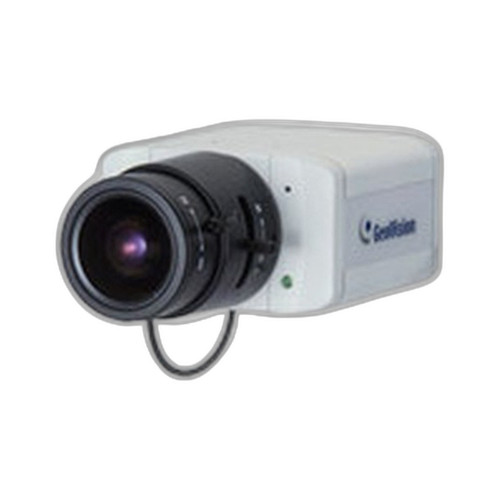
The Geovision FD320-D01U counters with a varifocal 2.7–9mm F2.7 lens — a meaningful commissioning advantage when the exact coverage zone is unknown at install time or subject to change. It adds 850nm IR illumination for low-light and no-light operation, a capability entirely absent from the E911 spec sheet. WDR capability for the FD320-D01U is not stated in the provided specifications. Minimum illumination figures are not provided for either model, limiting a direct low-light lux comparison.
What about installation and environment?
The ACTi E911 carries an IK08 impact rating, indicating resistance to 5-joule strikes — suitable for semi-exposed indoor areas subject to accidental or deliberate contact. It is explicitly rated for indoor use. Power draw is specified at under 13W on a standard 802.3af PoE port, requiring no injector or mid-span upgrade on most managed switches. No IP ingress-protection rating or operating-temperature range is stated in the provided specifications.
The Geovision FD320-D01U is documented as PoE-powered; however, the specific PoE standard (802.3af vs 802.3at), wattage draw, IK impact rating, IP ingress rating, and operating-temperature range are not present in the provided specifications. Both cameras support ceiling mount; the E911 also lists wall mount, while the FD320-D01U lists pendant mount — a distinction relevant to conduit-entry and junction-box selection at rough-in.
Which fits your VMS and analytics better?
Both cameras declare ONVIF compliance, ensuring baseline interoperability with Milestone, Genetec, Avigilon, and other standard VMS platforms. The Geovision FD320-D01U additionally lists native Geovision VMS and third-party VMS compatibility, which may be relevant if the site runs GV-VMS or GV-NVR hardware. The E911 specifies compatibility with 'Standard ONVIF IP platforms' without listing native ACTi VMS integration in the provided data.
The ACTi E911 specifies Video Analytics as a feature and includes MicroSD/MicroSDXC on-board storage — both meaningful for edge-recording redundancy and local event processing without NVR dependency. The Geovision FD320-D01U does not list edge analytics or on-board storage in the provided specifications. Neither model lists audio input/output in the provided data. H.265 compression is supported only by the E911, offering reduced storage and bandwidth consumption compared to the FD320-D01U's H.264-only support.
Which should you choose: the E911 or the FD320-D01U?
Our take: The E911 is the stronger choice when the priority is high-contrast imaging, bandwidth efficiency, and edge intelligence in a fixed-angle indoor installation. Concretely: the E911 specifies Extreme WDR where the FD320-D01U lists no WDR capability; the E911 adds H.265 compression that the FD320-D01U lacks; and the E911 includes on-board MicroSD storage and Video Analytics absent from the FD320-D01U spec sheet. The FD320-D01U holds a decisive advantage in two scenarios the E911 cannot address: any deployment requiring IR night vision (850nm illuminator vs. none on the E911), and installations where the final coverage angle is determined at commissioning rather than design time (varifocal 2.7–9mm vs. fixed 2.1mm). Choose the FD320-D01U for low-light or adjustable-FOV requirements; choose the E911 for WDR-critical, H.265-native, analytics-enabled fixed-angle indoor coverage.
Side-by-Side Comparison
Spec-for-spec, from manufacturer data.
| Specification | ACTi E911 | Geovision FD320-D01U |
|---|---|---|
| Resolution | 3 MP | 3 MP |
| Lens / Focal Length | Fixed 2.1mm F1.8 | Varifocal 2.7–9mm F2.7 |
| Horizontal FOV | 117.5° | — |
| IR / Low-Light Illumination | — | IR 850nm |
| WDR | Extreme WDR | — |
| Max Frame Rate | 1080p / 60fps | — |
| Video Compression | H.265; H.264 | H.264 |
| PoE Standard | 802.3af | PoE (standard not specified) |
| PoE Wattage | < 13W | — |
| IK / Impact Rating | IK08 | — |
| Mount Type | Ceiling; Wall | Ceiling; Pendant |
| Edge Storage | MicroSD / MicroSDXC | — |
| Video Analytics | Yes | — |
| ONVIF | Yes | Yes |
| VMS Compatibility | Standard ONVIF IP platforms | ONVIF; Geovision; Third-party VMS |
Frequently Asked Questions
Which should you choose: the E911 or the FD320-D01U?
The E911 is the stronger choice when the priority is high-contrast imaging, bandwidth efficiency, and edge intelligence in a fixed-angle indoor installation. Concretely: the E911 specifies Extreme WDR where the FD320-D01U lists no WDR capability; the E911 adds H.265 compression that the FD320-D01U lacks; and the E911 includes on-board MicroSD storage and Video Analytics absent from the FD320-D01U spec sheet. The FD320-D01U holds a decisive advantage in two scenarios the E911 cannot address: any deployment requiring IR night vision (850nm illuminator vs. none on the E911), and installations where the final coverage angle is determined at commissioning rather than design time (varifocal 2.7–9mm vs. fixed 2.1mm). Choose the FD320-D01U for low-light or adjustable-FOV requirements; choose the E911 for WDR-critical, H.265-native, analytics-enabled fixed-angle indoor coverage.
Is the E911 or FD320-D01U better for low-light or night-time coverage?
The Geovision FD320-D01U is the only model of the two with documented IR illumination (850nm), making it the appropriate choice for low-light or zero-light conditions. The ACTi E911 does not list IR or any low-light illumination capability in its specifications, so it should not be deployed in areas where lighting cannot be guaranteed.
Can I use either camera on a standard 802.3af PoE switch without an upgrade?
The ACTi E911 explicitly specifies 802.3af PoE at under 13W, confirming compatibility with any standard PoE switch port. The Geovision FD320-D01U lists PoE power but does not specify the PoE standard or wattage in the provided data — confirm with the manufacturer or datasheet before assuming 802.3af compatibility.
Which camera saves more storage and bandwidth over time?
The ACTi E911 supports both H.265 and H.264 compression. H.265 typically reduces bitrate by approximately 50% versus H.264 at equivalent quality, meaning the E911 can consume significantly less storage and network bandwidth. The Geovision FD320-D01U supports H.264 only, so its storage and bandwidth footprint will be higher at comparable quality settings.
Get a Second Opinion on Your Camera Choice
Share your site layout, coverage goals, and budget. Our team will validate the camera selection, flag anything we would change, and recommend products that match the use case.