
ACTi B928 vs Hanwha PNM-9085RQZ1: Specification Comparison
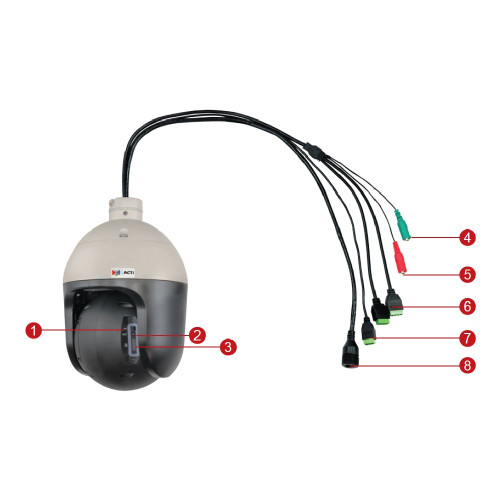
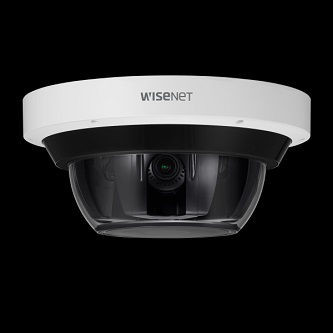
Both the ACTi B928 and Hanwha PNM-9085RQZ1 are 5MP outdoor PTZ cameras rated IP66/IK10 for harsh-environment deployment, making them legitimate cross-shop candidates for perimeter and wide-area surveillance. The B928 is a single-sensor speed dome with a 36x optical zoom, while the PNM-9085RQZ1 is a four-channel multi-sensor PTZ dome with 2.3x motorized varifocal lenses per channel. The comparison covers imaging capability, installation requirements, and integration depth for installers choosing between long-range single-point coverage and wide-area multi-sensor coverage.
In This Guide
How do the imaging specs compare?
The ACTi B928 uses a 1/2.9" sensor delivering 5MP at up to 30 fps with a 4.6–165.6mm (36x optical zoom) lens, achieving minimum illumination of 0.003 lux color and 0 lux with IR active. Its 850nm IR array reaches 200m working distance, making it purpose-built for long-range identification at a single point. WDR is rated at 120dB. PTZ range is pan 360° continuous, tilt −20° to 200°, with 256 presets and 10 tours; preset slew rate is 300°/second (pan).
The Hanwha PNM-9085RQZ1 uses four independent 1/1.8" 5MP CMOS sensors, each at 2560×1920 resolution and 30 fps, yielding 20MP aggregate coverage. Each channel has a 4.13–9.4mm (2.3x) motorized varifocal lens. Minimum illumination is 0.11 lux color and 0 lux with IR; IR range is 30m (98ft) per channel—substantially shorter than the B928's 200m. WDR is also rated 120dB. DORI figures are provided: Detect at 151.5m (tele) and Identify at 15.2m (tele). The four-sensor architecture covers wide angular areas simultaneously rather than tracking a single point at long range.
What about installation and environment?
Both cameras share IP66, IK10, and NEMA 4X ratings and an operating range of −40°C to +55°C, so environmental suitability is equivalent. The B928 weighs 3,146g (6.94 lb) and accepts PoE+ (802.3at) or AC 24V at a maximum of 75W—installers must confirm the switch or midspan supports High PoE at that wattage. The PNM-9085RQZ1 weighs 5.2 kg (11.5 lb) and requires HPoE (IEEE 802.3bt Class 6 / Type 3) or 12VDC, with a maximum draw of 45W despite the higher PoE class; it ships with a 12VDC power adapter. The B928 lists wall, pole, pendant, corner, and rack mount types; the PNM-9085RQZ1 specifies a dedicated hanging mount (SBP-317HMW) and a 3/4" conduit hole, and its housing is aluminum with RAL9003 white finish. The PNM-9085RQZ1 also notes pan/tilt remote adjustment limited to a maximum of 200 cycles, which is a mechanical wear parameter installers should log for maintenance planning.
Which fits your VMS and analytics better?
The ACTi B928 supports ONVIF Profile S, G, T, and M. Its analytics include VMD, People Counting, and Smoke Detection. Audio is two-way with line-in and line-out. No on-board edge storage slot is specified in the provided data. Position management is manual GPS setting. The B928 carries Taiwan IoT Cybersecurity Certification Level 1 and FCC/CE Class B approvals.
The Hanwha PNM-9085RQZ1 supports ONVIF Profile S and T, plus Hanwha's SUNAPI (HTTP API) and Wisenet open platform. Its analytics suite is substantially broader: defocus detection, directional detection, fog detection, face detection, motion detection (8-zone polygonal), appear/disappear, enter/exit, loitering, tampering, virtual line, and audio detection—all listed in the provided specs. Edge storage is four microSD/SDHC/SDXC slots (up to 256GB each channel). Audio input is selectable mic-in/line-in; audio out is line out at max 1Vrms. Streaming supports up to 20 unicast users and 10 profiles simultaneously. Security features include 802.1X (EAP-TLS, EAP-LEAP), HTTPS/SSL, digest authentication, and IP filtering. Hanwha specifies a 3-year warranty; ACTi warranty term is not stated in the provided specs.
Which should you choose: the B928 or the PNM-9085RQZ1?
Our take: The B928 is the stronger choice when the deployment requires long-range identification at a single point: its 36x optical zoom (4.6–165.6mm vs. 2.3x per channel) and 200m IR range dwarf the PNM-9085RQZ1's 30m per-channel IR, and it draws 75W versus 45W, so infrastructure must support High PoE. The PNM-9085RQZ1 is the stronger choice when the goal is simultaneous wide-area coverage: four independent 1/1.8" sensors aggregate to 20MP across a broad field, and its analytics library (loitering, enter/exit, face detection, fog detection, and more) substantially exceeds the B928's VMD/People Counting/Smoke Detection. On-board storage is four 256GB-capable microSD slots per the Hanwha spec versus none stated for the ACTi. Specify the B928 for PTZ-tracking or long-corridor use cases; specify the PNM-9085RQZ1 for intersection, parking, or multi-zone perimeter sites where simultaneous wide coverage and rich edge analytics reduce VMS licensing overhead.
Side-by-Side Comparison
Spec-for-spec, from manufacturer data.
| Specification | ACTi B928 | Hanwha PNM-9085RQZ1 |
|---|---|---|
| Resolution | 5MP | 5MP per channel (4CH; 20MP aggregate) |
| Image Sensor | 1/2.9" CMOS | 1/1.8" 5MP CMOS × 4CH |
| Lens / Focal Length | 4.6–165.6mm (36x optical zoom) | 4.13–9.4mm (2.3x) motorized varifocal per CH |
| Min. Illumination | 0.003 lux color; 0 lux (IR on) | 0.11 lux color; 0 lux (IR on) |
| IR Range | 200m | 30m (98ft) per channel |
| WDR | 120dB | 120dB |
| Max Frame Rate | 30 fps @ 5MP | 30 fps per channel |
| Video Compression | H.265; H.264; MJPEG | H.265; H.264; MJPEG |
| IP Rating | IP66 | IP66 |
| IK / Impact Rating | IK10 | IK10 |
| Operating Temperature | -40°C to +55°C | -40°C to +55°C |
| Power Input / PoE Class | PoE+ (802.3at) or AC 24V; 75W max | HPoE (802.3bt Class 6 / Type 3) or 12VDC; 45W max |
| Edge Storage | — (not specified) | 4× microSD/SDHC/SDXC up to 256GB each |
| Audio | Two-way; line-in; line-out | Selectable mic-in/line-in; line-out (max 1Vrms) |
| ONVIF Profiles | S, G, T, M | S, T |
| Weight | 3,146g (6.94 lb) | 5.2 kg (11.5 lb) |
| Warranty | — (not specified) | 3 years |
Frequently Asked Questions
Which should you choose: the B928 or the PNM-9085RQZ1?
The B928 is the stronger choice when the deployment requires long-range identification at a single point: its 36x optical zoom (4.6–165.6mm vs. 2.3x per channel) and 200m IR range dwarf the PNM-9085RQZ1's 30m per-channel IR, and it draws 75W versus 45W, so infrastructure must support High PoE. The PNM-9085RQZ1 is the stronger choice when the goal is simultaneous wide-area coverage: four independent 1/1.8" sensors aggregate to 20MP across a broad field, and its analytics library (loitering, enter/exit, face detection, fog detection, and more) substantially exceeds the B928's VMD/People Counting/Smoke Detection. On-board storage is four 256GB-capable microSD slots per the Hanwha spec versus none stated for the ACTi. Specify the B928 for PTZ-tracking or long-corridor use cases; specify the PNM-9085RQZ1 for intersection, parking, or multi-zone perimeter sites where simultaneous wide coverage and rich edge analytics reduce VMS licensing overhead.
Is the ACTi B928 or Hanwha PNM-9085RQZ1 better for low-light performance at long range?
The B928 reaches 0.003 lux color and 0 lux (IR on) with an IR range of 200m, compared to the PNM-9085RQZ1's 0.11 lux color and 0 lux (IR on) with a 30m IR range per channel. For identifying subjects at long distances in darkness, the B928 has a substantial advantage. The PNM-9085RQZ1's shorter IR range is adequate for close-to-mid-range coverage across a wide area but is not designed for long-range low-light identification.
Can the Hanwha PNM-9085RQZ1 record locally without a NVR?
Yes. The PNM-9085RQZ1 provides four microSD/SDHC/SDXC card slots, each supporting up to 256GB, enabling local edge recording per channel triggered by analytics, alarm input, or network disconnect events. The ACTi B928 specifications provided do not list an on-board storage slot, so local recording capability for the B928 cannot be confirmed from available data.
Which camera is easier to integrate with third-party VMS platforms?
Both support ONVIF: the B928 supports Profile S, G, T, and M; the PNM-9085RQZ1 supports Profile S and T plus Hanwha's SUNAPI and Wisenet open platform. The B928's broader ONVIF profile set (adding G and M) may offer an advantage with VMS platforms that use Profile G for edge recording management or Profile M for metadata. The PNM-9085RQZ1 offers SUNAPI for deeper Wisenet VMS integration. Confirm your specific VMS's ONVIF profile and SDK support before specifying either unit.
Get a Second Opinion on Your Camera Choice
Share your site layout, coverage goals, and budget. Our team will validate the camera selection, flag anything we would change, and recommend products that match the use case.