
Hanwha XNV-8081Z vs i-PRO S65501-Z1: Specification Comparison
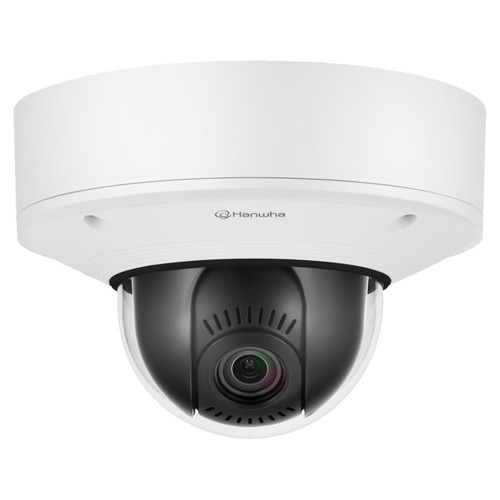
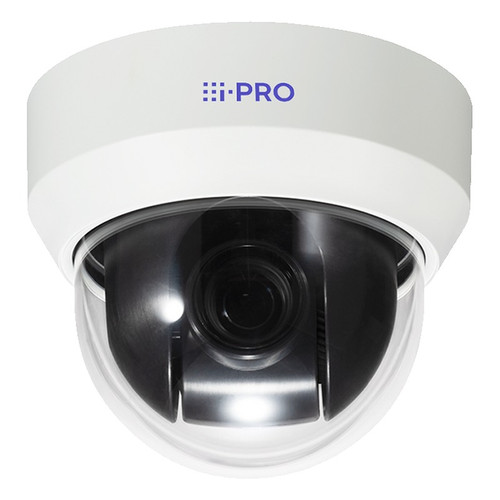
Both the Hanwha XNV-8081Z and the i-PRO WV-S65501-Z1 are 5MP outdoor vandal-resistant PTZ dome cameras targeting enterprise perimeter and surveillance applications. The comparison covers imaging performance, environmental certifications, PTZ mechanics, AI analytics depth, and integration compatibility — key decision factors for installers and IT buyers evaluating a motorized-zoom dome for outdoor deployment.
In This Guide
How do the imaging specs compare?
The XNV-8081Z uses a larger 1/1.8" 6MP CMOS sensor outputting 2560×1920 at 30fps, with a 2.6x motorized varifocal lens spanning 3.6–9.4mm and a wide-end aperture of F1.2. Minimum illumination is 0.07 lux color / 0.007 lux B&W. WDR is rated at 120dB. The i-PRO WV-S65501-Z1 uses a smaller 1/2.8" CMOS sensor outputting up to 3072×1728 at 30fps, with a 10x optical zoom lens spanning 4.7–47mm. Minimum illumination is lower at 0.004 lux B&W (16/30s exposure) with a color low-light figure not separately stated in the spec sheet. WDR (Super Dynamic) is rated at 132dB.
The XNV-8081Z's larger sensor and F1.2 aperture favor light-gathering in shorter-range scenes, while the WV-S65501-Z1's 10x optical zoom (versus 2.6x) and 132dB WDR enable identification at significantly greater standoff distances — the i-PRO spec sheet documents an Identify range of up to 94.5m and a Detect range up to 945.4m in telephoto. The XNV-8081Z does not publish equivalent DORI-style range figures. Both cameras support H.265/H.264/MJPEG compression and 30fps maximum frame rate.
What about installation and environment?
The XNV-8081Z carries IP67/IP66/IP6K9K, IK10+, and NEMA 4X ratings and operates across –50°C to +60°C. It accepts PoE (IEEE 802.3af, Class 3), 12VDC, or 24VAC, drawing a maximum of 5.4W. Physical dimensions are Ø180×125mm, weighing 1.75kg (3.86 lb). Housing is aluminum with RAL9003 white finish.
The WV-S65501-Z1 carries IP66 and IK10 (not IK10+) ratings with NEMA Type 4X and adds a wind resistance rating of up to 40m/s (≈89mph) and NEMA TS2 compliance — specs not published for the XNV-8081Z. Operating temperature is –30°C to +55°C (–20°C power-on minimum). It accepts DC12V (15.4W), PoE (12.95W), or PoE+ (18.9W). Dimensions are Ø165×139mm, weighing approximately 1.6kg (3.53 lb). The WV-S65501-Z1 is slightly smaller and lighter. The XNV-8081Z's wider temperature range (–50°C vs –30°C cold end) and IK10+ rating are advantages in extreme-cold or high-impact environments.
Which fits your VMS and analytics better?
Both cameras support ONVIF Profile S, G, T, and M. The XNV-8081Z adds Wisenet SUNAPI (HTTP API) and the Wisenet open platform for Hanwha-ecosystem integrations. The WV-S65501-Z1 adds FIPS 140-2 Level 3 security certification and a GlobalSign certificate — credentials relevant to federal, critical-infrastructure, or high-security deployments not claimed by the XNV-8081Z. The i-PRO also supports SFTP and MQTT protocols not listed in the Hanwha spec sheet.
On analytics, the XNV-8081Z provides a broader on-camera list including people counting, queue management, heatmap, directional detection, face detection, digital auto tracking, loitering, enter/exit, virtual line, sound classification, and shock detection — all listed in the product spec. The WV-S65501-Z1 specifies AI Video Motion Detection, Face/Vehicle/People Detection, and AI Sound Classification (gunshot, yell, vehicle horn, glass break) backed by an Ambarella CV22 SoC. The XNV-8081Z supports dual microSD slots up to 512GB total edge storage; the WV-S65501-Z1 lists microSDXC support but does not specify a maximum capacity or slot count in the provided spec. Both offer audio input and output with 3.5mm or selectable mic/line connections.
Which should you choose: the XNV-8081Z or the S65501-Z1?
Our take: The WV-S65501-Z1 is the stronger choice when standoff distance, cybersecurity certification, or PTZ reach are the primary requirements. Its 10x optical zoom (4.7–47mm vs 2.6x / 3.6–9.4mm) enables identification at ranges up to 94.5m and detection at 945.4m — figures the XNV-8081Z does not publish — while its 132dB Super Dynamic WDR exceeds the Hanwha's 120dB, and its 0.004 lux B&W low-light sensitivity is meaningfully lower than the XNV-8081Z's 0.007 lux B&W. The WV-S65501-Z1 also holds FIPS 140-2 Level 3 certification, a decisive differentiator for government or critical-infrastructure sites. Conversely, the XNV-8081Z is the stronger choice for extreme-cold environments (–50°C vs –30°C), higher impact protection (IK10+ vs IK10), lower PoE draw (5.4W Class 3 vs up to 18.9W PoE+), and broader on-camera analytics including heatmap and queue management. Buyers on standard PoE switches without PoE+ ports should note the i-PRO's full-speed preset recall (500°/s) requires PoE+.
Side-by-Side Comparison
Spec-for-spec, from manufacturer data.
| Specification | Hanwha XNV-8081Z | i-PRO S65501-Z1 |
|---|---|---|
| Resolution | 2560×1920 (5MP) | 3072×1728 (5MP) |
| Image Sensor | 1/1.8" 6MP CMOS | 1/2.8" CMOS |
| Lens / Focal Length | 3.6–9.4mm, 2.6x motorized varifocal | 4.7–47mm, 10x motorized optical zoom |
| Max Aperture (Wide) | F1.2 | F1.6 |
| Min Illumination (B&W) | 0.007 lux | 0.004 lux (16/30s) |
| Min Illumination (Color) | 0.07 lux | Not specified in provided spec |
| Wide Dynamic Range | 120dB | 132dB (Super Dynamic; 15fps above level 30) |
| Pan Range | ±175° | 360° endless |
| Tilt Range | 0°–85° | –15° to +195° |
| Max Frame Rate | 30fps | 30fps |
| Video Compression | H.265 / H.264 / MJPEG | H.265 / H.264 / MJPEG |
| IP Rating | IP67 / IP66 / IP6K9K / NEMA 4X | IP66 / NEMA Type 4X |
| Impact Rating | IK10+ | IK10 |
| Operating Temperature | –50°C to +60°C | –30°C to +55°C (–20°C power-on) |
| Power Input / Max Draw | PoE 802.3af Class 3 / 12VDC / 24VAC; 5.4W max | PoE 12.95W / PoE+ 18.9W / DC12V 15.4W |
| Edge Storage | Dual microSD/SDHC/SDXC slots, up to 512GB | microSDXC (max capacity not specified in provided spec) |
| AI / On-Camera Analytics | People counting, queue mgmt, heatmap, face, loitering, enter/exit, virtual line, sound classification, shock detection | AI VMD, face/vehicle/people detection, AI sound classification (gunshot, yell, horn, glass break) |
| Cybersecurity Certifications | 802.1X, HTTPS, IP filtering | FIPS 140-2 Level 3, GlobalSign cert, 802.1X, HTTPS |
| ONVIF Profiles | S / G / T | G / M / S / T |
| Dimensions | Ø180×125mm | Ø165×139mm |
| Weight | 1.75kg (3.86 lb) | Approx. 1.6kg (3.53 lb) |
| Warranty | 3-year | 3-year |
Frequently Asked Questions
Which should you choose: the XNV-8081Z or the S65501-Z1?
The WV-S65501-Z1 is the stronger choice when standoff distance, cybersecurity certification, or PTZ reach are the primary requirements. Its 10x optical zoom (4.7–47mm vs 2.6x / 3.6–9.4mm) enables identification at ranges up to 94.5m and detection at 945.4m — figures the XNV-8081Z does not publish — while its 132dB Super Dynamic WDR exceeds the Hanwha's 120dB, and its 0.004 lux B&W low-light sensitivity is meaningfully lower than the XNV-8081Z's 0.007 lux B&W. The WV-S65501-Z1 also holds FIPS 140-2 Level 3 certification, a decisive differentiator for government or critical-infrastructure sites. Conversely, the XNV-8081Z is the stronger choice for extreme-cold environments (–50°C vs –30°C), higher impact protection (IK10+ vs IK10), lower PoE draw (5.4W Class 3 vs up to 18.9W PoE+), and broader on-camera analytics including heatmap and queue management. Buyers on standard PoE switches without PoE+ ports should note the i-PRO's full-speed preset recall (500°/s) requires PoE+.
Is the XNV-8081Z or WV-S65501-Z1 better for low-light performance?
Based on published specs, the WV-S65501-Z1 has a lower minimum illumination figure: 0.004 lux B&W (at 16/30s) versus 0.007 lux B&W for the XNV-8081Z. The XNV-8081Z publishes a color low-light figure of 0.07 lux; the WV-S65501-Z1 does not separately state a color lux figure in the provided spec sheet. The i-PRO also claims a higher 132dB WDR versus Hanwha's 120dB.
Which camera is better suited for a PoE-only installation without PoE+ infrastructure?
The XNV-8081Z is the better fit. It is rated IEEE 802.3af Class 3 at a maximum of 5.4W, compatible with standard PoE switches. The WV-S65501-Z1 draws 12.95W on PoE (802.3af) but requires PoE+ (802.3at, 18.9W) for full-speed preset recall at 500°/s; on standard PoE or DC12V, preset speed is limited to 300°/s.
Does either camera meet federal cybersecurity or government procurement standards?
The WV-S65501-Z1 specifies FIPS 140-2 Level 3 certification and a GlobalSign certificate in its published specs — credentials commonly required for federal and critical-infrastructure procurement. The XNV-8081Z spec sheet does not list FIPS 140-2 certification. Both cameras support HTTPS/SSL, 802.1X authentication, and SNMPv3, but buyers with a hard FIPS requirement should select the i-PRO.
Get a Second Opinion on Your Camera Choice
Share your site layout, coverage goals, and budget. Our team will validate the camera selection, flag anything we would change, and recommend products that match the use case.