
Hanwha QND-8080R vs i-PRO S61501-Z1: Specification Comparison
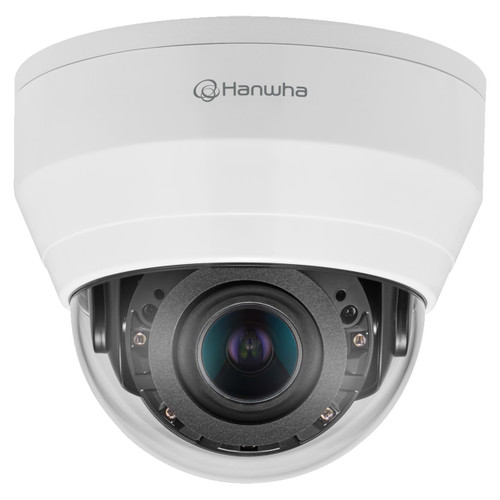
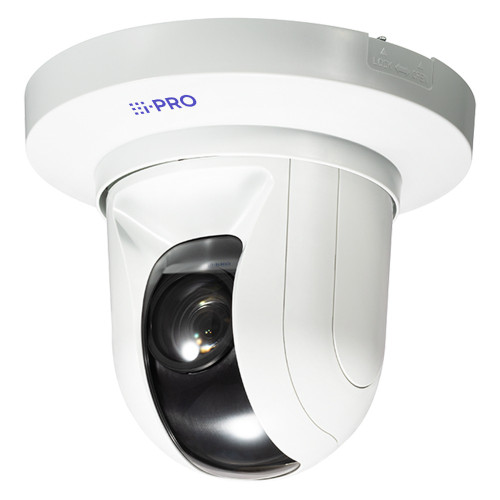
Both the Hanwha QND-8080R and the i-PRO WV-S61501-Z1 are 5MP indoor PTZ dome cameras delivering 30fps via H.265/H.264, powered over Ethernet, and ONVIF-compatible. A buyer evaluating either product is weighing a compact, motorized-zoom PTZ dome for indoor ceiling or wall deployment. Key differentiators span zoom ratio, low-light sensitivity, AI analytics depth, audio I/O, and preset/tracking capability—all of which are addressed directly by the published specifications for each model.
In This Guide
How do the imaging specs compare?
Both cameras use an approximately 1/2.8-inch CMOS sensor at 5MP resolution and 30fps. The QND-8080R's lens covers 3.2–10mm with a 3.1x motorized varifocal zoom and a maximum aperture of F1.6 (wide) to F2.9 (tele), yielding a horizontal field of view of 101° at wide end. The WV-S61501-Z1 uses a 4.7–47mm lens delivering 10x optical zoom (extendable to 15x at 720p) with an aperture of F1.6 (wide) to F3.0 (tele) and a horizontal FOV of 6.2°–58°. The i-PRO's tele reach enables identification distances of up to 94.5m versus 18.6m (tele) for the Hanwha.
Low-light performance diverges sharply. The QND-8080R specifies 0.15 Lux color and 0 Lux with IR illumination (850nm, 20m range). The WV-S61501-Z1 specifies 0.004 Lux in B&W mode with its IR active (IR range listed as 1.5m in the product metadata, which may reflect a minimum focus distance rather than full throw—buyers should confirm with i-PRO documentation). Dynamic range is 120dB WDR on the Hanwha versus a maximum 132dB Super Dynamic on the i-PRO at level 31. The i-PRO also includes a built-in gyro-based image stabilizer; no equivalent is specified for the QND-8080R.
What about installation and environment?
The QND-8080R is rated IP42 and designated for indoor use. It measures ø120.3×102.0mm and weighs 430g (0.95 lb), powered exclusively by PoE IEEE 802.3af Class 3 at a maximum of 8.9W. Pan range is 0°–350°, tilt 0°–67°, and rotate 0°–355°. Operating temperature is –10°C to +55°C. The WV-S61501-Z1 carries no IP rating in the provided specifications; it is also designated indoor. It measures ø117×155mm (H) and weighs approximately 1.2kg (2.65 lb), requiring PoE+ at 12.95W or DC 12V at 11.6W. Its pan range is 0°–350°, tilt is –30° to +90° (allowing straight-down and straight-up coverage), and preset pan speed reaches 350°/s with tilt preset at 300°/s. Operating temperature for both is –10°C to +50°C under power-on conditions for the i-PRO, versus –10°C to +55°C for the Hanwha.
The QND-8080R draws only PoE 802.3af (Class 3), making it compatible with standard PoE switches without budget concerns. The WV-S61501-Z1 requires PoE+ (802.3at) or a separate DC 12V supply at 12.95W—installers must verify switch port budgets. The i-PRO is safety-listed (UL 62368-1, c-UL, CE, IEC 62368-1) and carries FCC Part 15 Class A and CE EMC marks; equivalent safety certifications are not listed in the provided Hanwha specifications.
Which fits your VMS and analytics better?
Both cameras support ONVIF Profile S/G/T, H.265/H.264/MJPEG compression with CBR/VBR, and microSDXC edge storage. The QND-8080R adds Hanwha's WiseStream II smart codec and supports up to 3 simultaneous streaming profiles for up to 6 unicast users, plus multicast. Its analytics include motion detection, tampering, defocus detection, virtual area (intrusion/enter/exit), and virtual line (crossing/direction). It offers 1 alarm input and 1 alarm output. The WV-S61501-Z1 adds ONVIF Profile M, supports up to 14 simultaneous users, and embeds an Ambarella CV22 SoC with AI-based motion detection, face detection, vehicle detection, and AI sound classification (gunshot, yell, vehicle horn, glass break). Privacy masking supports up to 32 zones versus 6 on the Hanwha; VIQS (variable image quality on specified zones) adds 8 configurable regions. The i-PRO also supports auto-track, auto-pan, preset sequence, and patrol auto modes with 256 preset positions; no equivalent preset count or auto-track mode is specified for the QND-8080R.
Audio capability differs materially. The WV-S61501-Z1 provides a 3.5mm stereo mic input and 3.5mm stereo audio output with half/full-duplex modes, G.711, G.726, and additional audio compression options, plus AI sound classification. The QND-8080R's provided specifications do not list any audio input or output. The i-PRO also specifies 3 alarm inputs and 1 alarm output plus 1 AUX output; the Hanwha provides 1 alarm input and 1 alarm output. Both cameras support 802.1X network authentication; the i-PRO additionally specifies FIPS 140-2 Level 3 compliance and GlobalSign certificate provisioning.
Which should you choose: the QND-8080R or the S61501-Z1?
Our take: The WV-S61501-Z1 is the stronger choice when zoom reach, AI analytics depth, audio I/O, and high-user-count VMS integration are the primary requirements. The i-PRO's 10x optical zoom (versus 3.1x on the QND-8080R) extends identification range to 94.5m tele versus 18.6m, and its 0.004 Lux B&W sensitivity undercuts the Hanwha's 0.15 Lux color threshold by a significant margin. Its 256 preset positions, 350°/s preset pan speed, and embedded Ambarella CV22 AI (face, vehicle, sound classification) go substantially beyond the Hanwha's analytics set. However, the QND-8080R is lighter (430g vs 1.2kg), draws only standard PoE 802.3af Class 3 rather than PoE+, operates to +55°C versus +50°C, and integrates natively with Hanwha WiseStream II and Wisenet VMS platforms. Specify the QND-8080R where standard PoE infrastructure and Wisenet ecosystem alignment are constraints; specify the WV-S61501-Z1 where extended zoom, embedded AI, audio analytics, and FIPS-grade security are required.
Side-by-Side Comparison
Spec-for-spec, from manufacturer data.
| Specification | Hanwha QND-8080R | i-PRO S61501-Z1 |
|---|---|---|
| Resolution | 2592×1944 (5MP) | 3072×1728 (5MP, max listed) |
| Image Sensor | 1/2.8" CMOS | Approx. 1/2.8" CMOS |
| Lens / Focal Length | 3.2–10mm (3.1x motorized varifocal) | 4.7–47mm (10x optical zoom, motorized) |
| Horizontal FOV | 101° (wide) – ~25° (tele, not specified) | 58° (wide) – 6.2° (tele) |
| Min. Illumination | 0.15 Lux color / 0 Lux IR | 0.004 Lux (B&W) |
| IR Range | 20m (850nm) | 1.5m (per product data; confirm with i-PRO) |
| Wide Dynamic Range | 120dB | Max. 132dB (Super Dynamic On, Level 31) |
| Image Stabilization | — | Yes (built-in gyro) |
| Pan / Tilt Range | 0°–350° pan / 0°–67° tilt | 0°–350° pan / –30° to +90° tilt |
| Preset Positions | — | 256 |
| AI / Edge Analytics | Motion, tampering, defocus, virtual line/area | AI motion, face, vehicle detection; AI sound classification |
| Audio I/O | — | 3.5mm mic input + 3.5mm audio output (half/full duplex) |
| Alarm I/O | 1 input / 1 output | 3 inputs / 1 output + 1 AUX output |
| Power Input / PoE Class | PoE 802.3af Class 3 (max 8.9W) | PoE+ 802.3at (12.95W) or DC 12V (11.6W) |
| IP Rating | IP42 | — (not specified) |
| Operating Temperature | –10°C to +55°C | –10°C to +50°C (0°C to +50°C power-on) |
| Edge Storage | microSD/SDHC/SDXC up to 128GB (1 slot) | microSDXC (capacity not specified in provided specs) |
| ONVIF Profiles | S / G / T | G / M / S / T |
| Simultaneous Users | Up to 6 (unicast) + multicast | Up to 14 |
| Dimensions | ø120.3×102.0mm | ø117×155mm (H) |
| Weight | 430g (0.95 lb) | Approx. 1.2kg (2.65 lb) |
| Safety Certifications | — (not listed in provided specs) | UL 62368-1, c-UL, CE, IEC 62368-1, FCC Part 15 Class A |
| Security | FIPS: not specified; HTTPS, 802.1X, SRTP | FIPS 140-2 Level 3, GlobalSign cert, HTTPS, 802.1X |
| Warranty | 3 years | 3 years |
Frequently Asked Questions
Which should you choose: the QND-8080R or the S61501-Z1?
The WV-S61501-Z1 is the stronger choice when zoom reach, AI analytics depth, audio I/O, and high-user-count VMS integration are the primary requirements. The i-PRO's 10x optical zoom (versus 3.1x on the QND-8080R) extends identification range to 94.5m tele versus 18.6m, and its 0.004 Lux B&W sensitivity undercuts the Hanwha's 0.15 Lux color threshold by a significant margin. Its 256 preset positions, 350°/s preset pan speed, and embedded Ambarella CV22 AI (face, vehicle, sound classification) go substantially beyond the Hanwha's analytics set. However, the QND-8080R is lighter (430g vs 1.2kg), draws only standard PoE 802.3af Class 3 rather than PoE+, operates to +55°C versus +50°C, and integrates natively with Hanwha WiseStream II and Wisenet VMS platforms. Specify the QND-8080R where standard PoE infrastructure and Wisenet ecosystem alignment are constraints; specify the WV-S61501-Z1 where extended zoom, embedded AI, audio analytics, and FIPS-grade security are required.
Is the QND-8080R or WV-S61501-Z1 better for low-light indoor surveillance?
Based on published specs, the WV-S61501-Z1 specifies a minimum illumination of 0.004 Lux in B&W mode, compared to 0.15 Lux color for the QND-8080R. The i-PRO also delivers up to 132dB dynamic range versus 120dB on the Hanwha. If low-light sensitivity is the primary criterion, the i-PRO's numbers are meaningfully lower. Note that the QND-8080R includes an 850nm IR illuminator rated to 20m; the i-PRO's IR distance as listed in the product data is 1.5m—buyers should verify the i-PRO's IR throw with i-PRO directly before relying on IR for long-range low-light coverage.
Can I power either camera from a standard 802.3af PoE switch?
The QND-8080R is specified for PoE IEEE 802.3af Class 3 at a maximum of 8.9W and will work on any compliant 802.3af switch port. The WV-S61501-Z1 requires PoE+ (802.3at) at 12.95W or a separate DC 12V supply at 11.6W. A standard 802.3af port (15.4W budget, but typically limited to ~12.95W delivery) may or may not power the i-PRO depending on switch implementation; installers should confirm PoE+ port availability before deployment.
Which camera supports more advanced built-in analytics for a VMS-lite or edge-only deployment?
The WV-S61501-Z1 embeds an Ambarella CV22 SoC with AI-based face detection, vehicle detection, AI motion detection, and AI sound classification (gunshot, yell, vehicle horn, glass break), plus scene change detection, audio detection, 32 privacy zones, and 256 preset positions with auto-track and patrol modes. The QND-8080R provides motion detection, tampering, defocus detection, virtual area (intrusion/enter/exit), and virtual line (crossing/direction) with 6 privacy zones and 4 motion zones. For edge-only deployments requiring AI object classification or audio event detection, the i-PRO's on-board analytics set is substantially deeper per the provided specifications.
Get a Second Opinion on Your Camera Choice
Share your site layout, coverage goals, and budget. Our team will validate the camera selection, flag anything we would change, and recommend products that match the use case.