
Hanwha QND-8080R vs i-PRO S65501-Z1: Specification Comparison
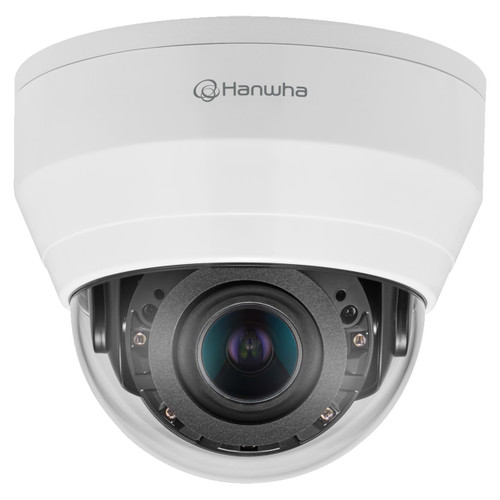
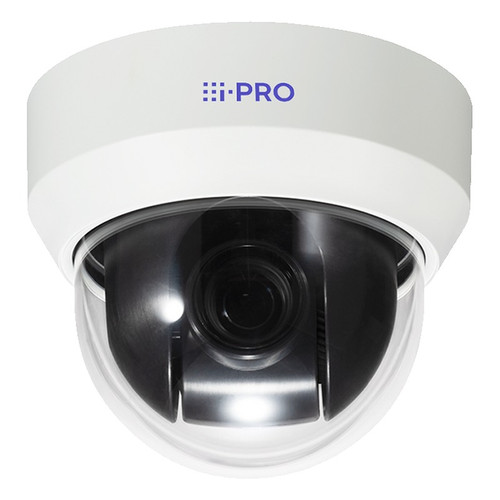
Both the Hanwha QND-8080R and the i-PRO WV-S65501-Z1 are 5MP PTZ dome IP cameras aimed at B2B installers requiring motorized zoom and day/night capability. The QND-8080R is an indoor-rated compact unit with a 3.1x varifocal lens, while the S65501-Z1 is an outdoor-hardened AI-enabled camera with 10x optical zoom and an Ambarella CV22 SoC. A buyer choosing between them is weighing indoor cost-efficiency and VMS integration breadth against outdoor durability, longer detection reach, and onboard AI classification.
In This Guide
How do the imaging specs compare?
Both cameras use an approximately 1/2.8-inch CMOS sensor at 5MP and deliver 30fps. The QND-8080R resolves 2592×1944 and offers a 3.2–10mm (3.1x) motorized varifocal lens with a maximum aperture of F1.6 (wide) to F2.9 (tele), reaching 101° horizontal field of view at wide end. Its minimum illumination is 0.15 lux color with IR assist down to 0 lux, supported by 850nm IR LEDs rated to 20m. WDR is rated at 120dB. The S65501-Z1 offers a 4.7–47mm 10x motorized optical zoom (extendable to 15x at 720p), F1.6 (wide) to F3.0 (tele), spanning 6.2°–58° horizontal. Its minimum illumination is 0.004 lux (B&W at 16/30s), significantly more sensitive in near-dark conditions, and its Super Dynamic WDR is rated at 132dB.
For detection reach, the QND-8080R's tele-end DORI metrics show detection at 185.7m and identification at 18.6m, consistent with its short zoom. The S65501-Z1 extends detection to 945.4m and identification to 94.5m at tele, reflecting its 10x optical zoom. The S65501-Z1 also incorporates an Ambarella CV22 SoC enabling onboard AI analytics including face, vehicle, and people detection, plus AI sound classification (gunshot, yell, vehicle horn, glass break). The QND-8080R's analytics are edge-rule-based (intrusion, crossing, direction) without a declared dedicated AI SoC.
What about installation and environment?
The QND-8080R is rated IP42 and is specified for indoor use only, with an operating temperature of -10°C to +55°C. It weighs 430g (0.95 lb) with a ø120.3×102.0mm footprint and is powered by PoE IEEE 802.3af (Class 3), drawing a maximum of 8.9W. The optional hanging mount referenced in the spec is SBP-122HMW. There is no IK vandal rating or outdoor certification stated in the provided specifications.
The S65501-Z1 is rated IP66 and Type 4X, with IK10 impact resistance and tested wind resistance up to 40 m/s (~89 mph). It operates from -30°C to +55°C (power-on from -20°C) and carries UL, c-UL, CE, and IEC62368-1 safety certifications plus FCC/ICES/EN EMC marks. An anti-condensation Temish element is built in. The camera is larger at ø165×139mm and heavier at approximately 1.6 kg (3.53 lbs). It supports DC 12V (15.4W), PoE (12.95W), and PoE+ (18.9W), with PoE+ enabling 500°/s preset recall speed versus 300°/s on DC 12V; PoE Class is listed as 0 in the provided spec data.
Which fits your VMS and analytics better?
Both cameras conform to ONVIF Profile S, G, and T. The QND-8080R adds Profile compatibility via SUNAPI (HTTP API) and Wisenet open platform, and supports up to 6 unicast users with 3 simultaneous stream profiles. Security hardening includes 802.1X (EAP-TLS/LEAP/PEAP), HTTPS/SRTP/WSS, firmware encryption, SD card partition encryption, and a Hanwha Private Root CA device certificate. Edge storage supports microSD/SDHC/SDXC up to 128GB in one slot. Audio is not listed as a hardware feature in the provided QND-8080R specifications.
The S65501-Z1 supports up to 14 simultaneous users, adds ONVIF Profile M, and includes FIPS 140-2 Level 3 and GlobalSign certificate security. It provides bidirectional audio (3.5mm stereo mic input and line output, G.711/G.726/ADPCM), built-in gyro-based image stabilization, 3 alarm I/O terminals, 256 preset positions, and auto-track/patrol/auto-pan modes. Protocol support extends to SFTP and MQTT in addition to standard IP protocols. Variable GOP smart coding and frame-rate control complement H.265/H.264/MJPEG compression. Edge storage is microSDXC; maximum card capacity is not stated in the provided specification.
Which should you choose: the QND-8080R or the S65501-Z1?
Our take: The WV-S65501-Z1 is the stronger choice when the installation requires outdoor deployment, extended detection range, or onboard AI classification. Its 10x optical zoom delivers detection to 945.4m versus 185.7m for the QND-8080R at tele, its 0.004-lux sensitivity is more than 37× lower than the QND-8080R's 0.15-lux color floor, and its IP66/IK10/NEMA 4X rating versus the QND-8080R's indoor-only IP42 makes it the only option for exposed exterior mounting. The S65501-Z1 also adds bidirectional audio hardware, 256 presets, and FIPS 140-2 Level 3 security. Conversely, the QND-8080R is appropriate for indoor corridors or covered areas where PoE 802.3af infrastructure (Class 3, 8.9W max) is already in place, compact dimensions matter, and budget is constrained—its Wisenet/SUNAPI ecosystem integration and WiseStream II codec efficiency are real operational advantages within a Wisenet VMS environment.
Side-by-Side Comparison
Spec-for-spec, from manufacturer data.
| Specification | Hanwha QND-8080R | i-PRO S65501-Z1 |
|---|---|---|
| Resolution | 2592×1944 (5MP) | 3072×1728 max (5MP) |
| Image Sensor | 1/2.8" CMOS | Approx. 1/2.8" type CMOS |
| Focal Length / Zoom | 3.2–10mm (3.1x motorized varifocal) | 4.7–47mm (10x motorized optical; up to 15x extra zoom at 720p) |
| Min. Illumination | 0.15 lux color / 0 lux IR | 0.004 lux B&W (16/30s) |
| WDR / Dynamic Range | 120dB | 132dB (limited to 15fps above level 30) |
| IR Range | 20m (850nm LEDs) | Not stated in provided specs |
| Max Frame Rate | 30fps @ 5MP | 30fps |
| Pan / Tilt Range | 0°–350° pan / 0°–67° tilt | 360° endless pan / -15° to +195° tilt |
| Video Compression | H.265, H.264 (Main/High), MJPEG | H.265, H.264, MJPEG |
| IP Rating | IP42 | IP66, Type 4X |
| IK / Impact Rating | — | IK10 (IEC 62262) |
| Operating Temperature | -10°C to +55°C | -30°C to +55°C (power-on from -20°C) |
| Power Input / PoE Class | PoE 802.3af, Class 3 (max 8.9W) | DC 12V 15.4W / PoE 12.95W / PoE+ 18.9W; Class 0 listed |
| Audio | Not listed in provided specs | Bidirectional; 3.5mm mic in + line out; G.711/G.726 |
| Edge Storage | microSD/SDHC/SDXC, 1 slot, up to 128GB | microSDXC (max capacity not stated in provided specs) |
| ONVIF Profiles | S, G, T | G, M, S, T |
| AI / Analytics | Rule-based: intrusion, crossing, defocus, tampering | AI VMD; Face, Vehicle, People detection; AI Sound Classification |
| Environment | Indoor only | Outdoor; IP66, IK10, wind-rated to 40 m/s |
| Weight | 430g (0.95 lb) | Approx. 1.6 kg (3.53 lbs) |
| Warranty | 3 years | 3 years |
Frequently Asked Questions
Which should you choose: the QND-8080R or the S65501-Z1?
The WV-S65501-Z1 is the stronger choice when the installation requires outdoor deployment, extended detection range, or onboard AI classification. Its 10x optical zoom delivers detection to 945.4m versus 185.7m for the QND-8080R at tele, its 0.004-lux sensitivity is more than 37× lower than the QND-8080R's 0.15-lux color floor, and its IP66/IK10/NEMA 4X rating versus the QND-8080R's indoor-only IP42 makes it the only option for exposed exterior mounting. The S65501-Z1 also adds bidirectional audio hardware, 256 presets, and FIPS 140-2 Level 3 security. Conversely, the QND-8080R is appropriate for indoor corridors or covered areas where PoE 802.3af infrastructure (Class 3, 8.9W max) is already in place, compact dimensions matter, and budget is constrained—its Wisenet/SUNAPI ecosystem integration and WiseStream II codec efficiency are real operational advantages within a Wisenet VMS environment.
Is the QND-8080R or WV-S65501-Z1 better for low-light performance?
The WV-S65501-Z1 is substantially more sensitive, with a minimum illumination of 0.004 lux (B&W at 16/30s) compared to 0.15 lux color for the QND-8080R. The QND-8080R supplements low-light performance with 850nm IR LEDs rated to 20m; the S65501-Z1 spec lists IR capability but does not state an IR illumination distance beyond a 1.5m focus range minimum in the provided data.
Can I use either camera outdoors?
Only the WV-S65501-Z1 is rated for outdoor use in the provided specifications. It carries IP66, Type 4X, and IK10 ratings with an operating range of -30°C to +55°C and tested wind resistance to 40 m/s. The QND-8080R is rated IP42 and is specified for indoor environments only; it carries no IK vandal rating in the provided specifications.
Which camera offers better AI analytics?
The WV-S65501-Z1 includes an Ambarella CV22 SoC and specifies AI Video Motion Detection, Face/Vehicle/People Detection, and AI Sound Classification (gunshot, yell, vehicle horn, glass break). The QND-8080R includes edge-based rules analytics—intrusion, enter/exit, line crossing, direction, defocus, and tampering—but does not reference a dedicated AI SoC or deep-learning object classification in the provided specifications.
Get a Second Opinion on Your Camera Choice
Share your site layout, coverage goals, and budget. Our team will validate the camera selection, flag anything we would change, and recommend products that match the use case.