
ACTi A88 vs ACTi E911: Specification Comparison
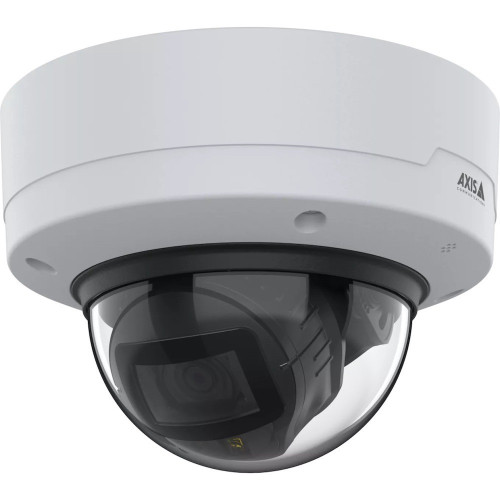
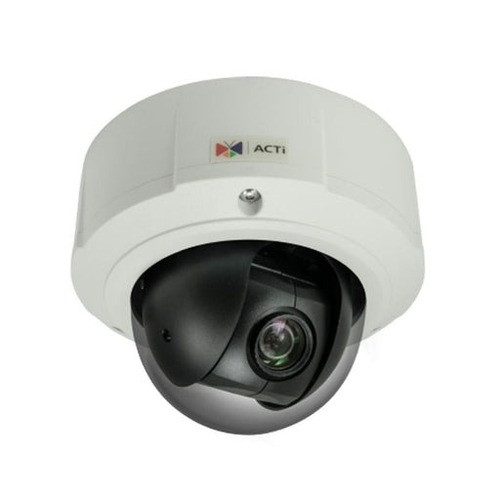
Both the ACTi A88 and ACTi E911 are 3-megapixel dome cameras from the same manufacturer, making them a natural cross-shop pair for installers evaluating whether an outdoor-rated zoom dome or an indoor-optimized wide-angle dome better fits a given coverage requirement. The A88 targets exterior or harsh-environment deployments with its weatherproof housing and motorized zoom lens, while the E911 is purpose-built for indoor ceiling and wall installation with a wide fixed lens and high-frame-rate output. This comparison draws only on published specifications for each model.
In This Guide
How do the imaging specs compare?
The A88 resolves at 2065x1553 (approximately 3.2 MP effective) on a 1/2.8-inch sensor, with a 2.8–8.0 mm motorized zoom lens (2.85x optical) and a minimum aperture of F1.6. Its IR LED array covers 30 meters, enabling 0.003 lux color performance and true 0-lux black-and-white capture when IR is active. Dynamic range is rated at 120 dB via Advanced WDR. Maximum frame rate is 30 fps across 2048x1536, 1920x1080, and 1280x720 resolutions.
The E911 is rated at 3 MP with a fixed 2.1 mm F1.8 lens delivering a 117.5-degree horizontal field of view, and it achieves 1080p at 60 fps — double the A88's maximum frame rate at that resolution. Its WDR is described as Extreme WDR, though a decibel figure is not published. Minimum illumination and IR capability are not specified for the E911, so low-light performance in darkness cannot be directly compared. Sensor size is also not specified for the E911.
What about installation and environment?
The A88 carries an IP66 weatherproof rating and IK10 vandal resistance, and is rated for operation from -20°C to 50°C (-4°F to 122°F), making it suitable for outdoor mounting in cold climates. It supports wall, pole, pendant, and corner mounting. Power is supplied via PoE IEEE 802.3af Class 3 or DC 12V. The unit weighs 363 g (0.8 lb) and holds CE, FCC Class A, and EAC certifications.
The E911 carries an IK08 impact rating and its IP rating is not specified in the available data, which effectively limits it to indoor use where exposure to water and dust is not a concern. Operating temperature range is also not published. Power draw is PoE 802.3af at under 13 W. Mounting options are ceiling and wall. Weight and physical dimensions are not provided for the E911.
Which fits your VMS and analytics better?
The A88 supports ONVIF Profiles S, G, T, and Q, giving it broad compatibility with enterprise VMS platforms and providing the Profile G edge-recording profile for NVR-less deployments. Its declared analytics include VMD and People Counting. Edge storage capability is not stated in the available specifications for the A88.
The E911 declares compatibility with standard ONVIF IP platforms but does not enumerate specific ONVIF profiles, which may limit profile-specific features such as metadata streaming (Profile T) or edge recording (Profile G) depending on VMS implementation. Its analytics are listed generically as Video Analytics without further detail. The E911 does include a MicroSD/MicroSDXC card slot for on-board edge storage, an explicit advantage over the A88 where edge storage spec is absent. Audio capability is not specified for either model.
Which should you choose: the A88 or the E911?
Our take: The A88 is the stronger choice when the deployment site is outdoors, subject to weather or vandalism, or requires variable focal coverage. Its IP66 and IK10 ratings provide full ingress and impact protection absent from the E911's published specs, its -20°C lower operating limit handles cold-climate installs, and its 30-meter IR illumination with 0-lux B/W capture enables genuine dark-environment coverage the E911 does not document. The 120 dB Advanced WDR figure also gives buyers a concrete dynamic-range reference. However, the E911 has a clear edge in two areas: its 60 fps at 1080p is twice the A88's 30 fps, which matters for fast-motion forensic capture, and its 117.5-degree fixed wide-angle lens covers broad indoor spaces without repositioning. Choose the E911 for controlled indoor environments where wide coverage, high frame rate, and on-board MicroSD storage are the priorities.
Side-by-Side Comparison
Spec-for-spec, from manufacturer data.
| Specification | ACTi A88 | ACTi E911 |
|---|---|---|
| Resolution | 3 MP (2065x1553) | 3 MP |
| Sensor Size | 1/2.8" | — |
| Lens | 2.8–8.0 mm, 2.85x optical zoom, F1.6 | 2.1 mm fixed, F1.8 |
| Horizontal FOV | — | 117.5° |
| Max Frame Rate | 30 fps @ 2048x1536 | 60 fps @ 1080p |
| WDR | Advanced WDR (120 dB) | Extreme WDR (dB not specified) |
| IR / Low-Light | 30 m IR; 0.003 lux color; 0 lux B/W | — |
| IP Rating | IP66 | — |
| IK Rating | IK10 | IK08 |
| Operating Temp | -20°C to 50°C (-4°F to 122°F) | — |
| PoE Class | 802.3af Class 3 | 802.3af, <13 W |
| Mounting | Wall; Pole; Pendant; Corner | Ceiling; Wall |
| ONVIF Profiles | S, G, T, Q | Standard ONVIF (profiles not enumerated) |
| Edge Storage | — | MicroSD / MicroSDXC |
| Analytics | VMD; People Counting | Video Analytics (details not specified) |
| Application | Indoor / Outdoor | Indoor |
Frequently Asked Questions
Which should you choose: the A88 or the E911?
The A88 is the stronger choice when the deployment site is outdoors, subject to weather or vandalism, or requires variable focal coverage. Its IP66 and IK10 ratings provide full ingress and impact protection absent from the E911's published specs, its -20°C lower operating limit handles cold-climate installs, and its 30-meter IR illumination with 0-lux B/W capture enables genuine dark-environment coverage the E911 does not document. The 120 dB Advanced WDR figure also gives buyers a concrete dynamic-range reference. However, the E911 has a clear edge in two areas: its 60 fps at 1080p is twice the A88's 30 fps, which matters for fast-motion forensic capture, and its 117.5-degree fixed wide-angle lens covers broad indoor spaces without repositioning. Choose the E911 for controlled indoor environments where wide coverage, high frame rate, and on-board MicroSD storage are the priorities.
Can the ACTi A88 be used indoors as well as outdoors?
Yes. The A88's IP66 and IK10 ratings make it suitable outdoors, but its operating-temperature range (-20°C to 50°C) and mounting options (wall, pole, pendant, corner) are equally usable indoors. There is no indoor-only restriction in the published specifications.
Does the ACTi E911 have night-vision or IR capability?
IR capability and minimum illumination figures are not published in the available E911 specifications. Buyers who need verified low-light or zero-lux performance should confirm this directly with ACTi or request the full datasheet before specifying the E911 for any application with limited ambient light.
Which camera works with more VMS platforms — the A88 or the E911?
The A88 explicitly lists ONVIF Profiles S, G, T, and Q, giving integrators concrete profile compatibility to match against their VMS requirements. The E911 lists generic ONVIF compatibility without naming specific profiles. If your VMS relies on Profile T for metadata or Profile G for edge recording, confirm E911 profile support with ACTi before deployment.
Get a Second Opinion on Your Camera Choice
Share your site layout, coverage goals, and budget. Our team will validate the camera selection, flag anything we would change, and recommend products that match the use case.