
ACTi A87 vs ACTi Z75: Specification Comparison
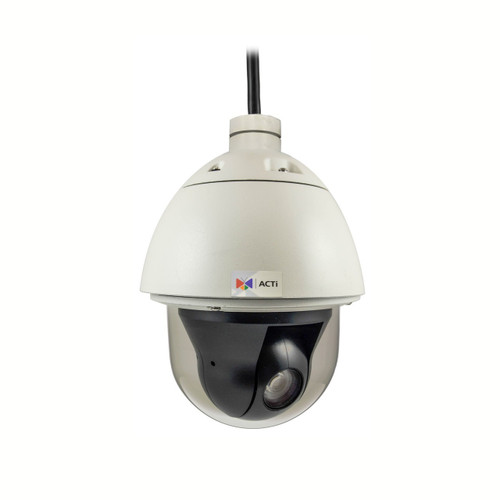
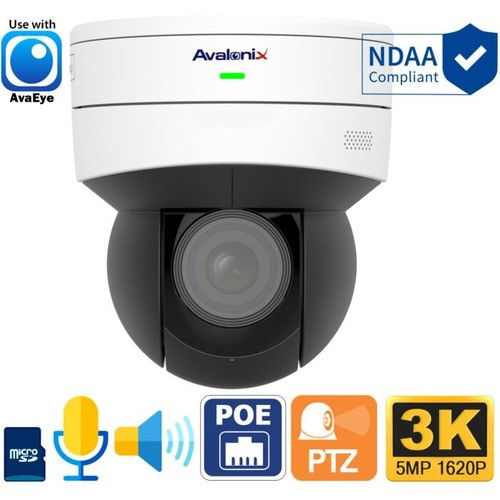
Both the ACTi A87 and ACTi Z75 are 5MP outdoor dome cameras designed for perimeter and general surveillance deployments. The A87 is a motorized varifocal zoom dome with a 2.8–12mm lens, while the Z75 is a fixed-lens dome with a 2.8mm/112.9° wide-angle optic. Despite sharing the same resolution class and dome form factor, they target meaningfully different use cases — zoom flexibility and harsh-environment hardening versus wide-area coverage and simplified installation — making a direct specification comparison relevant for integrators selecting between the two.
In This Guide
How do the imaging specs compare?
Both cameras deliver 5MP resolution, but their optical approaches diverge significantly. The A87 uses a 2.8–12mm varifocal (motorized zoom) lens with a 1/2.9-inch sensor, enabling the operator to dial in coverage from wide-angle to telephoto without relocating the camera. Maximum frame rate is specified at 30 fps at 2592×1944 (5MP), 1920×1080, and 1280×720. The Z75 uses a fixed 2.8mm lens at F1.6 with a 112.9° horizontal field of view; its sensor size and maximum frame rate are not specified in the provided data.
For low-light and WDR performance, the A87 specifies Advanced WDR at 120 dB, a minimum illumination of 0.15 lux in color mode and 0 lux in B/W with IR active, and an IR range of 30m using adaptive LED illuminators operating at 700–1150nm. The Z75 lists WDR (no dB rating provided) and adaptive IR with Day/Night switching, but minimum illumination figures and IR range are not specified. Buyers requiring quantified low-light or WDR performance can rely only on the A87's published numbers.
What about installation and environment?
The A87 carries IP66, IK10, NEMA 4X, and UL Listed (UL 62368-1) certifications, with an operating temperature range of −40°C to +50°C (−40°F to 122°F). IK10 indicates resistance to 20-joule impacts, making it suitable for vandal-prone or publicly accessible locations. The NEMA 4X rating adds corrosion-resistance relevant to coastal or industrial environments. Power input is PoE+ (802.3af/at Class 3) or DC 12V, with a specified maximum draw of 30W; the spec sheet lists the PoE class as both Class 3 (802.3af-level) and PoE+ (802.3at) — installers should verify switch port capability. Weight is 858g. Mounting options include wall, pole, pendant, corner, and rack via optional accessories.
The Z75 is rated IP67, which provides full dust ingress protection and resistance to temporary immersion — one step above the A87's IP66 dust/water-jet rating on the water side. However, no IK impact rating, NEMA rating, operating temperature range, or certifications are provided in the available specifications for the Z75. Power is standard PoE (802.3af), requiring no PoE+ switch port. The Z75 also lists onboard MicroSD storage, which the A87 specifications do not mention. Form factor for both is dome; mounting details for the Z75 are not specified.
Which fits your VMS and analytics better?
The A87 explicitly lists ONVIF compliance across Profiles S, G, T, and Q, and additionally supports Pelco-D and Pelco-P serial protocols — useful when integrating with legacy DVR/hybrid systems. Edge analytics on the A87 include Video Motion Detection (VMD) and People Counting. Two-way audio is supported with mic-in, line-in, and line-out connections over a 2m cable. ONVIF compliance for the Z75 is not stated in the provided specifications, nor are any edge analytics listed. The Z75 includes a built-in microphone for audio capture, but two-way audio capability and line I/O are not specified.
On-board storage is listed for the Z75 (MicroSD slot) but is absent from the A87's published specifications. For deployments requiring edge recording as a redundancy layer, this is a functional gap on the A87 side that installers should verify directly with ACTi. Video compression on the A87 covers H.265, H.264 (Baseline/Main/High profiles), and MJPEG; the Z75 lists H.265 and H.264 without profile detail, and MJPEG support is not confirmed.
Which should you choose: the A87 or the Z75?
Our take: The A87 is the stronger choice when optical flexibility, verified environmental hardening, and deep VMS integration are the primary requirements. Concretely: the A87's 2.8–12mm varifocal lens covers zoom scenarios the Z75's fixed 2.8mm optic cannot address; the A87 specifies a 120 dB Advanced WDR rating and 30m IR range with 0 lux B/W sensitivity, versus no quantified WDR dB or IR range on the Z75; and the A87 confirms ONVIF Profiles S/G/T/Q plus Pelco-D/P and People Counting analytics, while the Z75 provides no ONVIF or analytics data. The Z75's IP67 rating edges the A87's IP66 on water resistance, and its onboard MicroSD slot adds local redundancy not confirmed on the A87. Choose the Z75 for budget-sensitive, wide-angle fixed installations on standard 802.3af switches where MicroSD edge storage matters and VMS compatibility can be independently verified.
Side-by-Side Comparison
Spec-for-spec, from manufacturer data.
| Specification | ACTi A87 | ACTi Z75 |
|---|---|---|
| Resolution | 5MP | 5MP |
| Image Sensor Size | 1/2.9 inch | — |
| Lens / Focal Length | 2.8–12mm varifocal (motorized zoom) | 2.8mm fixed, F1.6 |
| Horizontal Field of View | — | 112.9° |
| Min Illumination | 0.15 lux (color); 0 lux (B/W with IR) | — |
| IR Range | 30m | — |
| WDR | Advanced WDR, 120 dB | WDR (no dB specified) |
| Max Frame Rate | 30 fps @ 5MP / 1080p / 720p | — |
| Video Compression | H.265; H.264 (B/M/H); MJPEG | H.265; H.264 |
| IP Rating | IP66 | IP67 |
| IK / Impact Rating | IK10 | — |
| NEMA Rating | NEMA 4X | — |
| Operating Temperature | −40°C to +50°C | — |
| Power Input / PoE Class | PoE+ (802.3at) / DC 12V; up to 30W | PoE (802.3af) |
| ONVIF Profiles | S, G, T, Q; Pelco-D; Pelco-P | — |
| Edge Analytics | VMD; People Counting | — |
| Audio | Two-way; mic-in; line-in; line-out | Built-in mic (one-way) |
| Edge Storage | — | MicroSD |
| Weight | 858g (1.892 lb) | — |
| Certifications | CE-A; FCC-A; EAC; CB; UL 62368-1; IK10; NEMA 4X | — |
Frequently Asked Questions
Which should you choose: the A87 or the Z75?
The A87 is the stronger choice when optical flexibility, verified environmental hardening, and deep VMS integration are the primary requirements. Concretely: the A87's 2.8–12mm varifocal lens covers zoom scenarios the Z75's fixed 2.8mm optic cannot address; the A87 specifies a 120 dB Advanced WDR rating and 30m IR range with 0 lux B/W sensitivity, versus no quantified WDR dB or IR range on the Z75; and the A87 confirms ONVIF Profiles S/G/T/Q plus Pelco-D/P and People Counting analytics, while the Z75 provides no ONVIF or analytics data. The Z75's IP67 rating edges the A87's IP66 on water resistance, and its onboard MicroSD slot adds local redundancy not confirmed on the A87. Choose the Z75 for budget-sensitive, wide-angle fixed installations on standard 802.3af switches where MicroSD edge storage matters and VMS compatibility can be independently verified.
Is the A87 or Z75 better for low-light performance?
Based on available specifications, the A87 has quantified low-light figures: 0.15 lux in color and 0 lux in B/W with IR active, with a 30m IR range. The Z75 lists adaptive IR and Day/Night switching but provides no minimum illumination values or IR range in its specifications. Buyers requiring a specified low-light threshold should select the A87; the Z75's low-light performance cannot be compared on published numbers alone.
Can both cameras work with my existing 802.3af PoE switch?
The Z75 is rated for standard 802.3af PoE and will work with any compliant 802.3af switch port. The A87 is listed as PoE+ (802.3at) Class 3 in some spec fields and also references IEEE 802.3af and DC 12V in others. Installers should confirm with ACTi whether the A87 operates within 802.3af budgets or requires a PoE+ (802.3at) port to avoid underpowering the motorized zoom mechanism.
Which camera supports onboard storage for edge recording?
The Z75 specifies a MicroSD slot for onboard storage. The A87's provided specifications do not mention any onboard storage capability. If edge recording redundancy is a requirement, the Z75 has a confirmed advantage on this point; integrators should verify the A87's storage options directly with ACTi before ruling it out.
Get a Second Opinion on Your Camera Choice
Share your site layout, coverage goals, and budget. Our team will validate the camera selection, flag anything we would change, and recommend products that match the use case.