
ACTi A818 vs Hanwha XND-8082RV: Specification Comparison
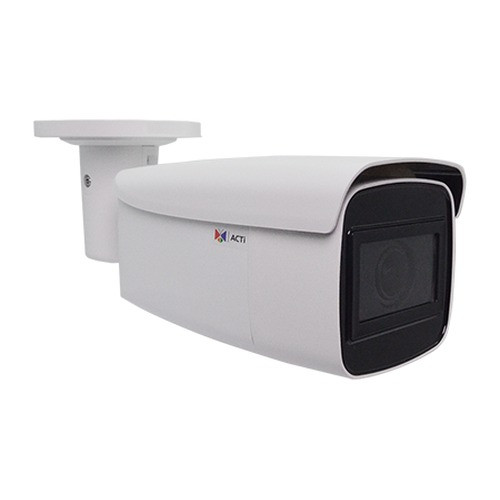
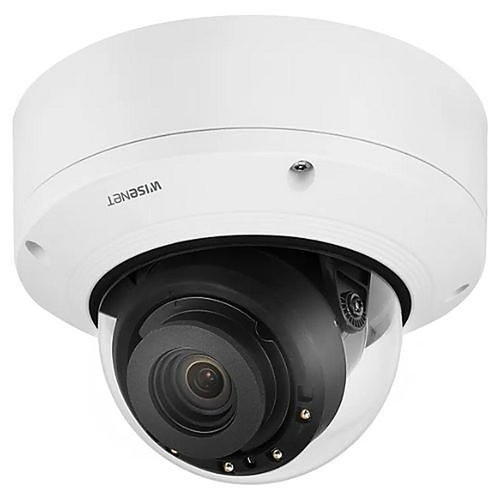
Both the ACTi A818 and Hanwha XND-8082RV are 6MP varifocal dome cameras targeting the mid-tier IP surveillance market. The A818 is rated for outdoor deployment with a 5x optical zoom range and a rugged IP68/IK10 enclosure, while the XND-8082RV is an indoor vandal dome with a 3x motorized varifocal lens and dual microSD onboard storage. Buyers cross-shopping these two models typically weigh outdoor durability and zoom reach against indoor feature density, storage flexibility, and Hanwha ecosystem integration.
In This Guide
How do the imaging specs compare?
Both cameras share a 6MP resolution, but differ meaningfully in sensor size, zoom range, and IR performance. The A818 uses a 1/2.7-inch sensor with a 2.7–13.5mm lens delivering 5x optical zoom, IR illumination rated to 85m at 1.0 lux, and a minimum color illumination of 0.01 lux. The XND-8082RV uses a 1/2.8-inch sensor with a 2.8–8.4mm lens providing 3x zoom, IR illumination specified at 40m range, and a minimum color illumination of 0.05 lux at F1.2. On IR throw and zoom reach, the A818 holds a quantifiable advantage.
WDR performance is specified at 150dB for the A818 versus 120dB for the XND-8082RV—a 30dB difference that matters in high-contrast scenes such as lobbies or entryways with direct sunlight. Both cameras achieve 30fps at their full 6MP resolution using H.265 or H.264 compression. The A818's maximum frame rate spec lists 30fps at 1920x1080, 25fps at 2688x1520, and 20fps at 2592x1944; the XND-8082RV is specified at 30fps at full 6MP (H.265/H.264). Frame-rate-at-full-resolution data for the A818 at its native 6MP output is not explicitly stated in the provided specs.
What about installation and environment?
The A818 carries IP68 and NEMA 4X ratings, meaning it is rated for continuous submersion and hose-down cleaning—appropriate for outdoor, wet, or washdown environments. The XND-8082RV is rated IP52, protecting against limited dust ingress and water drip at an angle, which limits it to indoor or sheltered installations. Both units carry IK10 impact resistance. Operating temperature ranges are similar: the A818 is specified for -30°C to 60°C, and the XND-8082RV for -25°C to 60°C, giving the A818 a 5°C advantage at the cold end.
Power input for the A818 is listed as PoE Class 3 (IEEE 802.3af) and DC 12V, with a maximum draw of 13W; the spec sheet also references PoE+ (802.3at) in one field, but the dominant power spec is 802.3af/Class 3 at 13W. The XND-8082RV is specified for PoE (IEEE 802.3af) and 12VDC, drawing approximately 12.95W. Both are Class 3 PoE-compatible and do not require a PoE+ injector. The A818 supports wall, pole, corner, and rack mounting; the XND-8082RV is specified for ceiling mount. Physical mounting accessories for the XND-8082RV beyond ceiling are not listed in the provided specs.
Which fits your VMS and analytics better?
The A818 supports ONVIF Profile S, G, T, and M, offering the broadest profile coverage in this comparison. The XND-8082RV supports ONVIF Profile S, G, and T, plus Hanwha's proprietary SUNAPI (HTTP API), which is an advantage for Hanwha Wisenet VMS deployments. The XND-8082RV also specifies 4GB RAM and 512MB Flash onboard, along with dual microSD slots supporting up to 512GB each—a significant edge storage advantage. The A818's onboard storage capability is not specified in the provided specs.
On analytics, the A818 lists VMD, People Counting, Smoke Detection, Face Detection, and Tampering Detection. The XND-8082RV lists Defocus Detection, Directional Detection, Motion Detection, Digital Auto Tracking, Audio Detection, Shock Detection, and Face/Upper Body Detection. The XND-8082RV's shock detection is relevant for vandal-prone indoor sites. Both cameras include audio input; the A818 additionally specifies 2-way audio with mic-in, line-in, and line-out, while the XND-8082RV specifies selectable mic-in/line-in/built-in mic. The A818 provides more complete audio I/O based on provided specs. USB connectivity is listed for the XND-8082RV; the A818 does not list a USB interface in the provided specs.
Which should you choose: the A818 or the XND-8082RV?
Our take: The A818 is the stronger choice for outdoor or environmentally demanding deployments where zoom reach, WDR, and enclosure durability are primary requirements. Its IP68/NEMA 4X rating versus the XND-8082RV's IP52 rating is a decisive differentiator for any non-sheltered installation. The A818 also outperforms on IR throw (85m vs. 40m), optical zoom range (5x/2.7–13.5mm vs. 3x/2.8–8.4mm), WDR headroom (150dB vs. 120dB), and cold-temperature operation (-30°C vs. -25°C). Conversely, the XND-8082RV is the stronger choice for indoor high-security or Hanwha Wisenet environments: its dual microSD slots (up to 512GB each) provide redundant edge recording not specified for the A818, and SUNAPI integration is a practical advantage in Wisenet VMS deployments. Buyers on a Hanwha VMS platform installing in conditioned indoor spaces should favor the XND-8082RV; those requiring outdoor-rated, long-range zoom coverage should select the A818.
Side-by-Side Comparison
Spec-for-spec, from manufacturer data.
| Specification | ACTi A818 | Hanwha XND-8082RV |
|---|---|---|
| Resolution | 6MP | 6MP (3328 x 1872) |
| Image Sensor | 1/2.7" CMOS | 1/2.8" CMOS |
| Lens / Focal Length | 2.7–13.5mm (5x optical zoom) | 2.8–8.4mm (3x motorized varifocal) |
| Min. Illumination (Color) | 0.01 lux | 0.05 lux @ F1.2 |
| Min. Illumination (B/W) | 0 lux (IR on) | 0 lux (IR on) |
| IR Range | 85m @ 1.0 lux | 40m |
| WDR | 150dB Extreme WDR | 120dB Extreme WDR |
| Max Frame Rate | 25 fps @ 2688x1520; 30 fps @ 1080p | 30 fps @ 6MP (H.265/H.264) |
| Video Compression | H.265; H.264; MJPEG | H.265; H.264; MJPEG |
| IP Rating | IP68 / NEMA 4X | IP52 |
| IK / Impact Rating | IK10 | IK10 |
| Operating Temperature | -30°C to 60°C | -25°C to +60°C |
| Power Input / PoE Class | PoE Class 3 (802.3af); DC 12V; 13W max | PoE Class 3 (802.3af); DC 12V; ~12.95W |
| Edge Storage | Not specified | Dual microSD up to 512GB each |
| Audio | 2-way; mic-in; line-in; line-out | Mic-in / line-in / built-in mic (selectable) |
| ONVIF Profiles | S, G, T, M | S, G, T |
| Analytics | VMD; People Counting; Smoke Detection; Face Detection; Tampering Detection | Motion Detection; Directional Detection; Face/Upper Body Detection; Digital Auto Tracking; Audio Detection; Shock Detection; Defocus Detection |
| Environment | Outdoor | Indoor |
| Warranty | 3 Years | 5 Years |
Frequently Asked Questions
Which should you choose: the A818 or the XND-8082RV?
The A818 is the stronger choice for outdoor or environmentally demanding deployments where zoom reach, WDR, and enclosure durability are primary requirements. Its IP68/NEMA 4X rating versus the XND-8082RV's IP52 rating is a decisive differentiator for any non-sheltered installation. The A818 also outperforms on IR throw (85m vs. 40m), optical zoom range (5x/2.7–13.5mm vs. 3x/2.8–8.4mm), WDR headroom (150dB vs. 120dB), and cold-temperature operation (-30°C vs. -25°C). Conversely, the XND-8082RV is the stronger choice for indoor high-security or Hanwha Wisenet environments: its dual microSD slots (up to 512GB each) provide redundant edge recording not specified for the A818, and SUNAPI integration is a practical advantage in Wisenet VMS deployments. Buyers on a Hanwha VMS platform installing in conditioned indoor spaces should favor the XND-8082RV; those requiring outdoor-rated, long-range zoom coverage should select the A818.
Is the A818 or XND-8082RV better for low-light performance?
Based on provided specs, the A818 has an advantage in IR throw distance (85m vs. 40m) and minimum color illumination (0.01 lux vs. 0.05 lux at F1.2). Both cameras reach 0 lux in black-and-white mode with IR active. For scenes requiring long-range IR coverage, the A818 is the stronger performer per the published specifications.
Can the XND-8082RV be used outdoors?
Based on the provided specs, the XND-8082RV carries an IP52 ingress protection rating, which covers limited dust ingress and dripping water at an angle. It is not rated for outdoor or wet environments. The A818, rated IP68 and NEMA 4X, is specified for outdoor and submersion-capable deployments. Installers requiring outdoor coverage should select the A818 or verify whether Hanwha offers a compatible outdoor housing for the XND-8082RV separately.
Which camera offers better onboard storage for edge recording?
The XND-8082RV specifies dual microSD card slots, each supporting up to 512GB, enabling redundant local recording. Onboard storage capability for the A818 is not listed in the provided specifications. Buyers who require confirmed, redundant edge storage should favor the XND-8082RV based on available spec data.
Get a Second Opinion on Your Camera Choice
Share your site layout, coverage goals, and budget. Our team will validate the camera selection, flag anything we would change, and recommend products that match the use case.