
ACTi A811 vs ACTi Z721: Specification Comparison
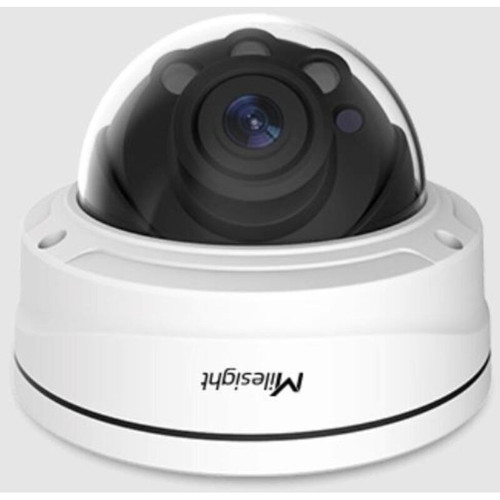
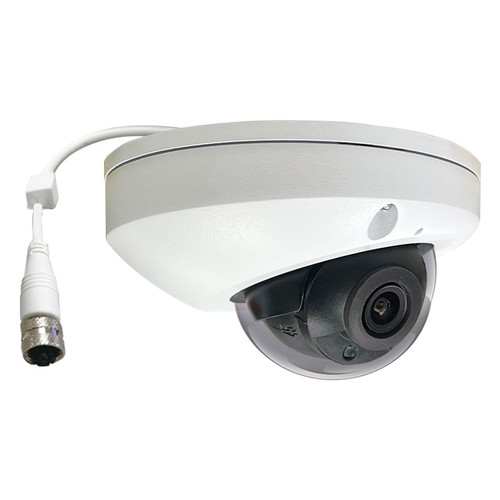
Both the ACTi A811 and ACTi Z721 are 4MP outdoor dome cameras targeting perimeter and site surveillance applications where vandal resistance and weatherproofing are required. The A811 is a motorized-zoom dome with a 5x optical zoom lens, while the Z721 is a fixed mini dome with a 4mm prime lens. Despite sharing the same resolution class and outdoor dome form factor, their optical designs, ingress protection levels, certifications, and analytics capabilities differ meaningfully — making this a relevant cross-shop for installers choosing between flexible zoom coverage and a compact fixed-lens solution.
In This Guide
How do the imaging specs compare?
Both cameras share a 4MP resolution output and a 1/2.7-inch image sensor, and both achieve B/W sensitivity down to 0 lux with IR active. In color mode the A811 requires 0.01 lux (AGC on) versus the Z721's 0.002 lux at f1.6 — a measurable low-light advantage for the Z721 in color mode, attributable to its f2.8 fixed lens (wider relative aperture than many zoom lenses at telephoto end). The A811 delivers Extreme WDR at 150dB compared to the Z721's 135dB, a 15dB margin that can matter in high-contrast outdoor scenes such as gate entries and loading docks.
The lens architectures diverge sharply. The A811 carries a 2.7–13.5mm motorized varifocal lens with 5x optical zoom, supporting IR illumination out to 85m at 1.0 lux. The Z721 uses a fixed 4mm f2.8 lens with a stated IR range of 30m. The A811's maximum frame rate is documented at 30fps across 2688×1520, 2560×1440, and 1920×1080; frame-rate spec for the Z721 at specific resolutions is not provided in the supplied data. The A811 also adds MJPEG compression alongside H.265/H.264, while the Z721's compression list per the top-level spec omits MJPEG (though a sub-field lists MJPEG — the primary spec for Z721 lists H.265 and H.264 only, so this should be confirmed against the datasheet).
What about installation and environment?
The A811 carries an IP68 rating (continuous submersion) and NEMA 4X, making it suitable for wash-down environments and flood-prone mounting locations. The Z721 is rated IP67 (temporary immersion), which covers the majority of outdoor deployments but falls one grade short of the A811 for extreme moisture exposure. Both cameras are rated IK10 for vandal impact resistance. The A811 also holds EN50155 certification (railway rolling-stock), which the A811 spec does not list — EN50155 is specified for the Z721, making the Z721 the documented choice for rail and transit vehicle installations.
Power input differs: the A811 is powered by PoE+ (802.3at) Class 3 or DC 12V, while the Z721 uses standard PoE (802.3af) or DC 12V ±25%. Installers on existing 802.3af infrastructure can power either camera, but the A811's motorized zoom mechanism draws on 802.3at — this should be verified against the switch budget. The A811 operates from -30°C to 60°C; the Z721 extends lower to -40°C to 60°C, a 10-degree cold advantage for installations in extreme northern climates. The A811 supports Wall, Pole, Pendant, Corner, and Rack mounting; the Z721 lists Wall, Pole, and Pendant. The A811's cable exit is via a 2m pigtail (RJ-45); the Z721's connector details are not specified in the supplied data.
Which fits your VMS and analytics better?
Both cameras are ONVIF-compliant covering Profile S, G, T, and M. The Z721 additionally lists verified compatibility with Milestone, Genetec, and Axis Camera Station by name; the A811 spec does not list named VMS partners beyond ONVIF profiles. Buyers on Milestone or Genetec deployments have documented driver confirmation for the Z721, while A811 compatibility with those platforms would need to be confirmed independently. Neither camera's supplied specification mentions onboard SD card or edge storage capability.
Analytics differ in architecture. The A811 lists Tampering Detection, Face Detection, Object Line Crossing Detection, People Counting, and Smoke Detection — running without a stated dedicated edge AI processor. The Z721 specifies a DLPU (Deep Learning Processing Unit) and lists VMD and Intrusion protection as primary analytics, with the supplied data also noting Deep Learning analytics. The DLPU designation suggests hardware-accelerated inference on the Z721, though the specific model set is narrower in the provided spec. Audio: the A811 provides two-way audio with mic-in, line-in, and line-out; the Z721 provides a built-in microphone with line-in and line-out, also described as two-way. Neither spec references an integrated speaker — external speaker connection would depend on the line-out.
Which should you choose: the A811 or the Z721?
Our take: The A811 is the stronger choice when variable-distance coverage, higher WDR, and a broader analytics suite are the priorities; the Z721 is the better fit for fixed-angle deployments on 802.3af infrastructure, rail or transit environments, and sites requiring a lower cold-temperature floor. Spec-by-spec: the A811's 5x optical zoom (2.7–13.5mm) versus the Z721's fixed 4mm lens gives installers repositionable depth without a physical camera move; the A811's 150dB WDR exceeds the Z721's 135dB by 15dB; and the A811's IR reach of 85m is nearly three times the Z721's 30m. Conversely, the Z721's IP67+EN50155 certifications cover rail applications the A811 does not document; its -40°C cold floor is 10 degrees lower; and its DLPU-backed analytics and named Milestone/Genetec compatibility reduce integration risk on those platforms. Choose the A811 for perimeter zoom surveillance in harsh outdoor environments; choose the Z721 for transit, extreme-cold, or fixed-lens VMS-integrated deployments.
Side-by-Side Comparison
Spec-for-spec, from manufacturer data.
| Specification | ACTi A811 | ACTi Z721 |
|---|---|---|
| Resolution | 4MP | 4MP |
| Image Sensor Size | 1/2.7 inch | 1/2.7 inch |
| Lens / Focal Length | 2.7–13.5mm motorized zoom (5x optical) | 4mm fixed, f2.8 |
| Min Illumination (Color) | 0.01 lux (AGC on) | 0.002 lux @ F1.6 |
| Min Illumination (B/W) | 0.002 lux (AGC on); 0 lux (IR on) | 0 lux (IR on) |
| IR Illumination Range | 85m (at 1.0 lux) | 30m |
| IR Wavelength | 850nm | 850nm |
| WDR | Extreme WDR, 150dB | Extreme WDR, 135dB |
| Max Frame Rate | 30fps @ 2688×1520 / 2560×1440 / 1920×1080 | Not specified in supplied data |
| Video Compression | H.265; H.264; MJPEG | H.265; H.264 (MJPEG listed in sub-field — verify datasheet) |
| IP Rating | IP68 | IP67 |
| IK / Impact Rating | IK10 | IK10 |
| Operating Temperature | -30°C to 60°C | -40°C to 60°C |
| Power Input / PoE Class | PoE+ (802.3at) Class 3; DC 12V | PoE (802.3af); DC 12V ±25% |
| Certifications | CE Class B; FCC Class B; EAC; IP68; NEMA 4X; IK10; TAICS/TCA Cybersecurity Lvl 1 | CE Class A; FCC Class A; IP67; IK10; EN50155; UL Listed; BSMI |
| ONVIF Profiles | Profile S, G, T, M | Profile S, G, T, M |
| Named VMS Compatibility | Not specified beyond ONVIF | Milestone; Genetec; Axis Camera Station |
| Edge Analytics | Tampering Detection; Face Detection; Line Crossing; People Counting; Smoke Detection | DLPU; VMD; Intrusion Protection |
| Audio | Two-way; Mic-in; Line-in; Line-out | Built-in mic; Line-in; Line-out (two-way) |
| Mount Types | Wall; Pole; Pendant; Corner; Rack | Wall; Pole; Pendant |
| Weight | 1060g (2.34 lb) | Not specified in supplied data |
| Form Factor | Zoom Dome | Fixed Mini Dome |
Frequently Asked Questions
Which should you choose: the A811 or the Z721?
The A811 is the stronger choice when variable-distance coverage, higher WDR, and a broader analytics suite are the priorities; the Z721 is the better fit for fixed-angle deployments on 802.3af infrastructure, rail or transit environments, and sites requiring a lower cold-temperature floor. Spec-by-spec: the A811's 5x optical zoom (2.7–13.5mm) versus the Z721's fixed 4mm lens gives installers repositionable depth without a physical camera move; the A811's 150dB WDR exceeds the Z721's 135dB by 15dB; and the A811's IR reach of 85m is nearly three times the Z721's 30m. Conversely, the Z721's IP67+EN50155 certifications cover rail applications the A811 does not document; its -40°C cold floor is 10 degrees lower; and its DLPU-backed analytics and named Milestone/Genetec compatibility reduce integration risk on those platforms. Choose the A811 for perimeter zoom surveillance in harsh outdoor environments; choose the Z721 for transit, extreme-cold, or fixed-lens VMS-integrated deployments.
Is the A811 or Z721 better for low-light color performance?
Based on the supplied specifications, the Z721 has the lower color minimum illumination at 0.002 lux (f1.6), compared to the A811's 0.01 lux in color mode with AGC on. Both reach 0 lux in B/W with IR active. For color imaging in near-dark conditions, the Z721's spec shows a 5x sensitivity advantage, though real-world performance depends on scene conditions.
Can I power both cameras from a standard 802.3af PoE switch?
The Z721 is specified for 802.3af PoE, which is compatible with standard PoE switches. The A811 is specified as PoE+ (802.3at) Class 3. While some 802.3at devices will negotiate down to 802.3af, the A811 spec lists 802.3at as its PoE standard — powering it from a strict 802.3af port may not be supported. Verify with ACTi before deploying the A811 on 802.3af-only infrastructure.
Which camera is certified for rail or transit vehicle installations?
The Z721 carries EN50155 certification, which is the standard for electronic equipment used on railway rolling stock. The A811's supplied specifications do not list EN50155. For rail or transit vehicle projects requiring EN50155 compliance, the Z721 is the documented choice between these two models.
Get a Second Opinion on Your Camera Choice
Share your site layout, coverage goals, and budget. Our team will validate the camera selection, flag anything we would change, and recommend products that match the use case.