
ACTi A76 vs ACTi Z72: Specification Comparison
Both the ACTi A76 and ACTi Z72 are 4MP fixed dome cameras targeting outdoor or semi-outdoor surveillance deployments where vandal resistance and single-cable PoE installation are priorities. They share the same resolution class, dome form factor, H.265 compression, and IK10 impact rating, making them genuine cross-shop candidates for installers evaluating ACTi's lineup. This comparison examines where they diverge across imaging performance, environmental ratings and installation requirements, and integration capabilities including VMS compatibility, analytics, audio, and edge storage.
In This Guide
How do the imaging specs compare?
The A76 carries a 1/2.7" sensor delivering 4MP at a maximum of 30 fps (2688×1520) with a minimum illumination of 0.003 lux in color and 0 lux in black-and-white with IR active. Its IR system uses 850nm LEDs with a specified range of 65 meters and operates as a fixed Day/Night system. WDR is rated at 150 dB Extreme WDR, a quantified figure that indicates high performance in scenes with mixed bright and shadowed zones. The Z72 specs list 'Superior WDR' but provide no dB rating, so a numerical comparison on that dimension is not possible from the available data.
The Z72 uses a 2.8mm fixed lens at f/1.6 aperture, which is a wider aperture than the A76's 2.8mm fixed lens whose aperture is not specified in the provided data. The Z72's IR is described as 'Adaptive IR' with Day/Night function, but no IR range in meters is listed, preventing a direct distance comparison. The A76 specifies a 65-meter IR range. The Z72's minimum illumination figure is not provided in the available specifications, so low-light sensitivity cannot be numerically compared between the two models.
What about installation and environment?
The A76 carries an IP68 rating, meaning it is tested for continuous submersion beyond 1 meter, compared to the Z72's IP67 rating, which covers temporary immersion up to 1 meter. Both units are IK10-rated for vandal resistance. The A76 specifies an operating temperature range of -40°C to 60°C (-40°F to 140°F), making it suitable for extreme cold environments. The Z72 does not include an operating temperature range in the provided specifications, so cold- or heat-extreme deployments cannot be evaluated for the Z72 on that basis.
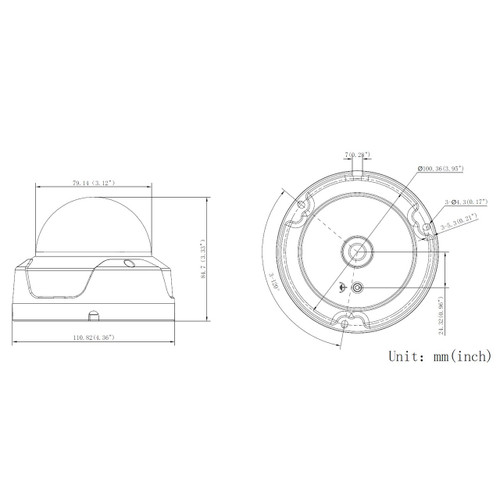
Both cameras are powered by PoE 802.3af. The A76 additionally accepts DC 12V as an alternative power input, and its PoE class is explicitly stated as Class 3. The Z72 lists PoE 802.3af but does not specify the PoE class or an alternative DC input voltage in the provided data. The A76 supports wall, pole, pendant, and corner mount types. The Z72 specifies ceiling and wall mounts only, so pole or corner mounting would require verification with ACTi for the Z72. A76 dimensions are provided (Ø 110.82mm × H 84.7mm); Z72 dimensions are not listed in the available specs.
Which fits your VMS and analytics better?
The A76 explicitly declares ONVIF compliance at Profile S, Profile G, Profile T, and Profile M — four profiles that cover live streaming, edge recording, advanced video, and metadata respectively. The Z72 does not include any ONVIF compliance statement in its provided specifications, so VMS compatibility via ONVIF cannot be confirmed for the Z72 from the available data. Installers standardizing on ONVIF-driven VMS platforms should verify Z72 compatibility directly with ACTi before specifying it.
On analytics, the A76 lists Deep Learning-based Face Detection and People Detection in addition to VMD (Video Motion Detection). The Z72 does not list any edge analytics capabilities in the provided specifications. For audio, the A76 provides a dedicated audio input and 2-way audio via Line-in and Line-out connections, while the Z72 includes a built-in microphone but no audio output or 2-way audio is listed. The Z72 includes onboard MicroSD card storage; the A76 does not list local storage in the provided specifications. The A76 carries a stated 3-year warranty; no warranty term is listed for the Z72.
Which should you choose: the A76 or the Z72?
Our take: The A76 is the stronger choice when environmental severity, analytics depth, and VMS interoperability are the primary selection criteria. On environmental protection, the A76 rates IP68 versus the Z72's IP67 and supplies a confirmed operating range of -40°C to 60°C where the Z72 provides no temperature specification. On imaging, the A76 quantifies WDR at 150 dB Extreme and IR range at 65 meters with 0.003 lux minimum illumination, while the Z72 provides no dB WDR figure, no IR distance, and no illumination threshold for comparison. On integration, the A76 declares four ONVIF profiles (S, G, T, M), Deep Learning analytics (Face and People Detection), and 2-way audio; the Z72 lists none of those in its available specs. The Z72 holds an advantage only where local edge storage is required, given its MicroSD slot. Specify the Z72 where onboard recording is mandatory and the missing specs are confirmed acceptable through ACTi documentation; specify the A76 for harsh outdoor environments, analytics-driven deployments, or ONVIF-centric VMS platforms.
Side-by-Side Comparison
Spec-for-spec, from manufacturer data.
| Specification | ACTi A76 | ACTi Z72 |
|---|---|---|
| Resolution | 4MP (2688×1520) | 4MP |
| Image Sensor | 1/2.7" | — |
| Lens / Focal Length | 2.8mm fixed | 2.8mm fixed f/1.6 |
| Min Illumination | 0.003 lux (color); 0 lux (B/W with IR) | — |
| IR System | 850nm LED; 65m range; Day/Night | Adaptive IR; Day/Night (range not specified) |
| WDR | Extreme WDR 150 dB | Superior WDR (no dB rating specified) |
| Max Frame Rate | 30 fps @ 2688×1520 | — |
| Video Compression | H.265; H.264; MJPEG | H.265; H.264 |
| IP Rating | IP68 | IP67 |
| IK / Impact Rating | IK10 | IK10 |
| Operating Temperature | -40°C to 60°C (-40°F to 140°F) | — |
| Power Input / PoE Class | DC 12V; PoE Class 3 (802.3af) | PoE 802.3af (class not specified) |
| ONVIF | Profile S, G, T, M | — |
| Edge Analytics | Deep Learning: Face Detection, People Detection; VMD | — |
| Audio | 2-way (Line-in, Line-out) | Built-in microphone only |
| Edge Storage | — | MicroSD |
| Mount Types | Wall; Pole; Pendant; Corner | Ceiling; Wall |
| Dimensions | Ø 110.82mm × H 84.7mm (4.36" × 3.33") | — |
| Warranty | 3 years | — |
| Certifications | CE Class B; FCC Class B; IP68; IK10; Taiwan IoT Cybersecurity Cert. Level 1 (TAICS, CNS-16120) | — |
Frequently Asked Questions
Which should you choose: the A76 or the Z72?
The A76 is the stronger choice when environmental severity, analytics depth, and VMS interoperability are the primary selection criteria. On environmental protection, the A76 rates IP68 versus the Z72's IP67 and supplies a confirmed operating range of -40°C to 60°C where the Z72 provides no temperature specification. On imaging, the A76 quantifies WDR at 150 dB Extreme and IR range at 65 meters with 0.003 lux minimum illumination, while the Z72 provides no dB WDR figure, no IR distance, and no illumination threshold for comparison. On integration, the A76 declares four ONVIF profiles (S, G, T, M), Deep Learning analytics (Face and People Detection), and 2-way audio; the Z72 lists none of those in its available specs. The Z72 holds an advantage only where local edge storage is required, given its MicroSD slot. Specify the Z72 where onboard recording is mandatory and the missing specs are confirmed acceptable through ACTi documentation; specify the A76 for harsh outdoor environments, analytics-driven deployments, or ONVIF-centric VMS platforms.
Is the A76 or Z72 better for low-light performance?
Based on available specifications, the A76 is documentably stronger: it lists a minimum illumination of 0.003 lux in color (0 lux in B/W with IR) and an IR range of 65 meters using 850nm LEDs. The Z72 does not provide a minimum illumination figure or an IR distance in its available specifications, so a numerical comparison cannot be made for the Z72 — buyers should request those figures from ACTi before specifying the Z72 in low-light applications.
Can either camera record locally without an NVR?
The Z72 lists MicroSD card storage in its specifications, enabling edge recording without an NVR. The A76 does not list any onboard storage option in its available specifications, so it would require an NVR or VMS with network recording to retain footage. If standalone edge recording is a deployment requirement, the Z72 has a confirmed advantage on this point.
Which camera is easier to integrate with third-party VMS software?
The A76 lists ONVIF compliance at Profile S, Profile G, Profile T, and Profile M, which are widely supported by major VMS platforms. The Z72 does not include any ONVIF statement in its available specifications. Integrators relying on ONVIF for VMS connectivity should confirm Z72 compatibility directly with ACTi before design; the A76 carries the documented interoperability profile.
Get a Second Opinion on Your Camera Choice
Share your site layout, coverage goals, and budget. Our team will validate the camera selection, flag anything we would change, and recommend products that match the use case.