
ACTi A76 vs ACTi A811: Specification Comparison
Both the ACTi A76 and ACTi A811 are 4MP outdoor dome cameras sharing the same resolution class, IP68/IK10 environmental ratings, and H.265/H.264/MJPEG compression. The core differentiator is optics: the A76 uses a fixed 2.8mm wide-angle lens, while the A811 offers a 5x motorized zoom (2.7–13.5mm). This comparison helps installers and IT buyers decide which model fits their field-of-view requirements, power budget, and analytics needs.
In This Guide
How do the imaging specs compare?
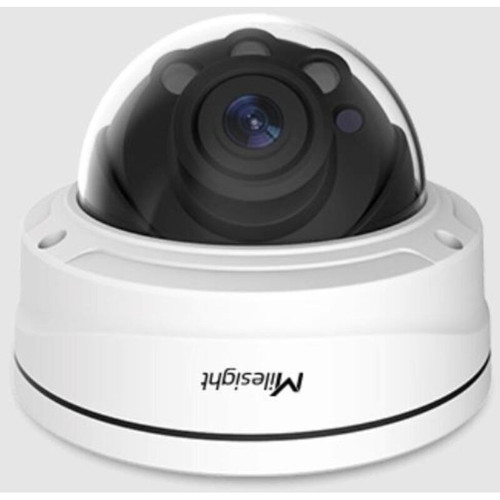
Both cameras deliver 4MP resolution at 30 fps (2688×1520) with a 1/2.7" sensor, 150 dB Extreme WDR, IR illumination at 850nm, and H.265/H.264/MJPEG compression. The A76 has a fixed 2.8mm board-mount lens providing a wide, static field of view, with a minimum illumination of 0.003 lux in color mode and 0 lux in B/W with IR active. The A811's motorized 2.7–13.5mm lens (5x optical zoom) allows operators or VMS systems to frame scenes from wide perimeter coverage down to a tighter close-up without physically repositioning the camera. Its minimum illumination is 0.01 lux color and 0.002 lux B/W with IR active.
IR range is a notable delta: the A76 is rated to 65m, while the A811 extends to 85m at 1.0 lux. On low-light sensitivity, the A76's 0.003 lux color figure is slightly better than the A811's 0.01 lux color figure as specified, though both reach 0 lux in full IR mode. The A811 also lists additional supported resolutions (2560×1440 and 1920×1080 at 30 fps), while the A76 spec sheet documents only 2688×1520 at 30 fps. No frame-rate or compression differences are specified beyond these points.
What about installation and environment?
Both cameras carry IP68 and IK10 ratings, making them suitable for submersion exposure and vandal-resistant installations. The A811 additionally holds NEMA 4X certification, which is not listed for the A76. Operating temperature diverges: the A76 is rated -40°C to 60°C, while the A811 is rated -30°C to 60°C — a 10°C gap at the cold end that matters in sub-arctic or extreme northern climates.
Power requirements differ meaningfully. The A76 runs on PoE 802.3af (Class 3, max 15.4W), making it compatible with standard PoE switches without budget concerns. The A811 requires PoE+ 802.3at (Class 3 per its spec header, though 802.3at supports up to 30W) — installers should verify switch port budgets and midspan compatibility before deployment. Both cameras use an RJ-45 pigtail connector and support DC 12V as an alternative. The A811 weighs 1060g (2.34 lb); weight for the A76 is not specified. Both support wall, pole, pendant, and corner mounts; the A811 additionally lists rack mounting. Both ship with a 2m cable per the A811 spec; A76 cable length is not specified.
Which fits your VMS and analytics better?
Both cameras are ONVIF-compliant across the same four profiles: Profile S, Profile G, Profile T, and Profile M — ensuring broad VMS compatibility. Neither spec sheet documents an onboard SD card slot or edge storage capability, so local recording is not confirmed for either model. Two-way audio is supported on both, though with slightly different input configurations: the A76 lists audio input with Line-in and Line-out; the A811 lists Mic-in, Line-in, and Line-out, adding a microphone input that the A76 does not specify.
Analytics differ in scope. The A76 lists Deep Learning-based Face Detection and People Detection, plus VMD. The A811 lists Tampering Detection, Face Detection, Object Line Crossing Detection, People Counting, and Smoke Detection — a broader set that reduces reliance on server-side analytics for perimeter and occupancy use cases. The A811 spec also notes pan 0°–355°, tilt 0°–75°, and rotation 0°–355° adjustment ranges, consistent with its motorized zoom dome form factor. Both carry Taiwan IoT Cybersecurity Certification Level 1, though the A76 cites the TAICS/CNS-16120 standard and the A811 cites TAICS/TCA — both are Level 1 designations per their respective spec sheets.
Which should you choose: the A76 or the A811?
Our take: The A76 is the stronger choice when the installation site has extreme cold (below -30°C), uses a standard 802.3af PoE infrastructure, and requires a fixed wide-angle view with a slightly lower color minimum illumination (0.003 lux vs 0.01 lux). The A811 is the stronger choice when variable focal length is operationally required: its 5x motorized zoom (2.7–13.5mm vs fixed 2.8mm) lets a single camera cover both wide perimeter and detail capture, and its 85m IR range outreaches the A76's 65m by 20m. The A811 also adds NEMA 4X certification, a broader analytics suite (line crossing, people counting, smoke detection), and a dedicated Mic-in. However, it requires PoE+ infrastructure and is only rated to -30°C. Choose the A76 for budget-constrained 802.3af deployments in extreme cold; choose the A811 for sites needing optical zoom flexibility and richer onboard analytics.
Side-by-Side Comparison
Spec-for-spec, from manufacturer data.
| Specification | ACTi A76 | ACTi A811 |
|---|---|---|
| Resolution | 4MP (2688×1520) | 4MP (2688×1520) |
| Image Sensor | 1/2.7" | 1/2.7" |
| Lens / Focal Length | 2.8mm fixed (board mount) | 2.7–13.5mm motorized zoom (5x optical) |
| Min Illumination (Color) | 0.003 lux | 0.01 lux (AGC on) |
| Min Illumination (B/W) | 0 lux (IR on) | 0.002 lux (AGC on); 0 lux (IR on) |
| IR Range | 65m | 85m (at 1.0 lux) |
| WDR | 150 dB Extreme WDR | 150 dB Extreme WDR |
| Max Frame Rate | 30 fps @ 2688×1520 | 30 fps @ 2688×1520; 2560×1440; 1920×1080 |
| Video Compression | H.265; H.264; MJPEG | H.265; H.264; MJPEG |
| IP Rating | IP68 | IP68 |
| IK / Impact Rating | IK10 | IK10 |
| Additional Environmental | — | NEMA 4X |
| Operating Temperature | -40°C to 60°C | -30°C to 60°C |
| Power Input / PoE Class | PoE 802.3af Class 3; DC 12V | PoE+ 802.3at Class 3; DC 12V |
| Audio | Line-in; Line-out (2-way) | Mic-in; Line-in; Line-out (2-way) |
| Edge Analytics | Deep Learning: Face Detection, People Detection; VMD | Tampering Detection; Face Detection; Line Crossing; People Counting; Smoke Detection |
| ONVIF Profiles | Profile S, G, T, M | Profile S, G, T, M |
| Mount Types | Wall; Pole; Pendant; Corner | Wall; Pole; Pendant; Corner; Rack |
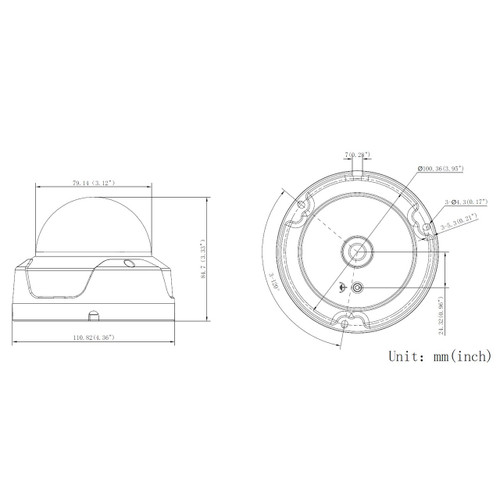
| Dimensions | Ø110.82mm × H84.7mm | — |
| Weight | — | 1060g (2.34 lb) |
| Warranty | 3 Years | — |
Frequently Asked Questions
Which should you choose: the A76 or the A811?
The A76 is the stronger choice when the installation site has extreme cold (below -30°C), uses a standard 802.3af PoE infrastructure, and requires a fixed wide-angle view with a slightly lower color minimum illumination (0.003 lux vs 0.01 lux). The A811 is the stronger choice when variable focal length is operationally required: its 5x motorized zoom (2.7–13.5mm vs fixed 2.8mm) lets a single camera cover both wide perimeter and detail capture, and its 85m IR range outreaches the A76's 65m by 20m. The A811 also adds NEMA 4X certification, a broader analytics suite (line crossing, people counting, smoke detection), and a dedicated Mic-in. However, it requires PoE+ infrastructure and is only rated to -30°C. Choose the A76 for budget-constrained 802.3af deployments in extreme cold; choose the A811 for sites needing optical zoom flexibility and richer onboard analytics.
Is the A76 or A811 better for low-light performance?
Based on the provided specs, the A76 has a slightly lower color minimum illumination (0.003 lux vs 0.01 lux for the A811), which suggests marginally better color sensitivity in near-dark conditions. Both cameras reach 0 lux in full IR mode. However, the A811 has a longer IR range (85m vs 65m), which matters more in open or deep outdoor scenes. Neither spec lists a starlight or multi-sensor low-light mode beyond these figures.
Can I use the A811 on an existing standard PoE switch?
The A811 specifies PoE+ (802.3at), which requires switch ports rated for up to 30W. Standard 802.3af ports deliver a maximum of 15.4W and may not reliably power the A811, particularly when the motorized zoom and IR are active simultaneously. The A76 is rated for PoE 802.3af Class 3 and will operate on standard PoE switches without upgrade. Always verify port power budgets before deployment.
Which camera is better for very cold outdoor environments?
The A76 is rated down to -40°C, giving it a 10°C advantage over the A811, which is only rated to -30°C. For installations in sub-arctic regions or environments where temperatures routinely fall below -30°C — such as cold storage facility exteriors or northern outdoor perimeters — the A76 is the spec-confirmed choice. The A811 is not rated for operation below -30°C per its published specifications.
Get a Second Opinion on Your Camera Choice
Share your site layout, coverage goals, and budget. Our team will validate the camera selection, flag anything we would change, and recommend products that match the use case.