
ACTi A63 vs ACTi A83: Specification Comparison
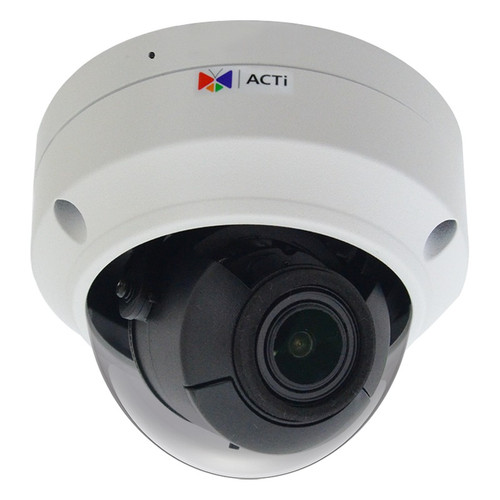
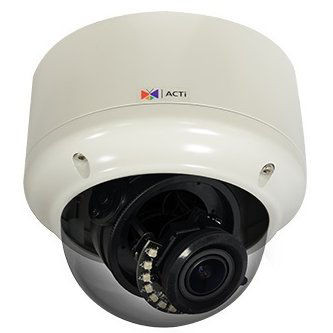
Both the ACTi A63 and ACTi A83 are 2MP zoom dome cameras sharing the same resolution class and fixed-lens form factor, making them a legitimate cross-shop for integrators evaluating a motorized zoom dome at the same sensor tier. The key differentiator is deployment environment: the A63 is an indoor mini dome with a 2.8–8mm motorized lens, while the A83 is a ruggedized outdoor dome with a wider 2.8–12mm zoom range, environmental certifications, and expanded analytics. This comparison covers imaging, installation suitability, and integration compatibility based strictly on published specifications.
In This Guide
How do the imaging specs compare?
Both cameras output 2MP (1920×1080) at 30fps and share H.265/H.264 compression with IR night vision. The A83 pulls ahead on virtually every imaging metric: its WDR is rated at 142dB Extreme WDR versus the A63's unquantified WDR spec, its lens covers 2.8–12mm (4.3× optical zoom per the Lens field, though the focal-length field states 3× optical zoom) against the A63's 2.8–8mm (2.8× zoom), and its minimum illumination is documented at 0.002 lux color / 0.001 lux B/W / 0 lux with IR active. The A63 provides no published minimum-illumination figure.
IR performance follows the same pattern. The A83 specifies 12 adaptive IR LEDs at 850nm with a 30m working distance. The A63 lists IR capability but provides no wavelength, LED count, or range figure. The A83 also adds MJPEG as a third compression codec; the A63 is limited to H.265 and H.264. Sensor size is documented only for the A83 at 1/2.8 inches; no sensor-size spec is published for the A63.
What about installation and environment?
The A83 carries IP66, IK10, and NEMA 4X ratings and is rated for –40°C to 50°C operation, making it suitable for outdoor perimeter, arctic-climate, and vandal-prone installations. It supports five mounting configurations: wall, pole, pendant, corner, and rack. The A63 carries no IP or IK rating per its published specs, is designated indoor-only, and supports ceiling and wall mounting only. No operating temperature range is published for the A63.
On power, the A63 draws a maximum of 12.95W and is powered by 802.3af PoE, compatible with standard PoE switches. The A83 requires PoE+ (802.3at) Class 3 at 13W maximum, though its Power Supply field also lists DC 12V as an alternative input. Installers wiring the A83 into an existing 802.3af-only infrastructure will need to verify switch compatibility or supply DC 12V locally. The A83 also ships with a 2m pigtail cable; the A63's cabling arrangement is not specified beyond the RJ-45 PoE interface.
Which fits your VMS and analytics better?
The A83 provides explicit ONVIF Profile S, G, T, and Q compliance plus Pelco-D and Pelco-P protocol support, two-way audio (mic-in, line-in, line-out), built-in VMD and People Counting analytics, and a documented PTZ range of Pan ±135° / Tilt 0–90° / Rotation ±90° for dome repositioning. Its warranty is stated as three years. The A63 is listed as ONVIF-compliant without specifying which profiles, supports audio input/output, and offers MicroSDHC/MicroSDXC edge storage. No edge-storage spec is published for the A83, and no analytics are listed for the A63.
For VMS integrators requiring a specific ONVIF profile—particularly Profile G for on-camera recording or Profile T for H.265 metadata—the A83's explicit four-profile declaration provides certainty the A63's unqualified 'ONVIF-compliant' label does not. The A63's onboard MicroSD slot is an advantage in bandwidth-constrained or edge-recording deployments where the A83 cannot be confirmed to offer local storage.
Which should you choose: the A63 or the A83?
Our take: The A83 is the stronger choice when the installation is outdoors, subject to vandalism, or requires validated low-light performance and broad VMS protocol support. Concretely: its WDR is rated at 142dB versus an unquantified figure for the A63; its IR range is documented at 30m versus no published range for the A63; and its lens reaches 2.8–12mm versus the A63's 2.8–8mm, delivering a tighter telephoto end for perimeter standoff distances. Its IP66/IK10/NEMA 4X ratings and –40°C to 50°C operating range address environments the A63 is not specified for at all. The A63 is appropriate for indoor, climate-controlled spaces where 802.3af PoE infrastructure is already deployed, onboard MicroSD edge recording is required, and a smaller dome profile is preferred—conditions where the A83's added cost and PoE+ requirement may not be justified.
Side-by-Side Comparison
Spec-for-spec, from manufacturer data.
| Specification | ACTi A63 | ACTi A83 |
|---|---|---|
| Resolution | 2MP (1920×1080) | 2MP (1920×1080) |
| Max Frame Rate | 30fps @ 1080p | 30fps @ 1920×1080 |
| Image Sensor Size | — | 1/2.8" |
| Lens / Focal Length | Motorized 2.8–8mm (2.8× zoom) | Motorized 2.8–12mm (4.3× optical zoom) |
| Min Illumination | — | Color: 0.002 lux @ F1.4; B/W: 0.001 lux @ F1.4; 0 lux (IR on) |
| IR Range | — | 30m |
| IR Wavelength / LEDs | — | 850nm; 12 Adaptive IR LEDs |
| WDR | WDR (level not specified) | Extreme WDR (142dB) |
| Video Compression | H.265; H.264 | H.265; H.264; MJPEG |
| IP Rating | — | IP66 |
| IK / Impact Rating | — | IK10 |
| Environmental Certifications | — | CE Class A; FCC Class A; EAC; NEMA 4X; IP66; IK10 |
| Operating Temperature | — | -40°C to 50°C (-40°F to 122°F) |
| Power Input / PoE Class | PoE 802.3af; 12.95W max | PoE+ 802.3at Class 3; 13W max (alt: DC 12V) |
| Mounting Options | Ceiling; Wall | Wall; Pole; Pendant; Corner; Rack |
| ONVIF Profiles | ONVIF-compliant (profiles not specified) | Profile S, G, T, Q |
| Additional Protocols | — | Pelco-D; Pelco-P |
| Edge Storage | MicroSDHC / MicroSDXC | — |
| Audio | Audio input/output | Two-way (Mic-in, Line-in, Line-out) |
| Edge Analytics | — | VMD; People Counting |
| Weight | — | 877.5g (1.935lb) |
| Warranty | — | 3 Years |
Frequently Asked Questions
Which should you choose: the A63 or the A83?
The A83 is the stronger choice when the installation is outdoors, subject to vandalism, or requires validated low-light performance and broad VMS protocol support. Concretely: its WDR is rated at 142dB versus an unquantified figure for the A63; its IR range is documented at 30m versus no published range for the A63; and its lens reaches 2.8–12mm versus the A63's 2.8–8mm, delivering a tighter telephoto end for perimeter standoff distances. Its IP66/IK10/NEMA 4X ratings and –40°C to 50°C operating range address environments the A63 is not specified for at all. The A63 is appropriate for indoor, climate-controlled spaces where 802.3af PoE infrastructure is already deployed, onboard MicroSD edge recording is required, and a smaller dome profile is preferred—conditions where the A83's added cost and PoE+ requirement may not be justified.
Is the A63 or A83 better for low-light performance?
Based on published specs, the A83 is better documented for low-light use: it specifies 0.002 lux color / 0.001 lux B/W minimum illumination and 0 lux with IR active, backed by 12 adaptive IR LEDs at 850nm with a 30m range. The A63 lists IR capability but publishes no minimum-illumination figure, no IR wavelength, and no IR range, so a direct numerical comparison cannot be made.
Can I power the A83 from a standard 802.3af PoE switch?
The A83's primary PoE spec is 802.3at (PoE+) Class 3 at 13W maximum. Its Power Supply field also lists DC 12V as an alternative. Standard 802.3af switches are limited to 15.4W available but deliver only 12.95W to the device—marginally below the A83's 13W draw—so compatibility is not guaranteed on 802.3af alone. The A63 draws 12.95W and is explicitly rated for 802.3af, making it safe on standard PoE switches.
Does either camera support on-board edge storage?
The A63 supports MicroSDHC and MicroSDXC edge storage per its published specs. No edge-storage specification is published for the A83; installers requiring local recording on the A83 should confirm this capability directly with ACTi before specifying.
Get a Second Opinion on Your Camera Choice
Share your site layout, coverage goals, and budget. Our team will validate the camera selection, flag anything we would change, and recommend products that match the use case.