
ACTi A415 vs Geovision BL3700: Specification Comparison
Both the ACTi A415 and Geovision GV-BL3700 are 3-megapixel outdoor IR bullet cameras aimed at the same resolution tier, making them genuine cross-shop candidates for integrators specifying fixed surveillance at entry-to-mid budget. The comparison covers imaging performance, environmental and installation requirements, and VMS/analytics integration — areas where the two models diverge meaningfully despite sharing the same headline resolution and bullet form factor.
In This Guide
How do the imaging specs compare?
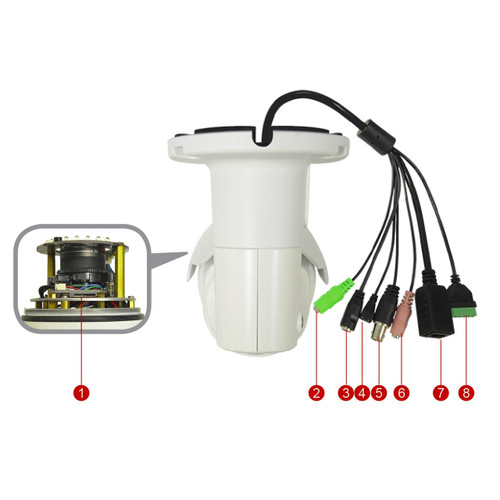
The ACTi A415 uses a 1/2.7-inch sensor with a motorized varifocal lens spanning 2.8–12 mm (4.3× optical zoom), covering a field of view from 90.6° down to 32.7° without digital zoom degradation. Minimum illumination is rated at 0.05 lux in color and 0.005 lux in black-and-white at F1.4 with AGC on, and adaptive 850 nm IR extends to a stated 30 m working distance. Maximum frame rate is 30 fps at 2048×1536 (3MP), 1920×1080, and 1280×960. WDR is specified at 142 dB Extreme WDR.
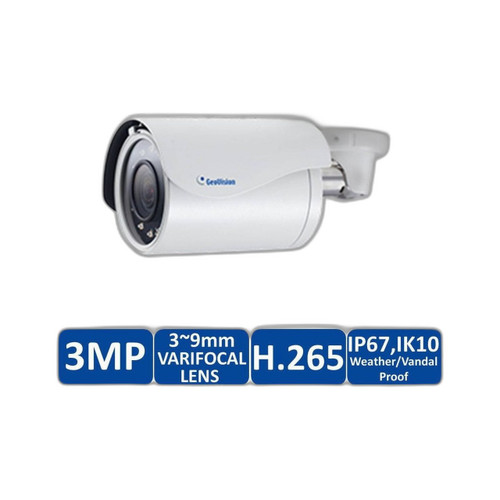
The Geovision GV-BL3700 is also rated at 3 MP and carries a 3–9 mm P-Iris varifocal lens. It lists WDR support and IR capability, but the spec data provided does not state a dB WDR figure, a numeric IR range, a numeric minimum illumination value (listed only as 'Super Low Lux'), a sensor size, or a maximum frame rate. H.265 compression is confirmed. Without those numeric values, a direct sensor-level or IR-range comparison between the two models cannot be made from the available data.
What about installation and environment?
The A415 carries IP66 and IK10 ratings with a metal casing, and its operating temperature range is specified as −30 °C to +50 °C (−22 °F to +122 °F). Power is accepted via PoE Class 3 (IEEE 802.3af) or DC 12 V (adapter not included); the spec sheet also lists PoE++ (802.3bt) Class 3 in multiple fields, which installers should verify against the physical port before selecting a switch. The unit weighs 834 g and supports pole and wall mount configurations via accessory camera mounts.
For the GV-BL3700, the provided specifications do not state an IP ingress-protection rating, an IK impact rating, an operating temperature range, a weight, or a PoE class. Mount types listed are wall and pole. Buyers specifying the GV-BL3700 for harsh-environment or vandal-resistant applications should consult Geovision's datasheet directly to confirm environmental ratings before deployment.
Which fits your VMS and analytics better?
The A415 is confirmed ONVIF-compliant to Profile S, Profile G, Profile T, and Profile Q, and additionally supports Pelco-D, Pelco-P, and ACTi URL command PTZ protocols for pan-tilt-zoom control of the motorized lens. On-board edge analytics include VMD (Video Motion Detection) and People Counting. Audio capability covers input, microphone-in, line-in, and line-out — enabling two-way audio without additional hardware. Edge storage capability is not specified in the provided data.
The GV-BL3700 is listed as ONVIF-compatible without a stated profile tier (S/G/T/Q not specified). No edge analytics, audio I/O, or on-board storage specs are present in the provided data. The VMS compatibility field references ONVIF generically. Integrators requiring specific ONVIF profile support, edge analytics, or audio on the GV-BL3700 should verify those capabilities directly with Geovision.
Which should you choose: the A415 or the BL3700?
Our take: The A415 is the stronger choice when quantified imaging performance, environmental ratings, and analytics depth are decision factors. On imaging, the A415 states a 142 dB Extreme WDR figure and a 0.005 lux B/W minimum illumination against the GV-BL3700's unquantified 'Super Low Lux' and undisclosed WDR dB rating — making a numeric comparison impossible for the Geovision unit. The A415 also carries confirmed IP66 and IK10 environmental ratings with a −30 °C to +50 °C operating range; the GV-BL3700 provides none of those figures in the available spec data. ONVIF coverage on the A415 extends to four named profiles (S, G, T, Q) plus people-counting analytics and two-way audio; the GV-BL3700 lists only generic ONVIF without profile detail and no analytics. Buyers considering the GV-BL3700 should obtain its full datasheet before specifying it for any application requiring confirmed environmental protection, low-light thresholds, or advanced VMS profile support.
Side-by-Side Comparison
Spec-for-spec, from manufacturer data.
| Specification | ACTi A415 | Geovision BL3700 |
|---|---|---|
| Resolution | 3 MP | 3 MP |
| Image Sensor Size | 1/2.7 inch | — |
| Lens / Focal Length | 2.8–12 mm motorized varifocal (4.3× optical zoom) | 3–9 mm P-Iris varifocal |
| Min Illumination | Color: 0.05 lux @ F1.4; B/W: 0.005 lux @ F1.4 (AGC on) | Super Low Lux (no numeric rating provided) |
| IR Range | 30 m (850 nm adaptive IR) | — (not specified) |
| WDR | 142 dB Extreme WDR | WDR (no dB rating provided) |
| Max Frame Rate | 30 fps @ 2048×1536; 30 fps @ 1920×1080; 30 fps @ 1280×960 | — (not specified) |
| Video Compression | H.265 Adaptive Stream; H.264 (Baseline/Main/High); MJPEG | H.265 |
| IP Rating | IP66 | — (not specified) |
| IK / Impact Rating | IK10 (metal casing) | — (not specified) |
| Operating Temperature | −30 °C to +50 °C (−22 °F to +122 °F) | — (not specified) |
| Power Input / PoE Class | PoE Class 3 (IEEE 802.3af) or DC 12 V | — (not specified) |
| ONVIF Profiles | Profile S, G, T, Q | ONVIF (profile tier not specified) |
| Edge Analytics | VMD; People Counting | — (not specified) |
| Audio | Input; Mic-in; Line-in; Line-out (2-way) | — (not specified) |
| Weight | 834 g (1.84 lb) | — (not specified) |
Frequently Asked Questions
Which should you choose: the A415 or the BL3700?
The A415 is the stronger choice when quantified imaging performance, environmental ratings, and analytics depth are decision factors. On imaging, the A415 states a 142 dB Extreme WDR figure and a 0.005 lux B/W minimum illumination against the GV-BL3700's unquantified 'Super Low Lux' and undisclosed WDR dB rating — making a numeric comparison impossible for the Geovision unit. The A415 also carries confirmed IP66 and IK10 environmental ratings with a −30 °C to +50 °C operating range; the GV-BL3700 provides none of those figures in the available spec data. ONVIF coverage on the A415 extends to four named profiles (S, G, T, Q) plus people-counting analytics and two-way audio; the GV-BL3700 lists only generic ONVIF without profile detail and no analytics. Buyers considering the GV-BL3700 should obtain its full datasheet before specifying it for any application requiring confirmed environmental protection, low-light thresholds, or advanced VMS profile support.
Is the A415 or GV-BL3700 better for low-light performance?
Based on available specs, the A415 states a numeric minimum illumination of 0.05 lux (color) and 0.005 lux (B/W) at F1.4, plus an 850 nm adaptive IR range of 30 m. The GV-BL3700 lists only 'Super Low Lux' with no numeric lux rating or IR distance — so a quantified comparison cannot be made from the provided data. Verify GV-BL3700 lux and IR figures via Geovision's datasheet before specifying for low-light applications.
Can I mount either camera on a pole outdoors in extreme cold?
The A415 is rated IP66, IK10, and operates from −30 °C to +50 °C, making it specifiable for cold outdoor and vandal-prone pole-mount installations. The GV-BL3700's provided specs do not include an IP rating, IK rating, or operating temperature range, so its suitability for those conditions cannot be confirmed from the available data alone.
Which camera integrates more broadly with third-party VMS platforms?
The A415 confirms ONVIF Profile S, G, T, and Q compliance plus Pelco-D and Pelco-P protocol support, covering a wide range of NVR and VMS platforms. The GV-BL3700 lists ONVIF compatibility without specifying which profiles are supported. If your VMS requires a specific ONVIF profile beyond Profile S, confirm GV-BL3700 support directly with Geovision before purchase.
Get a Second Opinion on Your Camera Choice
Share your site layout, coverage goals, and budget. Our team will validate the camera selection, flag anything we would change, and recommend products that match the use case.