
ACTi A49 vs Geovision BL34000-002U: Specification Comparison
Both the ACTi A49 and Geovision BL34000-002U are 3MP outdoor IP bullet cameras powered by 802.3af PoE, targeting perimeter and entrance surveillance in commercial and light-industrial deployments. This comparison evaluates how they differ across imaging performance, environmental hardening, and VMS/analytics integration — areas where spec differences directly affect installation decisions and long-term suitability. Neither model includes PTZ; both are fixed-lens varifocal bullets in the same resolution class, making them genuine cross-shop candidates for a buyer specifying a mid-tier outdoor bullet.
In This Guide
How do the imaging specs compare?
The ACTi A49 uses a 1/2.8-inch sensor with a 2.8–12mm varifocal lens delivering 4.3x optical zoom, a meaningful advantage over the Geovision BL34000-002U's 3–9mm varifocal lens (3x optical zoom). The A49's wider zoom range lets installers frame a scene more precisely from a fixed mount without moving the camera. Both cameras top out at 3MP resolution. The A49 specifies a maximum frame rate of 30 fps; the BL34000-002U does not state a maximum frame rate in its provided specifications.
On low-light performance, the A49 specifies minimum illumination of 0.05 lux color and 0.005 lux B/W at F1.4, with an adaptive IR LED array and an IR range of 30 meters. The BL34000-002U lists IR low-light capability but provides no minimum illumination figure, no IR range, and no aperture rating in the provided specifications. The A49 also specifies 142dB Extreme WDR; the BL34000-002U lists WDR without a dB rating, making direct comparison of dynamic-range performance impossible from available data.
What about installation and environment?
The A49 carries IP66, NEMA 4X, and IK10 ratings — IP66 blocks high-pressure water jets and dust ingress; IK10 certifies resistance to 20-joule impacts; NEMA 4X adds corrosion resistance. The BL34000-002U is rated IP67, which adds tolerance for temporary submersion (up to 1 meter for 30 minutes) but the provided specifications list no IK impact rating, making it unsuitable for verified vandal-resistance applications. For environments where physical impact is a concern, the A49's IK10 rating is a concrete differentiator.
The A49 operates from −30°C to 50°C (−22°F to 122°F) and accepts DC 12V or PoE Class 3 (802.3af, 13W maximum). The BL34000-002U operates across a wider range of −40°C to 60°C, an advantage in extreme-cold or high-heat deployments such as unheated northern enclosures or rooftop mounts in hot climates. Both cameras draw under 13W on PoE. The A49 connects via RJ-45 pigtail; the BL34000-002U's connector type is not specified. The A49 lists pole and rack mount types; the BL34000-002U lists wall, eave, and bracket mounting options.
Which fits your VMS and analytics better?
The A49 supports ONVIF Profile S and Profile T, H.265, H.264 (Baseline/Main/High), and MJPEG compression. Profile T adds H.265 and metadata streaming support, which benefits modern VMS platforms that consume motion or object metadata over ONVIF. The BL34000-002U supports ONVIF Profile S and the Geovision GeoVision VMS platform; it does not list Profile T or H.265 support in the provided specifications, and its compression formats are not enumerated. For open-VMS environments requiring H.265 bandwidth savings, the A49 has a clear spec advantage.
On edge analytics, the A49 specifies VMD (video motion detection) and people counting as on-board analytics. The BL34000-002U lists no edge analytics in the provided specifications. Neither camera lists audio input/output or on-board storage (SD card) support in the provided specifications, so those capabilities cannot be compared. GPS positioning on the A49 is listed as manual setting only — not autonomous GPS hardware.
Which should you choose: the A49 or the BL34000-002U?
Our take: The A49 is the stronger choice when imaging flexibility, vandal resistance, and open-VMS integration are priorities. Concretely: the A49's 4.3x optical zoom (2.8–12mm) outranges the BL34000-002U's 3x (3–9mm), giving installers more framing latitude from a fixed mount; the A49's 142dB Extreme WDR rating versus an unquantified WDR claim on the BL34000-002U is a meaningful differentiator in high-contrast scenes; and the A49's IK10 impact rating provides verified vandal resistance the BL34000-002U's specifications do not address. The BL34000-002U holds two specific advantages: a wider operating temperature range (−40°C to 60°C vs −30°C to 50°C) and IP67 submersion tolerance versus the A49's IP66. Choose the BL34000-002U for extreme-cold or potential-submersion environments tied to the Geovision VMS platform; specify the A49 for open-VMS deployments requiring H.265, ONVIF Profile T, edge analytics, or confirmed impact protection.
Side-by-Side Comparison
Spec-for-spec, from manufacturer data.
| Specification | ACTi A49 | Geovision BL34000-002U |
|---|---|---|
| Resolution | 3 MP | 3 MP |
| Image Sensor | 1/2.8 inch | — |
| Lens / Focal Length | 2.8–12mm varifocal (4.3x optical zoom) | 3–9mm varifocal (3x optical zoom) |
| Min Illumination | 0.05 lux color / 0.005 lux B/W @ F1.4 | — |
| IR Range | 30 m | — |
| WDR | Extreme WDR (142 dB) | WDR (dB not specified) |
| Max Frame Rate | 30 fps | — |
| Video Compression | H.265; H.264 (Baseline/Main/High); MJPEG | — |
| IP Rating | IP66 / NEMA 4X | IP67 |
| IK / Impact Rating | IK10 | — |
| Operating Temperature | −30°C to 50°C | −40°C to 60°C |
| Power Input / PoE Class | DC 12V or PoE Class 3 (802.3af), 13W max | PoE 802.3af, under 13W max |
| ONVIF | Profile S; Profile T | Profile S |
| Edge Analytics | VMD; People Counting | — |
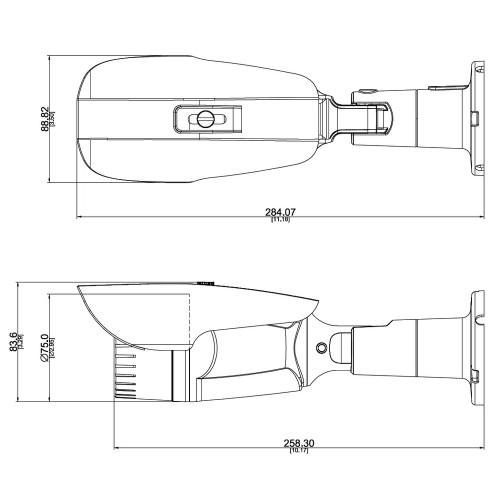
| Dimensions | Ø 80mm × 258.30mm | — |
| Weight | 694 g (1.53 lb) | — |
Frequently Asked Questions
Which should you choose: the A49 or the BL34000-002U?
The A49 is the stronger choice when imaging flexibility, vandal resistance, and open-VMS integration are priorities. Concretely: the A49's 4.3x optical zoom (2.8–12mm) outranges the BL34000-002U's 3x (3–9mm), giving installers more framing latitude from a fixed mount; the A49's 142dB Extreme WDR rating versus an unquantified WDR claim on the BL34000-002U is a meaningful differentiator in high-contrast scenes; and the A49's IK10 impact rating provides verified vandal resistance the BL34000-002U's specifications do not address. The BL34000-002U holds two specific advantages: a wider operating temperature range (−40°C to 60°C vs −30°C to 50°C) and IP67 submersion tolerance versus the A49's IP66. Choose the BL34000-002U for extreme-cold or potential-submersion environments tied to the Geovision VMS platform; specify the A49 for open-VMS deployments requiring H.265, ONVIF Profile T, edge analytics, or confirmed impact protection.
Is the A49 or BL34000-002U better for low-light performance?
Based on available specifications, the A49 is more fully documented for low-light use: it specifies 0.05 lux color / 0.005 lux B/W minimum illumination at F1.4 and a 30-meter IR range. The BL34000-002U lists IR capability but provides no minimum illumination figure, no IR range, and no aperture rating in its specifications, so a direct numerical comparison cannot be made.
Which camera handles wider temperature extremes?
The BL34000-002U's specified operating range of −40°C to 60°C is wider than the A49's −30°C to 50°C. If the installation site reaches temperatures below −30°C or above 50°C — such as an unheated northern outdoor enclosure or a rooftop in a hot climate — the BL34000-002U's rated range is the differentiator.
Will either camera work with a third-party VMS like Milestone or Genetec?
The A49 supports ONVIF Profile S and Profile T, which are widely adopted by third-party VMS platforms including Milestone and Genetec. The BL34000-002U supports ONVIF Profile S and the Geovision GeoVision platform; Profile T is not listed in the provided specifications. For broadest third-party VMS compatibility — especially platforms leveraging Profile T metadata — the A49 is the better-documented option.
Get a Second Opinion on Your Camera Choice
Share your site layout, coverage goals, and budget. Our team will validate the camera selection, flag anything we would change, and recommend products that match the use case.