
ACTi A415 vs ACTi A49: Specification Comparison
Both the ACTi A415 and ACTi A49 are 3MP outdoor zoom bullet cameras sharing the same 2.8–12mm (4.3× optical) lens range, IP66/IK10-rated metal housings, and 30m adaptive IR. They occupy the same resolution class and camera type, making them a genuine cross-shop decision for integrators specifying fixed outdoor zoom coverage. The key differentiators lie in PoE power budget, ONVIF profile depth, audio capability, and certification breadth — all of which affect switch infrastructure choices, VMS compatibility, and total installed cost.
In This Guide
How do the imaging specs compare?
Both cameras deliver 3MP resolution with a motorized 2.8–12mm (4.3× optical zoom) lens on a board-mount design, and both achieve a maximum of 30 fps. Low-light sensitivity is identical per spec: 0.05 lux (color) and 0.005 lux (B/W) at F1.4 with AGC on. WDR is rated at 142dB Extreme WDR on both models. IR range is 30m on both, using 850nm adaptive IR LEDs with a mechanical Day/Night IR cut filter. The A415 specifies a 1/2.7-inch sensor; the A49 specifies a 1/2.8-inch sensor — a marginal difference that rarely affects real-world performance at this resolution class.
Video compression support is nearly identical: both offer H.265, H.264 (Baseline/Main/High profile), and MJPEG. The A415 additionally specifies H.265 Adaptive Stream, which can reduce bandwidth on congested networks. The A415 also lists maximum frame-rate resolutions explicitly (30 fps at 2048×1536, 1920×1080, and 1280×960), whereas the A49 spec states 30 fps without per-resolution breakdowns. No other imaging distinctions are derivable from the provided specifications.
What about installation and environment?
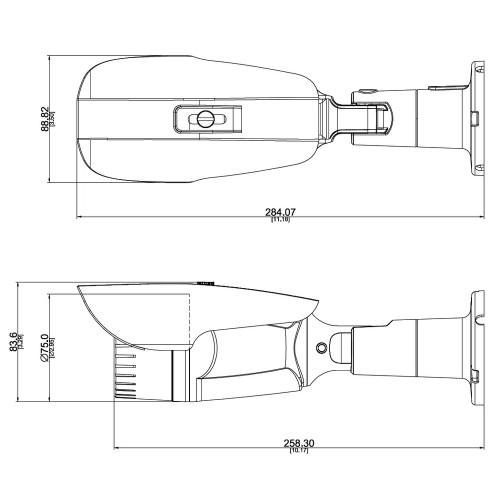
Both cameras are rated IP66 and IK10 and operate across an identical temperature range of −30°C to +50°C, confirming equivalent environmental durability for outdoor exposed deployments. The A49 adds a NEMA 4X certification not listed for the A415, which matters for North American industrial enclosure compliance. Physical form factor differs: the A49 provides explicit body dimensions of Ø80mm × 258.30mm (3.15″ × 10.17″) and weighs 694g (1.53lb); the A415 is heavier at 834g (1.84lb) with no body dimensions stated in the provided specs.
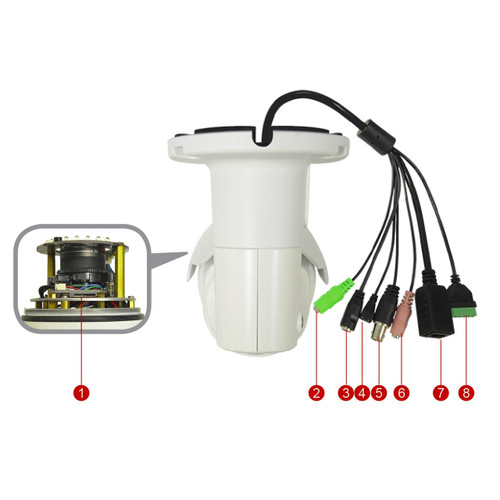
Power is a meaningful differentiator. The A415 is specified as PoE++ (802.3bt) Class 3 in one field and PoE Class 3 (IEEE 802.3af) in another — an internal inconsistency in the supplied data that installers should verify against the datasheet before switch selection. The A49 is consistently specified as PoE Class 3 (802.3af) at 13W, requiring only a standard 802.3af-capable port. Both also accept DC 12V (adapter not included). Mounting accessories are listed as camera-mount accessories for both; the A415 notes pole and wall mount styles, while the A49 notes pole and rack mount styles per the provided specs.
Which fits your VMS and analytics better?
ONVIF profile support diverges notably. The A415 is compliant with ONVIF Profile S, Profile G, Profile T, and Profile Q — four profiles covering streaming, recording, metadata, and device discovery. The A49 supports only ONVIF Profile S and Profile T, omitting Profile G (server-side recording integration) and Profile Q (easy provisioning). For VMSs that leverage Profile G for native edge-recording management or Profile Q for zero-config onboarding, the A415 offers broader compatibility.
Edge analytics are equivalent: both cameras include VMD (Video Motion Detection) and People Counting onboard. Audio is exclusively available on the A415, which provides an audio input with 2-way capability (Mic-in, Line-in, Line-out); the A49 lists no audio specification. On-board or edge storage is not specified for either model in the provided data. The A415 also lists PTZ protocol support (Pelco-D, Pelco-P, ACTi URL command) for motorized zoom control over serial, which is not mentioned for the A49.
Which should you choose: the A415 or the A49?
Our take: The A415 is the stronger choice when your deployment requires 2-way audio, broader VMS integration, or serial PTZ control over the motorized zoom. Concretely: the A415 supports four ONVIF profiles (S, G, T, Q) versus the A49's two (S, T), adds onboard 2-way audio absent from the A49, and its 834g housing is heavier but includes explicit pole and wall mounting styles. The A49 holds two advantages: it carries a NEMA 4X certification not listed for the A415 — relevant for North American industrial or wet-area enclosures — and its power draw is consistently specified at 13W / 802.3af Class 3, avoiding the PoE standard inconsistency noted in the A415 spec sheet. For standard commercial outdoor surveillance on an 802.3af infrastructure where audio and Profile G are unnecessary, the A49 is a straightforward fit; for installations needing audio intercom, Profile G recording integration, or Pelco PTZ serial control, specify the A415.
Side-by-Side Comparison
Spec-for-spec, from manufacturer data.
| Specification | ACTi A415 | ACTi A49 |
|---|---|---|
| Resolution | 3 MP | 3 MP |
| Image Sensor | 1/2.7 inch | 1/2.8 inch |
| Lens / Focal Length | 2.8–12 mm, 4.3× optical, motorized, f/2.8–f/12 | 2.8–12 mm, 4.3× optical, motorized |
| Min Illumination | 0.05 lux color / 0.005 lux B/W @ F1.4 (AGC on) | 0.05 lux color / 0.005 lux B/W @ F1.4 (AGC on) |
| IR Range | 30 m (850nm adaptive IR) | 30 m (850nm adaptive IR) |
| WDR | 142 dB Extreme WDR | 142 dB Extreme WDR |
| Max Frame Rate | 30 fps @ 2048×1536 / 1920×1080 / 1280×960 | 30 fps (resolution breakdowns not specified) |
| Video Compression | H.265 Adaptive Stream; H.264 (B/M/H); MJPEG | H.265; H.264 (B/M/H); MJPEG |
| IP Rating | IP66 | IP66 |
| IK / Impact Rating | IK10 | IK10 |
| Additional Certifications | CE Class A; FCC Class A; EAC | CE; FCC; EAC; NEMA 4X |
| Operating Temperature | −30°C to +50°C (−22°F to +122°F) | −30°C to +50°C (−22°F to +122°F) |
| Power Input / PoE Class | PoE Class 3 (802.3af) or PoE++ (802.3bt) — inconsistency in spec; also DC 12V | PoE Class 3 (802.3af) 13W; also DC 12V |
| ONVIF Profiles | Profile S, G, T, Q | Profile S, T |
| Audio | 2-way (Mic-in, Line-in, Line-out) | — |
| Edge Analytics | VMD; People Counting | VMD; People Counting |
| Weight | 834 g (1.84 lb) | 694 g (1.53 lb) |
| Dimensions | — | Ø80 mm × 258.30 mm (3.15″ × 10.17″) |
Frequently Asked Questions
Which should you choose: the A415 or the A49?
The A415 is the stronger choice when your deployment requires 2-way audio, broader VMS integration, or serial PTZ control over the motorized zoom. Concretely: the A415 supports four ONVIF profiles (S, G, T, Q) versus the A49's two (S, T), adds onboard 2-way audio absent from the A49, and its 834g housing is heavier but includes explicit pole and wall mounting styles. The A49 holds two advantages: it carries a NEMA 4X certification not listed for the A415 — relevant for North American industrial or wet-area enclosures — and its power draw is consistently specified at 13W / 802.3af Class 3, avoiding the PoE standard inconsistency noted in the A415 spec sheet. For standard commercial outdoor surveillance on an 802.3af infrastructure where audio and Profile G are unnecessary, the A49 is a straightforward fit; for installations needing audio intercom, Profile G recording integration, or Pelco PTZ serial control, specify the A415.
Is the A415 or A49 better for low-light performance?
Per the provided specifications, both cameras are identical in low-light performance: each achieves 0.05 lux (color) and 0.005 lux (B/W) at F1.4 with AGC on, uses 850nm adaptive IR LEDs, and covers a 30m IR range with a mechanical Day/Night IR cut filter. Neither has a specified advantage over the other based on available data.
Can I use a standard 802.3af PoE switch for both cameras?
The A49 is consistently specified as PoE Class 3 (802.3af) at 13W, so a standard 802.3af switch port is confirmed compatible. The A415 spec contains an inconsistency — one field lists PoE++ (802.3bt) Class 3 while another lists PoE Class 3 (IEEE 802.3af) — so installers should verify the actual power requirement against the A415 datasheet before selecting switch infrastructure.
Which camera works with more VMS platforms?
The A415 supports ONVIF Profile S, G, T, and Q; the A49 supports only Profile S and T. VMSs that use Profile G for native server-side recording control or Profile Q for zero-configuration provisioning will integrate more fully with the A415. Both are adequate for VMSs that rely solely on Profile S or Profile T.
Get a Second Opinion on Your Camera Choice
Share your site layout, coverage goals, and budget. Our team will validate the camera selection, flag anything we would change, and recommend products that match the use case.