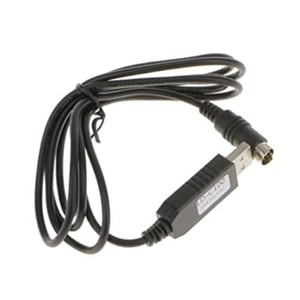
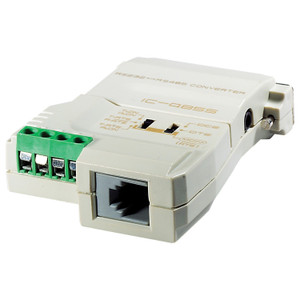
Kantech VC-485 RS-232 to RS-485 Communication Interface
The Kantech VC-485 is a protocol converter that transforms point-to-point RS-232 connections into multi-drop RS-485 networks, enabling multiple access control devices to operate on a single shared communication line. Built for integrators managing heterogeneous deployments—legacy Kantech controllers alongside third-party readers, panels, and credentials systems—the VC-485 eliminates the wiring overhead and cost of running dedicated RS-232 connections to each device. In sprawling facilities, multi-building campuses, or retrofit projects where cable distance and noise immunity are constraints, this compact interface reduces installation labor and future expansion costs.
Key Features
- RS-232 to RS-485 Protocol Conversion: Translates single RS-232 host port into multi-drop RS-485 trunk. Supports up to 32 devices on one communication line without additional hubs or repeaters.
- Extended Cable Distance: RS-485 permits cable runs of 1,200+ meters (4,000 feet) versus RS-232's 15-meter practical limit. Reduces intermediate repeater cost on large campuses.
- Superior Noise Immunity: Differential RS-485 signaling rejects electrical interference common in industrial and outdoor access control deployments. Maintains signal integrity in electrically noisy environments (motor drives, HVAC, lighting ballasts).
- Multi-Drop Architecture: Single communication line connects multiple devices—Kantech controllers, third-party readers, badge encoders, and credential servers—without separate wiring runs. Measurably reduces copper cable and conduit cost.
- Compact Form Factor: DIN-rail mountable, small footprint suitable for controller cabinets and telecom closets. Reduces footprint overhead in space-constrained electrical rooms.
- Kantech and Third-Party Compatibility: Works with Kantech access control systems (K2, KT-400, KT-500 series) and any RS-232/RS-485 capable device. No proprietary firmware locks integrators into single-vendor ecosystems.
- Passive Integration: No external power supply required in many configurations. Draws minimal current, reducing load on facility power infrastructure.
Deployment Context: When Multi-Drop Networks Pay Off
The VC-485 solves a specific but common problem: legacy RS-232 networks don't scale. A facility with 8 doors initially wired to a single Kantech controller via RS-232 can add 24 more doors using the same controller and communication line by converting to RS-485 at the outset. Retrofit projects—parking structures, warehouses, multi-tenant buildings—benefit most. Instead of running new RS-232 cables to a second or third controller location, a single RS-485 trunk serves all devices. This architecture also insulates you from vendor lock-in: if a Kantech reader fails, you can replace it with a compatible RS-485 reader from another manufacturer without rearchitecting the entire network.
Integration with Kantech and Standard VMS Platforms
The VC-485 is transparent to the host system—it operates at the physical and link layer only. Your Kantech access control software, reporting tools, and any integrated VMS or security information management system see no difference in device behavior. A third-party platform that speaks Kantech's protocol (or any standard RS-485 command set) will poll devices downstream of the VC-485 identically. This simplicity is a feature: no additional configuration, no new software drivers, no maintenance burden beyond initial installation. The converter simply moves the signal down the cable. Datasheet available at VC-485 Datasheet for electrical specifications and pinout details.
Total Cost of Ownership: Wiring and Scalability
Over a 5-year lifecycle, the VC-485's real value emerges in cable and labor savings. A 10-device access control network with dedicated RS-232 runs requires ~1,200 meters of copper cable, multiple conduit runs, and individual termination at the controller. The same network on a single RS-485 trunk needs ~400 meters of (cheaper) twisted-pair cabling and one termination point. For a 100-door facility spanning a 500-meter perimeter, this difference funds the converter and ancillary hardware multiple times over. Future expansions—adding 20 doors next fiscal year—cost only the devices and a single cable extension, not rearchitecture of the entire control system.
Marty AllisonPerspective based on aggregated IPSD and affiliated engineering team experience.
We've installed the Kantech VC-485 on dozens of access control networks where legacy infrastructure meets modern expansion demands. What makes this converter invaluable is its invisibility—it sits between the controller and the network, doing one job exceptionally well: converting single-point RS-232 into multi-device RS-485 without adding software complexity or operational overhead. On a 200-door university campus where IT wanted to keep the existing Kantech controller but add badge readers at three new buildings, the VC-485 cut engineering from 8 weeks (redesign entire system, new controller, new wiring) to 2 weeks (run one RS-485 trunk, plug in the converter at the hub, add readers downstream). That payback ratio—reduced project timeline, zero new software licensing, backward compatibility with existing Kantech infrastructure—is why this converter is a standing spec in our refresh playbooks for mature Kantech deployments.
Technical Highlights:
- Multi-Drop Capacity (up to 32 devices): RS-485 topology eliminates one device per serial port limitation. On a single controller with one RS-232 output, you can now address 32 devices. For facilities with 16-port Kantech controllers, this effectively multiplies port capacity without adding hardware.
- Extended Distance (1,200+ meters unrepeatered): RS-232 signal degrades rapidly beyond 50 feet in noisy environments; RS-485 maintains signal integrity at 1,200 meters. Large campuses (airports, hospitals, industrial parks) avoid intermediate repeater infrastructure—cost savings compound quickly at scale.
- Noise Rejection in Industrial Settings: Differential signaling inherent to RS-485 rejects common-mode electrical noise. Installations near high-voltage HVAC, motor drives, or radio transmitters show zero corruption; RS-232 on the same route would require shielding and careful grounding to achieve equivalent performance.
- Passive Topology (No External Power in Most Cases): The VC-485 draws minimal current; many Kantech controllers power it directly from their RS-232 output. Eliminates need for dedicated 12V supplies in remote cabinet locations—reduces footprint and maintenance liability.
- Vendor Agnostic Protocol Support: Works with any RS-485 compliant device speaking Kantech protocol or compatible command sets. You are not locked into Kantech readers; you can mix third-party products as long as they understand the underlying protocol—real freedom in competitive bidding.
Deployment Considerations:
- Termination resistors required: RS-485 trunk lines need 120-ohm termination at both ends. Many integrators miss this—cable runs without proper termination exhibit signal reflections and communication timeouts. Verify your cabling plan includes resistors at the host and furthest device.
- Device polling order matters: In multi-drop configurations, the host system (Kantech controller) polls devices sequentially. If one device hangs or fails to respond, downstream devices may see latency. Ensure your access control software has timeout and failover logic configured appropriately.
- Cable shielding and grounding: While RS-485 tolerates noise better than RS-232, proper grounding of the shield on twisted-pair cable is critical in electrically noisy facilities. Do not run RS-485 trunks alongside 480V power lines without significant physical separation or conduit shielding.
- Baud rate consistency: All devices on the RS-485 network must be configured to the same baud rate (typically 9,600 or 19,200 bps). Mismatched rates will cause communication failures. Verify this before installation, especially on retrofit projects where legacy devices may have been set to non-standard rates.
- Cable length and voltage drop: Long runs (500+ meters) at 9,600 bps usually pose no issue; confirm with your Kantech controller specifications. Some older controllers may require shorter runs or lower baud rates on extended distances—check the datasheet before finalizing your topology.
The VC-485 is the right choice if you have an existing Kantech access control footprint, need to add readers or controllers without a complete system redesign, or operate in electrically noisy environments where RS-232 signal integrity is compromised. It is not necessary for greenfield deployments where you can architect from scratch—modern all-IP access control eliminates serial converters entirely. But for integrators managing mature Kantech estates and budget-conscious facility expansions, this converter is a proven workhorse. Explore the full Kantech catalog for compatible controllers and readers.