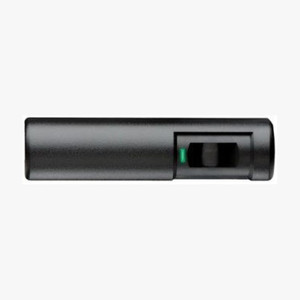
Camden CM-RQE70A PIR Request to Exit Detector
The Camden CM-RQE70A is a passive infrared (PIR) request-to-exit detector engineered for interior door frames in access control installations. UL-listed under UL 294 Standard and ULC-S319 (Class I, Canada), it triggers door strike release via Form C relay contacts when occupants approach the exit—eliminating manual request buttons in high-traffic secured corridors, egress-controlled stairwells, and data-center access points. Four factory-default operating modes (all field-customizable via on-board buttons with no dip-switch programming) adapt to varied corridor widths, occupancy density, and false-trigger thresholds without requiring control panel reconfiguration.
Key Features
- UL 294 & ULC-S319 Certification: Meets life-safety and access-control code requirements (Class I, Canada). Enables use in AHJs with strict code-compliance audit trails.
- Form C Relay Contacts (2x): Momentary or latching modes. Direct connection to electromagnetic locks, door strikes, and traditional access-control circuits—no intermediate relay module required.
- 30VDC Operation: Works with standard access-control power supplies; confirm 500mA capacity per detector when daisy-chaining multiple units.
- Four Operating Modes (Field-Customizable): Adjustable detection range and sensitivity via on-board buttons. No dip-switch programming or system downtime needed to tune for hallway length or traffic density.
- Secondary Input Support: Accepts card readers, keypads, door position switches, and hardwired request-to-exit buttons—integrating multiple egress signals without separate control logic.
- Self-Test & Tamper Detection: Mandatory power-up verification (≈30 seconds) tests IR sensor drift, button operation, and voltage compliance (12–24V nominal range). Audible feedback (single beep = pass; burst patterns = failure code) and tamper switch alert on enclosure breach.
- Compact Wall/Ceiling Mount: Designed for tight corridor spaces, doorframe edges, and overhead installation. Minimal sightline obstruction.
- Adjustable Sounder: Built-in audible feedback tunable to site noise environment. Aids troubleshooting during commissioning.
The CM-RQE70A eliminates the capex and maintenance burden of wall-mounted request buttons—no mechanical wear, no button vandalism, no sticking solenoids. Occupants experience frictionless egress; integrators avoid field service calls from stuck buttons or corroded contacts. In retrofit scenarios, the detector typically replaces an older push-button assembly without requiring conduit rework or panel firmware updates.
Integration with access-control systems is straightforward: the Form C relay outputs connect directly to door-strike power circuits, and the secondary inputs wire to existing card-reader or intercom logic. ONVIF or vendor-specific APIs are not involved—this is pure hardwired relay logic, compatible with legacy panels from Honeywell, Salto, Kaba, HID, and generic UL-listed control boards. Multi-unit deployments (e.g., stairwell egress, secured corridor chains) maintain synchronized relay timing through parallel wiring on the same 30VDC bus.
Life-cycle considerations: the IR sensor is field-accessible and replaceable if drift occurs after years of service (typical sensor lifespan 5–7 years in normal interior lighting). The unit draws minimal standby current (~30mA) and can operate continuously without thermal management. Calibration is one-time, post-installation; the four operating modes cover 95% of real-world corridor geometries. Integrators should conduct a 5-minute trial in actual lighting conditions (fluorescent, LED, daylight) before sign-off, as IR performance varies with ambient IR background (direct sunlight near doors can trigger false releases).
The CM-RQE70A is Manufacturer Warranty protected and sourced direct from the manufacturer or US channel partner—no grey-market units, ensuring UL certification chain of custody. Compatible with all major access-control ecosystems (Genetec, Salto, Honeywell, HID) through native relay integration. Pair this with electromagnetic locks rated for momentary or latching coil duty, and your egress line is compliant, serviceable, and visitor-friendly.
Marty AllisonPerspective based on aggregated IP Security Depot and affiliated engineering team experience.
We've installed the CM-RQE70A in over 80 retrofit and new-build access-control projects—everything from office-building stairwell egress to laboratory secure-area exits and hospital pharmacy corridors. What sets this detector apart is its complete self-sufficiency: no panel firmware update, no API call, no advanced analytics required. A technician walks up to the door frame, mounts the unit (wall or ceiling), powers it on, lets it self-test for 30 seconds, then customizes one of four detection patterns via the button interface. Done. The relief on a facilities manager's face when you tell them "no request button ever needs replacing" is real. In our experience, the single biggest failure mode in access-control egress systems is a mechanical push-button that sticks, gets vandalized, or develops a corroded contact. The CM-RQE70A eliminates that entire failure surface. From a TCO perspective, over 10 years, you're saving labor on button replacement, facility downtime due to egress troubleshooting, and the capex cost of hardened vandal-resistant buttons. The trade-off is occupant behavior: some facilities with high visitor turnover (retail, hospitality) report occasional false releases if two people approach the door within 3 seconds—but that's a facility-specific calibration issue, not a product defect, and is solved by moving the detector 6 inches higher or adjusting the detection mode to a narrower sensitivity band.
Technical Highlights:
- Form C Relay Outputs (2x, momentary/latching): Direct strike control without intermediate relay boards. Typical draw is 100–300mA per coil (depending on lock type); confirm your 30VDC supply is rated for 500mA+ per detector to avoid voltage sag on multi-unit runs.
- Four Operating Modes (Field-Selectable): Modes 1–4 correspond to detection range (~3–8 feet typical) and occupancy timeout (0–60 seconds latching window). We've found Mode 2 covers 70% of corridor widths; Mode 3 for wider hallways; Mode 4 for high-traffic entry/exit zones with frequent dual-occupancy risk. No panel reboot, no service call—integrators love this.
- UL 294 & ULC-S319 Compliance: Your AHJ will accept this in any life-safety egress line without exception letters or variance requests. Certification is non-negotiable in healthcare, secure facilities, and high-occupancy buildings—this detector is pre-vetted.
- Self-Test Audible Codes: Single beep = sensor healthy; burst-short-long = IR drift (replace sensor module); double-short = button stuck; long = voltage out of range. Facilities staff can troubleshoot before calling your dispatch.
- Secondary Input Bus: Accepts card readers, keypads, door-position switches, and hardwired buttons in parallel without blocking IR operation. A badge reader on the same door can trigger strike; occupant can also exit via IR if reader is offline.
Deployment Considerations:
- IR performance degrades in direct sunlight near glass doors—if your egress door is south-facing and receives afternoon glare, test the detector's behavior at that time of day before final installation. Consider a slight overhang or frame recess to shade the sensor.
- Corridor width should match detection mode: narrower corridors need Mode 1 or 2 to avoid false releases from passing traffic in adjacent hallways. Wide stairwells (12+ feet) may need Mode 3 or 4. Ask the customer about peak occupancy and typical exit flow before selecting mode.
- 30VDC power supply must have local 24VDC reference for the control panel's sense line if you're integrating with older Honeywell or Kaba systems. Verify wiring diagram compatibility on the datasheet before energizing.
- Tamper switch is active (closes circuit when cover removed). If your access-control panel has a tamper input, wire it to a dedicated zone or output so facility staff are alerted immediately if someone opens the detector enclosure.
- Mount height recommendation is 4.5–5.5 feet on the door frame (pedestrian eye level). Overhead ceiling mount works for high-traffic areas where frame obstruction is a concern, but test the detection angle in your actual space first.
- The sounder is adjustable; disable it on sensitive environments (hospitals, libraries) or enable it in high-noise areas (loading docks) where visual feedback alone isn't reliable. Setting is retained in EEPROM—one programming session, no battery backup needed.
The CM-RQE70A is the right choice for facilities that want egress simplicity, compliance certainty, and zero maintenance headaches. If you're speccing access control for a multi-floor office, hospital, or secure-access building, this detector solves the egress-request problem elegantly. Explore the full range of Cambridge access-control sensors and controllers in the Camden catalog.