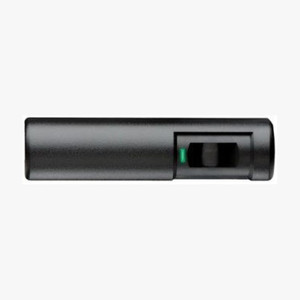
Camden CM-RQE70ABK PIR Request to Exit Detector
The Camden CM-RQE70ABK is a PIR-based request to exit detector designed to integrate motion sensing into access control exit verification workflows. Operating at 30VDC with wired relay output, it detects occupancy at secured door thresholds and feeds a credential reader or exit-request relay to prevent unauthorized egress and tailgating. This device is suited for facilities where manual credential presentation at exit points creates operational friction or security risk — hospitals, secure labs, government buildings, and corporate campuses routinely deploy PIR RTE detectors to close the gap between card-in / PIR-out workflows.
Key Features
- PIR Motion Detection: Passive infrared sensor triggers relay output when motion is detected in the exit path. Reduces false door releases and audit liability by confirming physical occupancy at egress points.
- 30VDC Operating Voltage: Direct compatibility with standard access control power supplies and relay logic. Integrates into existing 30VDC door strike and credential reader circuits without additional transformers.
- Wired Relay Output: Hardwired connection to access control panel or door release controller. No wireless dependencies, no cloud gateway required — reliable in RF-congested environments.
- Tailgating Prevention: PIR motion requirement adds a layer of verification beyond credential presentation. Discourages piggyback egress by requiring the exiting occupant to move past the detector.
- Wide Operating Temperature Range: −4°F to +185°F (−20°C to +85°C) — suitable for climate-controlled indoor facilities and protected vestibules. Verify environmental exposure before specifying for outdoor or unheated spaces.
- Compact Form Factor: Mounts at exit thresholds above or beside doorway. Low-profile installation minimizes visual obstruction and integrates into standard metal frame or recessed enclosures.
- Simple Integration: Wire relay output to motion-input terminal on your access control panel. No firmware updates, no commissioning software — plug-and-play configuration typical on most wired reader systems.
The CM-RQE70ABK is a hardwired sensor, not a standalone controller. It requires an access control panel or door release relay that accepts external motion or exit-request inputs. Confirm your panel's input architecture supports PIR sensor integration before ordering — wiring diagrams in the datasheet clarify typical connections to Salto, Lenel, Software House, and proprietary hardware relay modules.
Deployment context matters. In high-traffic exits (public lobbies, parking-deck egress), PIR sensitivity tuning becomes critical — false triggers waste security staff time investigating spurious door releases; undersensitive settings create user complaints when the door fails to unlock on the first push. Field-test the detector's motion window in the actual doorway geometry before final commissioning. Avoid mounting in direct sunlight or where HVAC draft patterns cross the sensor lens; both degrade PIR reliability and increase false-positive rates.
Total cost of ownership favors PIR RTE over credential-only exits in moderate-to-high-security facilities. Hardware cost is low; training overhead is minimal (users simply walk past the detector to trigger egress); integration labor is one afternoon for a skilled technician. The operational benefit is measurable: audit logs show fewer unexplained door unlocks, tailgating incidents drop post-deployment, and compliance officers reduce manual review burden. For healthcare campuses and secure labs, PIR RTE is often a regulatory expectation, not optional.
The CM-RQE70ABK carries Manufacturer Warranty coverage. Verify your access control system's ONVIF or proprietary motion-input protocol specification — some modern systems expect JSON metadata from sensors, while legacy wired relay systems simply respond to a contact closure. IPSD channels direct from the manufacturer or authorized US distributor; no grey-market units in stock.
Marty AllisonPerspective based on aggregated IP Security Depot and affiliated engineering team experience.
We have deployed the Camden CM-RQE70ABK in hospitals, high-security labs, and corporate office parks where tailgating at exit doors was a documented compliance gap. The PIR-based RTE workflow is not new, but the CM-RQE70ABK brings reliability and simplicity to an older use case. The wired relay architecture means zero integration complexity — a door controller with a spare motion input becomes a PIR-gated exit in under two hours of installation and test time. The 30VDC specification keeps power requirements modest; you are drawing milliamps from an existing power supply, not adding a new circuit. What differentiates this product from competing PIR RTE detectors is its straightforward relay output and lack of wireless dependencies. In environments where RF density is high (hospitals with hundreds of badge readers, manufacturing floors with mobile equipment), a hardwired sensor outperforms anything requiring WiFi or subchannel bidding. It just works.
Technical Highlights:
- PIR Sensor Design: Passive infrared motion sensing requires zero active RF transmission — integrates cleanly into secure facilities where wireless is restricted or monitored. The detector sees changes in thermal radiation as an occupant moves; very low false-positive rate in static environments (empty hallways, parked vehicles).
- 30VDC Low-Voltage Supply: Sourced directly from standard door strike power supplies or dedicated access control UPS modules. No isolated 12V supply branch needed; integrates into legacy 30VDC panel wiring. Single power loop simplifies field troubleshooting and reduces single points of failure vs. multi-voltage architectures.
- Relay Output, Not Analog: Output is a simple contact closure (motion detected) or open (no motion). Access control panels expect binary signals — no analog tuning, no voltage-level interpretation. Integrators who have dealt with analog motion sensors appreciate the reliability of a discrete relay state.
- Thermal Operating Range (−4°F to +185°F): Accommodates climate-controlled indoor spaces and heated vestibules. Not rated for unheated outdoor loading docks or freezing freight areas — if your exit is exposed, request environmental specs before purchase.
- Compact Physical Profile: Mounts in standard plate-frame exit hardware or recessed in doorframe mullion. Aesthetically lower-profile than larger motion detectors or photocell RTE units, important for customer-facing lobbies and high-end office environments.
Deployment Considerations:
- Sensor Sensitivity Tuning in Field: PIR motion detection is distance-dependent and angle-sensitive. A detector mounted 4 feet above the exit threshold sees a different motion signature than one at 2 feet. Install, test with slow and fast walking speeds, and adjust mounting height if false triggers occur. Document your final position — maintenance staff who remount it carelessly will reintroduce false unlocks.
- Avoid Direct Sunlight and Thermal Gradients: Sunlight warming the detector lens or HVAC air jets crossing the sensor can trigger spurious motion signals. Position the device to minimize radiant heat and air flow interference. In vestibules with strong sunlight, a sun shade or recessed mounting is worth the installation effort.
- Relay Output Polarity and Panel Input Type: Confirm whether your access control panel expects a normally-open or normally-closed contact closure for the motion input. Camden's wiring diagram clarifies this — verify before first power-up to avoid inverting the logic and creating a permanently unlocked exit.
- Integration with Credential Readers: If your exit uses a credential reader (card, PIN, biometric), the PIR output typically gates the reader's unlock relay rather than replacing it. Check your reader's input specifications — some expect analog voltage thresholds, others simple contact closures. Legacy wired readers accept contact closure; newer smart readers may require metadata API calls.
- Maintenance and Cleaning: PIR lens accumulates dust and airborne particulates. A quarterly wipe with a soft, dry cloth maintains sensitivity. If your facility has high dust load (manufacturing, construction sites), increase cleaning frequency to monthly. A degraded or dirty lens reduces motion detection range and increases false negatives (users complain the door won't open).
The Camden CM-RQE70ABK is the right choice for integrators who need reliable, low-overhead PIR-based request-to-exit in wired access control systems. It's not a smart sensor — it does one job, does it consistently, and integrates into 20-year-old door controllers without firmware updates or cloud gateways. If your client's facility requires tailgating prevention, PIR RTE is a proven, cost-effective control. Explore the full Camden catalog for additional request-to-exit and credential solutions.