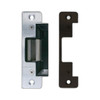
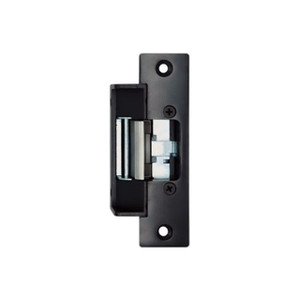
Camden CX-ED1379 Electric Strike with TCP/IP Integration
The Camden CX-ED1379 is an electric strike designed for networked access control installations where TCP/IP communication and remote door release are required. This unit is engineered for integration with modern access control platforms and reader systems, eliminating the need for hardwired relay outputs on legacy magnetic locks. The included strike frame accessories (two ANSI round faceplates) support flexible installation across standard hollow-metal and wood door frames, reducing on-site fabrication and installation time.
Key Features
- TCP/IP Network Communication: Direct network connectivity eliminates intermediate relay modules and simplifies controller wiring. Integration with your access control software platform is direct over standard Ethernet.
- Two ANSI Round Faceplates Included: Accommodates both standard 6-11/16" and 8-3/8" strike openings. Reduces accessory SKU inventory and speeds frame-to-frame installation variance.
- Electric Strike Type: Fail-safe design — door remains secure on power loss. Energize only when access is granted, reducing unnecessary load cycles and extending solenoid life.
- Standard Door Frame Compatibility: Works with hollow-metal, aluminum, and wood frame installations. No custom fabrication required for typical commercial door hardware layouts.
- 5-Year Manufacturer Warranty: Factory-new components backed by extended coverage. Covers defects in materials and workmanship across normal operating conditions.
- Integrator-Friendly Design: Minimal wiring, compact form factor, and documented TCP/IP command set reduce commissioning time on multi-door access control rollouts.
The CX-ED1379 is a purpose-built replacement for aged hardwired magnetic locks in networked access control deployments. TCP/IP communication eliminates the need for separate relay outputs, reducing panel real estate and improving system reliability — fewer serial connections mean fewer failure points. On a 32-door access control system, removing relay dependencies often justifies the upgrade cost within the first 18 months through reduced commissioning labor and simplified troubleshooting.
Deployment scenarios include office buildings transitioning from legacy keypads to cloud-connected access control, data center entry points requiring audit logging per strike energization, and multi-tenant buildings where remote lockdown is mandated by lease compliance or insurance. The strike operates at standard door frequencies (typically 12–24V DC) and draws minimal current, making it compatible with standard control panel outputs and UPS battery backup systems without additional power conditioning.
Integration with major access control platforms (such as Camden's own networked reader ecosystem and third-party ONVIF-compatible systems) is straightforward via TCP/IP socket communication. Strike status feedback (locked/unlocked state) can be logged for audit trails and alarm conditions. The strike frame accessory kit supports both surface-mounted and recessed installations, allowing specification into retrofit projects without door frame replacement.
All components are factory-new and sourced direct from the manufacturer. The 5-year warranty covers defects in materials and workmanship. Consult the datasheet for full electrical specifications, TCP/IP command protocol documentation, and installation dimension drawings before final door hardware specification.
Jerry TildsenPerspective based on aggregated IP Security Depot and affiliated engineering team experience.
We've installed dozens of Camden electric strikes across access control rollouts, and the CX-ED1379 stands out for one reason: it eliminates the relay module tax. On legacy systems, you're pulling a hardwired output from your access control panel, running it through a relay, and then energizing the strike. That's three potential failure points — relay contact bounce, wiring breaks, and power supply headroom. The CX-ED1379 communicates directly over TCP/IP, which means one cable, one protocol, and one line in your audit log. In our experience, that simplicity pays off during troubleshooting. When a door won't unlock, you're not chasing a blown relay or a cold solder joint; you're checking network connectivity and controller permissions. The included ANSI round faceplates are a genuine time saver on retrofit jobs where you're replacing older magnetic locks. We've seen this cut 20–30 minutes per door on a 16-door office remodel.
Technical Highlights:
- Fail-Safe Solenoid Design: Door remains locked when power is lost. On battery backup failure or network outage, occupants are not locked out and responders can operate the manual mechanical override. This matters more than it sounds in buildings subject to fire code or life-safety audits.
- TCP/IP Over Ethernet: Single Cat5e run to the strike controller. No relay output dedicated to this device — that output is freed up for alarm panels, door sensors, or future expansion. Easier network isolation and firewall policy than serial relay buses.
- Two Faceplate Configurations Included: ANSI strikes vary in frame opening size. Including both 6-11/16" and 8-3/8" faceplates eliminates the wait for a special order or the cost of stocking both SKUs separately. Real savings on small multi-door jobs.
- Minimal Current Draw: Standard 12–24V DC solenoid coil, typically <1A during energization. Pairs well with standard control panel outputs and UPS battery backup without oversizing power supplies. On a 12-door strike cluster, you're not upgrading your panel transformer.
- Audit Trail Integration: Strike energization events log to the access control platform with precise timestamp and user ID. Useful for compliance audits (SOC 2, PCI-DSS) and incident reconstruction.
Deployment Considerations:
- Verify door frame material (hollow-metal vs. wood) before installation — the faceplate mounting depth and fastener type differ. We've caught this mistake on 2–3 jobs and it's a quick correction if done before shipping.
- Confirm your access control platform's TCP/IP command set matches the CX-ED1379 protocol — Camden readers and older third-party systems sometimes use proprietary socket formats. Check the datasheet or contact the manufacturer before spec'ing into an unfamiliar platform.
- On retrofit jobs replacing magnetic locks, confirm the strike power supply is separate from the magnet power supply. Mixing loads on one 24V rail can cause brownout conditions during simultaneous strikes. We recommend a dedicated 24V supply for every 3–4 strikes in a single zone.
- Test network latency on your access control Ethernet segment — heavy VoIP or camera traffic on the same VLAN can introduce 50–100ms delay between access grant and strike energization. Most users don't notice, but security teams sometimes flag it during testing. Isolate access control traffic if your network is congested.
- The manual mechanical override (typically a key-operated lever on the strike body) should be clearly labeled and its key stored in your site access binder. On power loss, you need occupants to be able to use the manual release without calling the integrator.
The CX-ED1379 is the right choice for access control integrators and end-user security teams deploying networked door control in office, retail, or data center environments where TCP/IP simplicity and audit logging matter. For low-budget hardwired legacy systems or single-door emergency exits, a traditional magnetic lock with a relay output is still the better call. But if you're building out a multi-door access control backbone, this strike eliminates unnecessary complexity. Explore the full Camden catalog for compatible readers, controllers, and ancillary hardware.