Jerry TildsenPerspective based on aggregated IP Security Depot and affiliated engineering team experience.
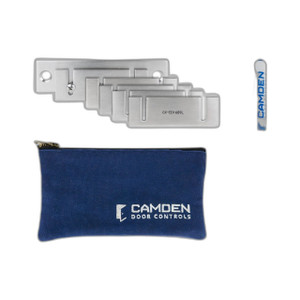
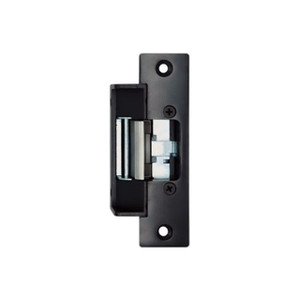
We've deployed the Camden CX-ED2079-1-BK across office parks, education campuses, and hospitality properties for nearly a decade. What makes it stick in our recommendation set is the voltage flexibility and the faceplate modularity—not exotic features, but genuine operational friction-reducers. A single part number that handles both 12VDC controllers and 24VAC legacy systems means your procurement team doesn't have to carry separate SKUs. On a 50-door retrofit, that saves paperwork and stock confusion. The universal faceplate set (ESP1B, ESP3B, ESP4B) means the frame carpenter doesn't have to special-order—we pack the strike, all three faceplates arrive, and one fits. That simplicity carries through to spare-parts logistics: a single replacement unit goes in the technician's van instead of three different strikes.
The Grade 2 holding force is exactly what the ANSI standard intended: adequate for normal commercial egress and access control, not over-specified for environments where people aren't actively defeated or attacking the door. We don't recommend it for loading docks, psychiatric facilities, or high-abuse detention spaces—Grade 1 strikes belong there. But for general office, retail, education, and hospitality? The CX-ED2079-1-BK delivers proven reliability at the right cost-to-performance ratio.
Technical Highlights:
- 12VDC / 24VAC/VDC Field Selectable: No factory configuration required. A single unit accommodates both modern distributed 12VDC systems and legacy 24VAC hardwired panels. On mixed-age buildings, you reduce SKU proliferation and simplify tech training.
- 1,000 lbs Static Holding Force (Grade 2 ANSI): Meets ANSI/BHMA A156.25 Grade 2 minimum. Adequate for standard commercial doors in retail, office, and education. Not rated for high-impact or attack-resistant applications; understand your physical security threat model before substituting down from Grade 1.
- Universal Three-Faceplate System: ESP1B (beveled frame), ESP3B (straight frame), and ESP4B (shallow mount) are factory-included. Eliminates frame-specific purchasing and speeds retrofit installation—especially valuable in buildings with mixed-era door hardware.
- UL 1034 & UL 294 Certification: Fire-rated door compliance. Integrates directly with fire-alarm system door-hold-open logic. Many building codes require UL-listed strikes on fire-rated frames—this is not optional, it's code enforcement.
- Low Current Draw (300mA @ 12VDC, 150mA @ 24VDC): Integrates with any standard access control relay output—no external drivers needed on modern panels. Legacy systems with 1A or 2A relays handle this comfortably. Confirm relay specs during design phase to avoid field surprises.
- Continuous-Duty Rated (700,000 cycles factory-tested, 500,000 UL-verified): No intermittent/duty-cycle restrictions. Works in fail-secure lock-down (continuous energization) or high-frequency access zones without derating. Solenoid coil is designed for permanent load.
Deployment Considerations:
- AC operation (24VAC setting) produces audible buzz from the solenoid coil—typical for relay-driven strikes, but notable in quiet environments (libraries, executive offices). Specify 12VDC field selection if acoustics are a site constraint; DC operation is silent.
- Mount hardware is wood screws (#10 × 1-1/4") into door frame timber. Verify the frame composition (solid wood vs. hollow metal) before installation. Hollow-metal frames require toggle bolts or threaded inserts—standard wood screws will not hold.
- Confirm your access control panel relay output voltage and polarity at design time. Field mistakes (reverse polarity, wrong voltage selection) disable the strike entirely. Wiring diagram is included in the datasheet; laminate it and post it next to the panel during commissioning.
- The strike is fail-safe or fail-secure selectable at installation—a field jumper or factory configuration determines which. Know your egress requirement (ADA life-safety vs. high-security lock-down) before powering up. Changing this in the field requires panel downtime.
- Grade 2 holding force is not rated for high-impact abuse or active attack. If your site experiences door-slamming, forced-entry attempts, or vibration-induced release concerns, escalate to Grade 1 (higher holding force and impact rating). A $50 difference at purchase time beats a $3,000 retrofit after failure.
The CX-ED2079-1-BK is the default specification for integrators deploying cylindrical locksets on standard commercial doors in access-controlled office, retail, education, and hospitality buildings. Its voltage flexibility, faceplate modularity, and UL fire-rating compliance eliminate most spec-time friction. If you're shipping multiple sites or managing mixed-era building stock, this strike reduces procurement, training, and spare-parts overhead. Explore the Camden catalog for complementary lock hardware and control system components.