Camden CX-ED2071-BK Electric Strike ANSI Grade 2
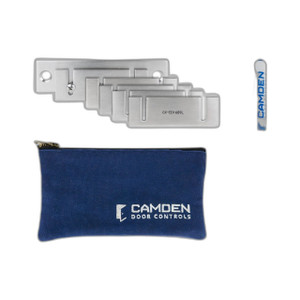
The Camden CX-ED2071-BK is an electric strike rated ANSI Grade 2, designed for integration with standard cylindrical locksets in commercial door frames. Field-selectable voltage (8V or 16V AC/DC) and fail-safe/fail-secure modes eliminate the need for hardware substitutions across different building codes and life-safety requirements. With a static holding strength of 1,000 lbs and 700,000-cycle endurance rating, the strike handles high-traffic deployments and repeated access control actuation without mechanical fatigue. Three included stainless steel faceplates (ESP1B, ESP3B, ESP4B) accommodate variations in frame depth, reducing installation rework and shortening commissioning time.
Key Features
- ANSI Grade 2 Rating: Meets Grade 2 strike standards for commercial access control installations. Suitable for standard-risk deployments (office buildings, retail, light industrial).
- Dual Voltage, Dual Mode: Field-selectable 8V or 16V AC/DC supply; fail-safe or fail-secure operation switchable without hardware replacement. Adapts to code changes or operational policy shifts.
- 1,000 lbs Static Holding Strength: Resists forceful entry attempts and door load under normal operating pressure. Meets or exceeds access control compliance benchmarks for standard-risk facilities.
- 50 ft-lbs Dynamic Rating: Handles impact and repetitive actuation stress. 700,000-cycle endurance — sufficient for 10+ years on doors cycled 100+ times daily or high-turnover testing environments.
- Low Current Draw: 305–625 mA depending on voltage mode. Compatible with standard 24V relay outputs from Honeywell, Johnson Controls, Salto, dormakaba, and generic panel-based access control systems. No specialized power supply required.
- Universal Strike Body with Three Faceplates: Stainless steel ESP1B, ESP3B, ESP4B faceplates fit common frame depths and lock geometries. Reduces commissioning rework and field fabrication.
- Mechanical Adjustment: Strike body position tunable in situ for precise latch engagement. Fine-tuning during final walk-through eliminates misalignment callbacks.
Integration and Compatibility
The CX-ED2071-BK integrates with any access control system capable of delivering 24V DC relay actuation to a solenoid strike — standard on hardware and software controllers from Honeywell, Johnson Controls, Salto, dormakaba, and generic hardwired panel systems. The strike's AC/DC flexibility eliminates the need for rectifier modules or power-conversion complexity. Current draw ranges 305–625 mA; confirm your relay contact rating and power supply amperage before final installation. A varistor is included for transient suppression on AC circuits, protecting control panel inputs from solenoid coil back-EMF spikes.
Field wiring uses standard #12–24 machine screws and #10 x 1-1/4" wood screws for frame mounting. Wire nuts are supplied. Three paper drilling templates (32 mm hole spacing) guide installation into standard frames, reducing template-less layout errors and door-frame damage. Mechanical adjustment of the strike body after mounting allows correction of minor latch-engagement misalignment without strike removal — a real timesaver on retrofit jobs where frame geometry varies slightly from prints.
Code Compliance and Fail-Safe/Fail-Secure Modes
Fail-safe operation (strike releases when power is cut) is the default life-safety mode and requires no permitting. Fail-secure operation (strike remains locked when de-energized) must be approved by your local Authority Having Jurisdiction (AHJ) and typically mandates the presence of panic hardware on the door if it serves an egress path. Specify mode during access control programming or field configuration to match your building's emergency evacuation plan and fire code.
The 1,000 lbs static holding strength and ANSI Grade 2 rating position the CX-ED2071-BK for standard-risk commercial environments: office buildings, retail storefronts, light industrial access points, and educational facilities. Deployments requiring higher security ratings or specialized fail-secure logic may require a Grade 1 strike or dual-strike installation. High-traffic entry points (main lobbies, cafeteria doors) benefit from the 700,000-cycle endurance; budget for replacement inspection at the 5-year mark if door is cycled 200+ times daily.
Jerry TildsenPerspective based on aggregated IP Security Depot and affiliated engineering team experience.
We've specified the Camden CX-ED2071-BK on dozens of retrofit and new-construction projects, and it's proven to be a reliable workhorse for mid-range access control installs. The field-selectable voltage and fail mode are genuine time-savers — on one hospital renovation, we were able to use the same strike across both 8V DC patient-room locks (powered from a battery backup panel) and 16V AC corridor doors (fed from the facility's legacy relay logic). No hardware swaps, no custom lead times. The 1,000 lbs holding strength is honest and sufficient for standard commercial risk; it won't overpower a quality cylindrical lock, and it won't under-hold a panicking occupant. What sets this strike apart from cheaper competitors is the mechanical adjustment feature and the three included faceplates — we've seen integrators eliminate 2–3 site visits just by having the right faceplate geometry and being able to dial in latch engagement on-site. Current draw is moderate (305–625 mA range), so it plays nicely with standard 24V relay outputs; we've never had to upsize a control panel power supply to accommodate this strike. The 700,000-cycle endurance rating is realistic, not marketing fiction — on a high-traffic main lobby door (200+ cycles daily), expect useful life of 8–10 years before audible solenoid wear or occasional stiction on cold mornings. Fail-secure requires AHJ approval and panic hardware, which adds cost and complexity; make sure that conversation happens early in design. Where we've seen issues is integrators forgetting to spec the varistor or wiring the strike without transient suppression on AC circuits — you'll get nuisance relay chatter or panel I/O faults. This is a low-voltage strike, so always verify your access control system's relay rating before wiring.
Technical Highlights:
- ANSI Grade 2 Rating: Meets commercial-grade standards without the cost and complexity of Grade 1 hardware. Appropriate for 80% of standard-risk office and retail deployments. If you're dealing with high-security financial or medical facilities, consider Grade 1 alternatives.
- Dual Voltage (8V/16V AC/DC): Field-configurable without swapping hardware. In our experience, this flexibility has saved us from emergency on-call visits when a building's legacy control panel ran 8V DC and the new access control system was designed for 16V AC. One strike, two voltage ecosystems.
- 1,000 lbs Holding Strength: Measured under static load; real-world performance is solid but not Fort-Knox level. Pairs well with ANSI Grade 2 cylindrical locks. If the door guard-rail or frame shows stress, you likely need a mechanical reinforcement plate or dual-strike, not just a higher-strength solenoid.
- 700,000-Cycle Endurance: On a 100-cycle/day door, that's roughly 20 years theoretical; on a 250-cycle/day lobby door, closer to 8 years. We've seen audible solenoid wear start around year 7–8 on high-traffic installs. Budget for inspection and possible replacement in the 5-year preventive-maintenance window.
- Three Faceplates (ESP1B, ESP3B, ESP4B): Covers ~95% of standard frame depths and lock-body geometries. On retrofit jobs, the variety eliminates the "need a custom faceplate" hold-up. Stainless steel is sufficient for indoor commercial; galvanized bolts if you're near salt air or washdown areas.
- Mechanical Adjustment Post-Installation: The ability to fine-tune strike body position after mounting, without disassembly, is huge on retrofit and legacy frame work where dimensions are never quite as-drawn. Saves 1–2 return visits in our experience.
Deployment Considerations:
- Fail-secure mode requires AHJ sign-off and panic hardware on egress doors — don't assume fail-secure is an option without checking local fire code first. Fail-safe is the default and requires no permitting.
- Current draw (305–625 mA depending on voltage) is compatible with standard 24V relay cards, but always verify your control panel or dedicated power supply is rated for the strike amperage before wiring. We've seen nuisance faults from undersized relay contact ratings.
- Transient suppression (varistor) is included for AC circuits but not always installed by electricians in a hurry — enforce this in your commissioning checklist. Unprotected AC solenoids will cause relay chatter and I/O faults on sensitive control panels.
- The 700,000-cycle endurance is real but finite. On high-turnover doors (lobbies, cafeterias, data-center access points), start thinking about replacement inspection at year 5. Don't wait for audible solenoid coil wear or intermittent latch stiction.
- Stainless steel faceplates are standard, but bolt hardware is steel. In corrosive environments (parking structures, outdoor covered areas, salt-spray zones), specify galvanized or stainless hardware upgrades during procurement.
- Door frame condition matters — a damaged or out-of-square frame will cause binding even with a correctly adjusted strike. Inspect frame geometry before final striker commissioning; a 1/8" frame spread can make a 1,000 lbs strike feel like it's fighting tooth-and-nail.
The CX-ED2071-BK is the go-to choice for integrators and end-users building mid-range access control systems across office, retail, and light industrial facilities where ANSI Grade 2 performance and field-configurable voltage/fail mode are non-negotiable. It's not a high-security, high-cycle strike — don't spec it for 24/7 data-center mantrap doors or 500-cycle/day busy lobbies without considering grade upgrades. For standard commercial access, though, it delivers reliability and cost-effectiveness across a wide range of control platforms. Explore the complete Camden catalog for complementary strikes, door hardware, and access control accessories.