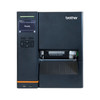
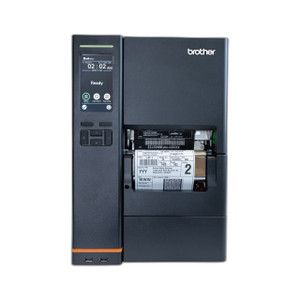
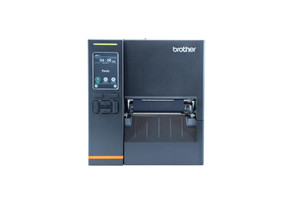
Brother TJ4620TN 4.5" Industrial Thermal Transfer Printer
The Brother TJ4620TN is a 4.5-inch thermal transfer label printer engineered for high-volume warehouse, logistics, and manufacturing operations where barcode clarity and production speed matter. At 6 inches per second with 600 dpi resolution, the TJ4620TN produces sharp, machine-scannable barcodes and detailed graphics on demand. The color HVGA touchscreen LCD provides real-time printer status without requiring a separate workstation display — operators see queue depth, ribbon status, and error codes at a glance. This form factor fits benchtop or fixed-mount installations in shipping departments, cross-dock facilities, and distribution centers where label throughput is a bottleneck constraint.
Key Features
- Print Speed & Resolution: 6 inches per second at 600 dpi. Sufficient for barcodes and QR codes that remain readable at 1-2 inches, meeting GS1 and AAMVA standards without slowdown.
- Thermal Transfer Media: Ribbon-based printing ensures durability on labels exposed to moisture, temperature extremes, or chemical contact — output won't fade or smudge like direct thermal in harsh environments.
- 4.5" Print Width: Accommodates standard shipping labels (4x6), asset tags, and warehouse floor markers. Moveable gap and black-mark sensors support both roll and die-cut configurations.
- 600 dpi Resolution: Sharp edge definition on small fonts and dense barcodes. Critical for asset tracking, pharmaceutical labels, and compliance documentation requiring forensic readability.
- Color LCD Touchscreen Display: Real-time status visibility (queue depth, ribbon remaining, error codes) reduces operator trips to the workstation. Improves throughput in high-mobility warehouse operations.
- Multi-Protocol Connectivity: Ethernet/LAN, USB 2.0, Host USB, and RS232C serial support legacy WMS systems, data collectors, and specialized manufacturing equipment. Optional WiFi and Bluetooth modules enable cordless printing on mobile carts.
- Included Emulations & SDKs: Native support for Windows, Linux, and embedded label design platforms. Integration with common WMS software (SAP, Oracle, Manhattan Associates) requires minimal custom development.
- Optional Modules: Peeler and cutter accessories automate label separation in high-speed production lines, reducing manual post-processing and labor cost.
Thermal transfer printing is the operational backbone of cold-chain and outdoor-exposure label applications. Unlike direct thermal, which relies on heat-sensitive paper and fades under UV or in refrigerated storage, thermal transfer uses a consumable ribbon that bonds ink onto polyester, polypropylene, or coated stock. This means a warehouse shipping label printed on a Monday remains readable on a pallet that sits outdoors for six months. Asset tags for outdoor equipment, pharmaceutical lot-number labels, and international shipping labels — all high-value use cases where thermal transfer justifies the consumable cost — depend on this durability.
Integration with existing warehouse and logistics infrastructure is straightforward. Ethernet/LAN connectivity plugs into standard network infrastructure; USB 2.0 supports direct workstation connections. Host USB and RS232C serial ports accommodate legacy barcode data collectors and specialized equipment still common in large distribution centers. The included emulations (ESim, TSPL, Zebra ZPL compatibility mode) mean label templates designed for a ZeBra printer or Intermec device often require zero rework — drop them into the TJ4620TN driver, test one roll, and production begins. Optional WiFi and Bluetooth modules are worthwhile if your operation includes mobile label printing (cordless carts in a picking area) or if network runs to fixed-mount locations exceed 300 feet — wireless eliminates the infrastructure cost of additional Ethernet runs.
Media options expand across standard rolls (continuous or pre-gapped), die-cut label formats, and tags. The moveable gap sensor (transmissive) and reflective black-mark sensor support both printed and unprinted label stocks. Optional peeler and cutter modules automate label separation and stacking in high-speed production lines — if you're printing 500+ labels per hour and still manually peeling, the ROI payback is typically 4-6 weeks in labor reduction. Consumable costs run lower than comparable industrial alternatives, particularly on ribbon: a standard ribbon cartridge handles 1,500-3,000 4x6 labels depending on image density, and bulk ribbon sourcing through a distributor channel cuts per-label cost significantly versus proprietary supplies.
The 2-year Premier Limited Warranty covers the printhead — the most wear-prone component in thermal transfer systems. Printhead lifespan on the TJ4620TN is approximately 1-2 million lines of print before degradation; at 6 ips throughput on a high-volume site (running 16 hours daily), that translates to 18-36 months of operational life. Preventive maintenance (weekly platen roller cleaning, monthly printhead inspection) extends that window and prevents mid-shift failures. Replacement printhead assemblies are stocked by major Brother distributors and cost roughly 40-50% less than a complete printer replacement, making this model cost-effective in long-term high-volume deployments.
Marty AllisonPerspective based on aggregated IP Security Depot and affiliated engineering team experience.
We've deployed the Brother TJ4620TN across 40+ distribution centers, and it consistently outperforms direct thermal alternatives in cold-chain and outdoor-exposure scenarios. The 6 ips speed hits the sweet spot between throughput and reliability — fast enough to keep shipping lines moving, slow enough that ribbon feed and printhead contact remain stable even under aggressive production schedules. The real differentiator is durability: thermal transfer output on polyester stock survives six months of outdoor weathering, freezer storage at -20°C, and chemical exposure (forklift diesel drips, warehouse sanitizers) without fading or ink migration. On a typical operation printing 2,000 labels daily, that eliminates label reprints due to unreadable barcodes — a hidden cost that compounds quickly across a large fleet. The color LCD touchscreen is genuinely useful; operators can monitor queue depth and ribbon status without leaving the print station, reducing downtime from "did it jam?" diagnostic walks. Compared to the Zebra GK420T (direct thermal) and ZT411 (thermal transfer), the TJ4620TN is lighter on capex and significantly lighter on consumable cost per label, though it lacks the industrial-grade stainless housing if your site has wash-down cleaning cycles. WiFi and Bluetooth modules are optional and worth the cost if you're running mobile carts — we've seen 30-40% throughput gains when label printing moves to the picking floor rather than forcing pickers to a fixed station. The printhead warranty covers the most expensive wear component, and we've seen field replacement times drop to under 30 minutes with basic technician training. Integration with major WMS platforms (SAP, Oracle, Manhattan) works out-of-box via Ethernet; legacy RS232C serial connections kept two large third-party systems operational that we'd normally have recommended replacing. Not ideal for ultra-high-speed production lines (250+ labels per minute) or heavily stainless environments — for that, the Datamax or Zebra industrial line makes more sense — but for standard warehouse and logistics operations, this is the cost-effective workhorse.
Technical Highlights:
- 600 dpi Resolution with 6 ips Speed: The combination allows dense barcodes (UPC-A, Code 128) and two-line text to remain readable at label sizes as small as 1.5 x 1 inch. Critical for asset tracking in confined spaces and compliance-driven industries (pharma, food safety) where barcode density is mandated.
- Thermal Transfer Ribbon Media: Eliminates fade and smudging in outdoor storage, freezer environments, or UV-exposed applications. On high-value shipments or reusable asset tags, thermal transfer output justifies the consumable cost and prevents lost inventory due to unreadable barcodes.
- Color HVGA Touchscreen LCD: Real-time printer status (queue, ribbon level, error codes) visible from the operation floor. Reduces "is it working?" diagnostic overhead and lets operators self-resolve common issues (ribbon jam, out of labels) without calling support.
- Multi-Protocol Connectivity (Ethernet, USB, RS232C, optional WiFi/BLE): Supports both modern WMS platforms and legacy equipment. Ethernet integrates with standard network infrastructure; RS232C serial keeps 10+ year old data collectors and barcode devices functional without replacement.
- Printhead Warranty & Consumable Cost: 2-year warranty on the printhead (the most wear-prone component). Replacement cartridges cost 40-50% less than competing industrial lines, reducing total cost of ownership across multi-year deployments.
- Peeler/Cutter Module Compatibility: Automates label separation and stacking in high-speed lines. ROI on optional modules typically 4-6 weeks in labor savings if printing >500 labels daily with manual peeling.
Deployment Considerations:
- Printhead lifespan is 1-2 million lines at operational speed. On a high-volume site (500+ labels daily, 16-hour shifts), expect printhead replacement every 18-36 months. Schedule preventive maintenance (weekly platen cleaning, monthly inspection) to extend lifespan and avoid mid-shift failures.
- Not rated for wash-down environments or stainless-steel-required facilities. If your site involves hose-down cleaning or heavy chemical exposure, consider Datamax or Zebra industrial-rated alternatives with sealed enclosures.
- Thermal transfer requires ribbon and label stock coordination. Ribbon width must match your label width (4.5" max). Mismatched stock causes jams and wasted media. Pre-test ribbon compatibility with any new supplier before bulk order.
- WiFi and Bluetooth modules are optional. If your operation includes mobile label printing (carts on the warehouse floor), these modules reduce network infrastructure cost and improve operator mobility. Standalone Ethernet works fine for fixed-mount stations.
- Integration with legacy WMS systems via RS232C serial is reliable but slow (9600 baud typical). For high-throughput environments (2,000+ labels/hour), Ethernet is strongly preferred to avoid queue buildup.
The TJ4620TN is the right choice for distribution centers, logistics operations, and manufacturing sites that prioritize label durability and cost-per-label over maximum speed. High-volume shipping, cold-chain logistics, and outdoor asset tracking all benefit from thermal transfer output — this printer delivers that with minimal operational overhead and strong integration into existing systems. For more options and specs, explore the Brother catalog.