
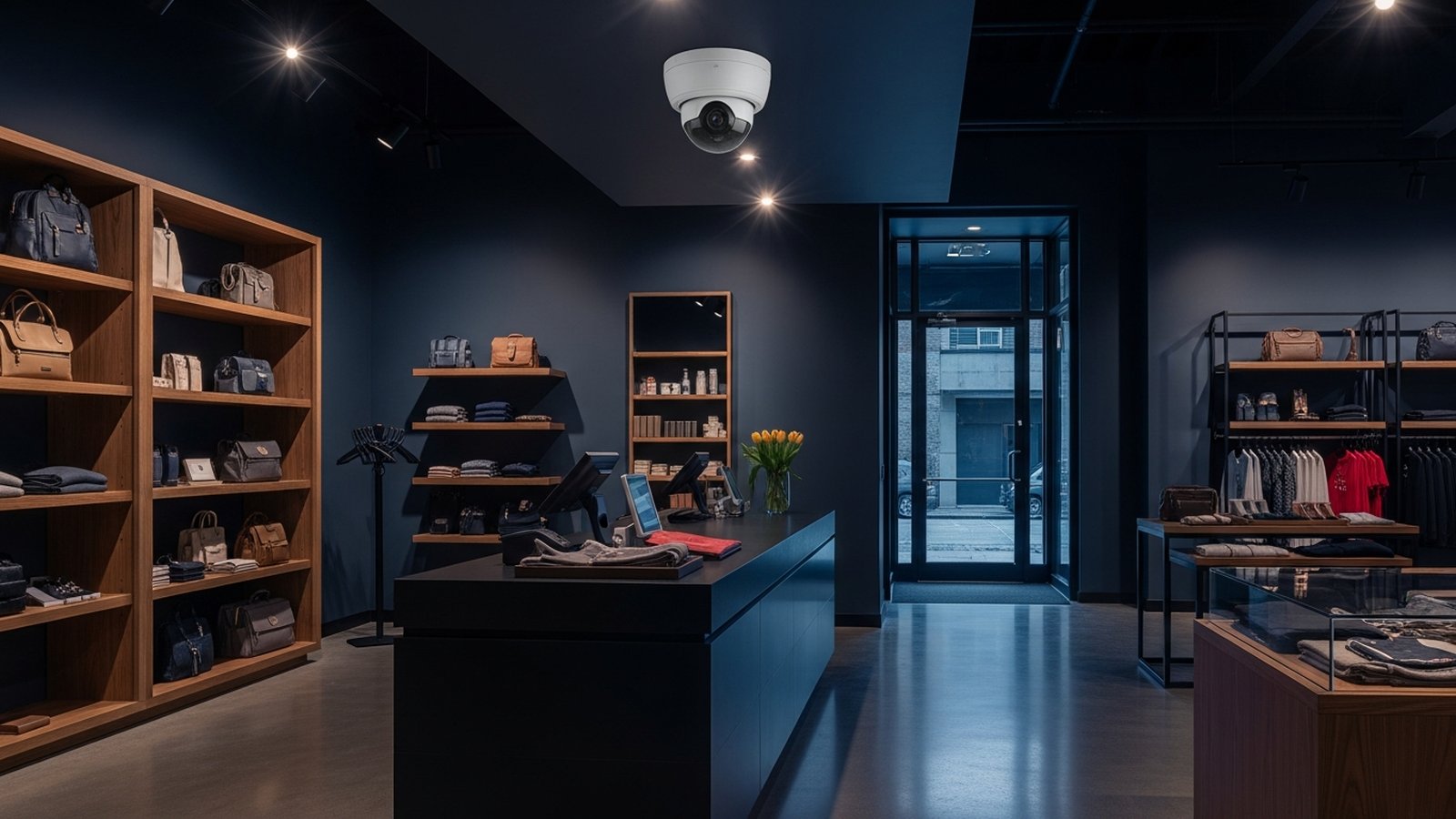
Retail Camera Placement Guide: POS, Entrance, Stockroom
Retail camera placement is loss-prevention first. The POS register angle, the storefront deterrent position, the sales-floor coverage, and the stockroom-to-sales-floor transition are the positions that actually reduce shrinkage. This guide walks through practical placement with mount heights, angles, and the positions proposals tend to get wrong.
Bottom Line
Retail placement follows specific rules: POS camera at 8-10 feet angled 30 degrees off the customer axis; storefront camera at 10-12 feet facing the entry for deterrence; sales-floor domes spaced every 25-35 feet; stockroom cameras at entry points and high-value storage; parking at 12-15 feet on light-pole mounts.
Our team has installed retail surveillance across independent stores and chain retailers. These rules reflect what works for loss-prevention outcomes.
Best For
- Retail operators planning a new or refresh deployment
- Loss-prevention directors reviewing camera layouts
- Integrators specifying retail placement
Not For
- Warehouse
- Cannabis
- Office
In This Guide
POS Register Placement
One camera per register. Shared coverage across registers fails loss-prevention requirements.
Angle: 30 degrees off the customer-register axis. Captures drawer (with cash and product visible), product being transferred, and customer face simultaneously.
Mount height: 8 to 10 feet on the wall or ceiling opposite the register.
Resolution: 4MP minimum, 4K AI preferred for high-traffic chains.
Frame rate: 15-30 fps. Higher captures faster scan motions.
Continuous recording: Not motion-triggered — every transaction is a potential incident.
Storefront and Entrance Placement
Exterior storefront camera: 10-12 feet above the entry door facing outward. Captures anyone approaching; serves as visible deterrent.
Interior entry camera: 9-10 feet on the wall facing the entry. Captures customer face as they enter.
Double-entry handling: For stores with separate entry and exit, cover both with dedicated cameras.
WDR for glass handling: 120dB+ WDR required. Storefront glass creates mixed lighting that defeats budget cameras.
Visible signage at entry: Posted surveillance notice reinforces the deterrent and satisfies disclosure requirements in most jurisdictions.
Sales Floor Coverage
Spacing: Indoor domes every 25-35 feet in standard retail layouts. Closer in high-value zones.
Mount height: 9-10 feet on drop-ceiling tile.
Angle: Along aisles rather than across. Along-aisle captures customers walking past; across-aisle wastes pixels on shelving.
Open-plan and large floor: 360-degree fisheye at ceiling center replaces 3-4 fixed cameras.
High-value merchandise: One camera per high-value display case. 4K AI at jewelry, electronics, or high-shrink categories.
Dressing room entries: Cover the corridor to dressing rooms, not the interiors. Dressing-room interior cameras create significant privacy issues.
Stockroom and Back-of-House
Stockroom entry: One camera covering the door from the sales floor. Captures anyone entering the BOH.
Stockroom interior: One or two cameras covering the main storage area, positioned so the entire room is visible.
Receiving and loading dock: One camera covering the dock opening and one covering the dock-to-stockroom path.
Employee break and locker areas: No cameras inside. Cover the entry from the hallway.
High-value secured storage (safe, jewelry vault, controlled substances): Dedicated camera with continuous recording and longer retention.
Parking Lot and Perimeter
Light-pole mount: 12-15 feet on existing light-pole mounts where available.
Angle: Along drive aisles and main walking paths, not at individual parking stalls.
Entry and exit coverage: One camera covering vehicle entry, one covering exit.
Dark corners and dumpster areas: One camera per position. Catches after-hours loitering and vandalism.
Curbside pickup (post-pandemic): One camera covering the curbside-pickup zone for order-fulfillment documentation.
Common Retail Placement Mistakes
Single camera covering multiple POS registers. Insufficient for loss prevention. One per register.
Missing customer-face angle at POS. Camera captures register but not customer. Re-angle.
Facing storefront camera into direct sunlight. Overexposes the image. Use 120dB+ WDR cameras at storefront.
Across-aisle camera orientation. Wastes pixels on shelving. Orient along the aisle.
No coverage of stockroom entry from sales floor. Missing the transition point is a loss-prevention gap.
Cameras inside dressing rooms. Privacy-law issue. Cover the corridor only.
No POS exception integration. Missing the highest-ROI loss-prevention feature.
Parking stall-by-stall coverage. Wasted pixels. Aim at drive aisles and walking paths instead.
Recommended Cameras by Retail Position
Cameras matched to placement scenarios.
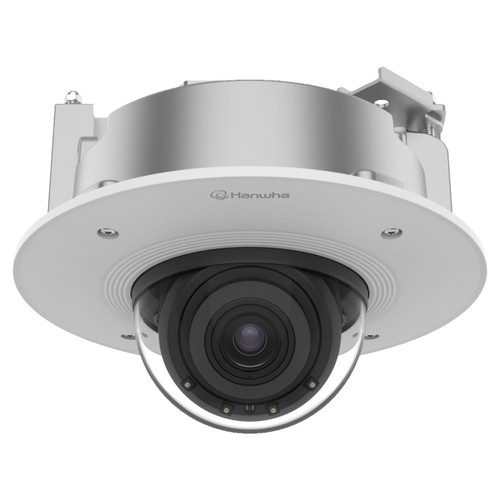
Hanwha
Hanwha PND-A9081RF 4K Indoor AI IR Dome IP Camera
PND-A9081RF
4K AI for register position at 8-10 ft mount, 30-deg angle.
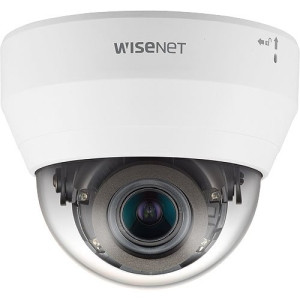
Hanwha
Hanwha QND-7082R 4MP Indoor IR Dome Camera
QND-7082R
4MP dome spaced 25-35 ft on drop ceiling.
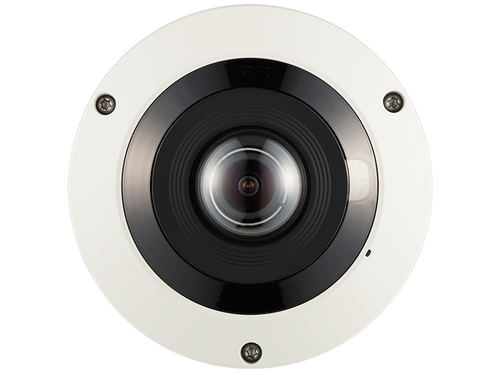
Hanwha
Hanwha PNF-9010RV 12MP 360˚ Fisheye Camera
PNF-9010RV
12MP fisheye ceiling center for large floors.
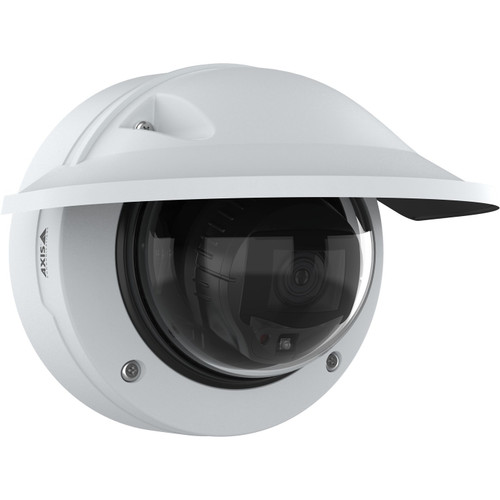
Axis
Axis P3277-LVE 5MP Outdoor AI IR Dome Camera - 03153-001
03153-001
Axis P3277-LVE for glass-front mixed lighting.
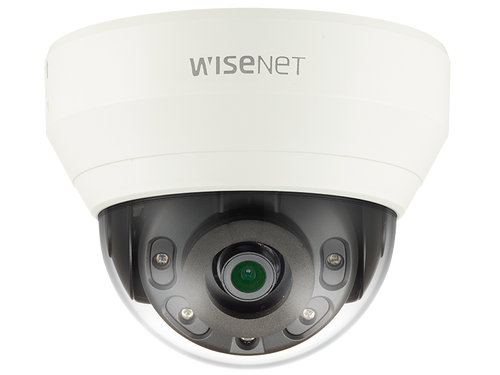
Hanwha
Hanwha QND-6010R 2MP Network IR Dome Camera
QND-6010R
Budget 2MP for stockroom interior.
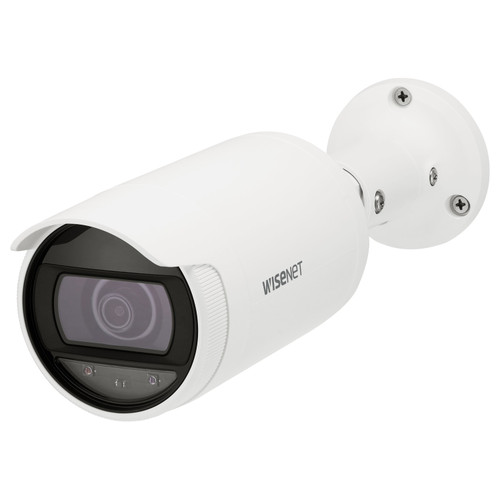
Hanwha
Hanwha ANO-L7012R 4MP Wide-Angle Low Light Outdoor Bullet IP Camera
ANO-L7012R
Outdoor bullet at 12-15 ft on light poles.
Also Consider
Additional options for high-value positions or high-contact entrances.
Hanwha
Hanwha PND-A9081RF 4K Indoor AI IR Dome IP Camera
PND-A9081RF
4K AI at jewelry, electronics, or high-shrink display cases.
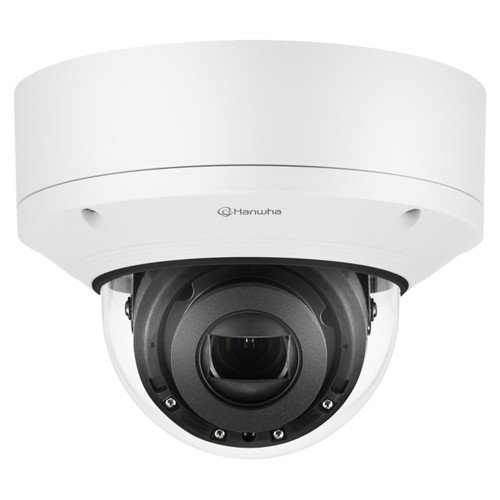
Hanwha
Hanwha XND-6081RV 2MP Vandal-Resistant Dome Camera
XND-6081RV
IK10 dome for high-contact entrance positions.
Frequently Asked Questions
What's the right mount height for POS cameras?
8-10 feet on the wall or ceiling opposite the register. Angle 30 degrees off the customer-register axis.
How should I space sales-floor cameras?
Every 25-35 feet for standard retail. Closer spacing in high-value zones.
Where should storefront cameras go?
Exterior at 10-12 feet facing outward for deterrence; interior at 9-10 feet facing the entry for customer capture. Cover both sides of the doorway.
Can cameras go inside dressing rooms?
No. Privacy-law issue. Cover the corridor to dressing rooms only.
What's the biggest retail placement mistake?
Sharing one camera across multiple POS registers. Each register needs its own dedicated camera to meet loss-prevention requirements.
How do I handle storefront sunlight?
Use cameras with 120dB+ WDR at storefront positions. Budget cameras lose faces in overexposure; Axis P3277-LVE and Hanwha PND-A9081RF handle this reliably.
No Bots, Just Experts
No bots, just experts. Free pre-sales support for every customer — product questions, BOM quotes, compatibility checks, price confirmation — typically answered within one business day. Paid services available like full system design, remote installation, and more. Know what you need? Send us your BOM, free quote. Need camera placement designed from a floor plan? That is engineering work — $175 per hour, qty 1 = 1 hour. Typical single-site placement runs 3 to 4 hours. We scope the hours with you before you purchase. Hardware buyers get up to one hour ($175) credited back against their order as a thank-you.