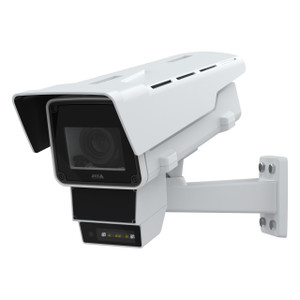
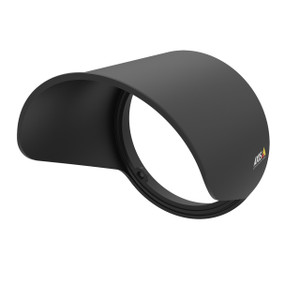
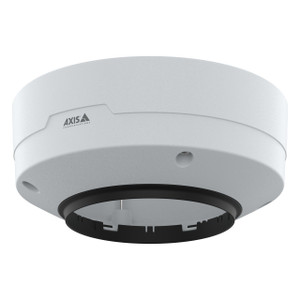
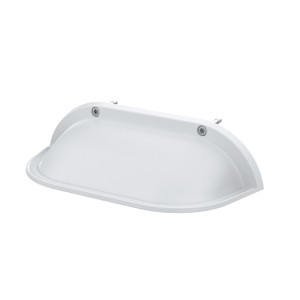
Axis 02968-001 Q1686-DLE Radar-Video Fusion Outdoor Camera
Overview
The Axis 02968-001 is a dual-sensor outdoor network camera that fuses millimeter-wave radar with video analytics to detect and track moving objects in conditions where traditional IP cameras lose effectiveness. Radar maintains target acquisition through fog, heavy rain, and snow—weather that renders video-only systems unreliable. The camera tracks objects moving at speeds up to 200 km/h (125 mph), making it purpose-built for perimeter security, traffic enforcement, and infrastructure monitoring where environmental variables and high-speed movement are routine.
Key Features
- Millimeter-Wave Radar + Video Fusion: Radar operates independently of visibility, so detection accuracy remains consistent in fog, rain, snow, and darkness. Video provides contextual classification and visual verification without requiring radar to fail first. This redundancy cuts false alarms compared to single-sensor systems.
- High-Speed Object Tracking (200 km/h): The 02968-001 sustains tracking on vehicles and pedestrians moving at extreme speeds—critical for highway monitoring, airport perimeters, and port security where slower-moving targets miss fleeting threats.
- IP66 Weatherproof Enclosure: Fully sealed against dust and direct rain jet spray, so you can deploy this outdoors without weatherproof housings or additional protective covers. Not submersion-rated (that would require IP67), but standard outdoor exposure is handled.
- Automatic Vehicle and Pedestrian Classification: On-camera analytics distinguish vehicle from human targets, enabling scenario-specific alert rules. Reduces alert fatigue by filtering out irrelevant motion and letting security staff focus on genuine threats.
- Power over Ethernet (PoE) Connectivity: Draws power via standard network cabling, eliminating the need for separate 12V or AC infrastructure at the camera location. Simplifies installation on poles, rooflines, and remote perimeter points where running dedicated power is expensive or impractical.
- 24/7 Day/Night Operation: Combines radar's all-weather capability with video processing that adapts to daylight and low-light conditions. No blind hours; threats are detected and logged continuously regardless of illumination or weather.
- VMS Integration via ONVIF and Proprietary APIs: Integrates with network video management systems using standard protocols, so you deploy it alongside existing Axis and third-party camera infrastructure without system overhauls.
Integration & Compatibility
The 02968-001 outputs standard RTSP/ONVIF streams and supports event-driven alerting through webhook and syslog protocols. Works with Axis Camera Station, Milestone XProtect, and other ONVIF-compliant VMS platforms. Radar detections and video analytics trigger separate alert channels, allowing your VMS to correlate radar hits with video events and suppress false positives before they reach security personnel.
When to Choose a Different Model
If your deployment is primarily indoors or in sheltered loading areas, a standard outdoor IP camera with advanced video analytics may suffice and cost less. If you need PTZ (pan-tilt-zoom) capability for wide-area scanning, consider a radar-video variant with motorized optics in the Axis Q-series. If your maximum tracked speed is under 50 km/h and fog is not a factor, a single-sensor thermal or visible-light camera reduces cost and complexity.
Why Radar-Video Fusion Matters for Your Deployment
Traditional cameras struggle with adverse weather and high-speed objects because video relies on contrast and motion blur, both of which degrade under rain, fog, or snow. Radar operates at millimeter wavelengths that pass through water and ice; it detects motion by measuring Doppler shift (frequency change caused by a moving object), independent of lighting or visibility. Pairing radar with video ensures that any object the radar locks onto is visually verified, drastically reducing false alerts from radar noise while maintaining detection when video fails. This is why the 02968-001 is deployed at facilities where a missed intrusion or traffic violation carries high cost or risk.
Frequently Asked Questions
Q: Does the Axis 02968-001 work in complete darkness?
A: Yes. Radar requires no ambient light and tracks objects in total darkness. Video analytics also function with radar detections; the radar initiates tracking, and video provides context. Without external lighting, video won't show detail, but radar maintains detection and threat classification.
Q: What is the typical installation height and coverage range for the 02968-001?
A: Mounting height and detection range depend on target size and speed. The radar-video fusion is designed for perimeter and open-area monitoring (parking lots, highway segments, airport runways, port access roads). Consult the technical datasheet or a systems integrator for site-specific coverage modeling based on your facility's layout and threat profile.
Q: Can the 02968-001 distinguish between a vehicle and a large animal or object?
A: The on-camera classification algorithms are trained to identify vehicles and pedestrians. Classification confidence improves at moderate speeds and on clear backgrounds. False classifications can occur with very small vehicles or unusual objects; your VMS can filter alerts by confidence threshold to minimize noise.
Q: Is the 02968-001 compliant with NDAA Section 889 or export restrictions?
A: Axis products are generally available for civilian and commercial use. For NDAA or export compliance verification, contact the manufacturer or your authorized Axis distributor with your specific regulatory requirements and intended deployment country.
Q: What PoE wattage does the 02968-001 draw, and will a standard 802.3af switch port support it?
A: Exact power draw is specified in the technical datasheet. Radar-video fusion cameras typically exceed 802.3af (15.4W) limits and require 802.3at PoE+ (30W) or higher. Verify your network switch's per-port power budget before deployment to avoid brownout or intermittent power loss.
Q: How is the 02968-001 mounted—pole, wall, or ceiling?
A: The camera is designed for outdoor pole and wall mounting. The mounting bracket and orientation depend on your perimeter layout and radar beam direction (radar has a specific azimuth and elevation pattern). Work with your integrator to orient the unit correctly; improper mounting can degrade detection coverage.
James EverettPerspective based on aggregated IP Security Depot and affiliated engineering team experience.
The Axis 02968-001 addresses a real operational gap where environmental factors routinely blind traditional video surveillance. I've worked outdoor perimeter deployments where fog, rain, or snow render video-only systems useless for hours at a time. The 02968-001's millimeter-wave radar maintains detection independent of visibility, while the video layer provides the context you need to avoid false alerts from radar artifacts or weather-induced noise. That 200 km/h tracking capability is not marketing speak—it's a hard limit on object velocity the radar can lock onto and the video can correlate. If your perimeter sees traffic at highway speeds or your facility requires detection through seasonal weather, this camera earns its premium cost.
Technical Highlights:
- Radar-Video Correlation: Radar detections automatically trigger video recording and analytics at the same timestamp. This correlation drops false-positive rates significantly because radar noise (e.g., rain clutter, wind-blown debris) is rejected if video doesn't confirm a moving object in the same location.
- IP66 Weatherproof Enclosure: Protects internal radar and thermal imaging optics from direct spray and dust. No external housing needed on poles or exposed rooflines, which cuts installation labor and bill-of-materials cost on large perimeter deployments.
- PoE Power Simplification: Dual-sensor systems often require high-current 12VDC runs or dedicated AC drops. PoE+ (802.3at, 30W minimum) powering keeps cabling centralized and future-proofs the installation if you later add companion cameras or network storage nearby.
Deployment Considerations:
- Radar beam pattern and coverage are site-dependent. Unlike video, which has a visual field you can see in advance, radar operates in a cone or rectangle that must be aligned to your threat axis. Incorrect orientation leaves blind zones. Budget time for site modeling or a test deployment before committing to full-perimeter installation.
- PoE+ power budget is a real constraint. A single 802.3af port won't suffice; you need 802.3at or higher. Verify your network switch's total power budget and remaining capacity before deploying multiple units.
- Radar performs best on metal-bodied vehicles and human-sized targets. Very small objects or non-metallic targets may have reduced detection range. If your perimeter includes unmanned aerial vehicles (UAVs) or small animals, radar alone won't catch them reliably—you'll need supplementary detection.
Position the 02968-001 at fixed perimeter points—fence lines, parking entry gates, cargo dock approaches—where steady-state surveillance beats pan-tilt flexibility. It's a specialized tool for high-traffic or high-weather-impact sites where a video-only camera repeatedly fails. For controlled indoor environments or low-speed monitoring, the complexity and cost aren't justified.
Key Specifications:
Color: White