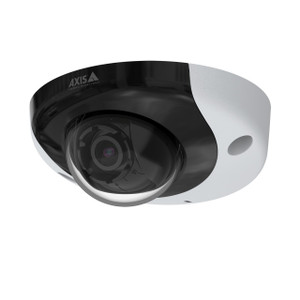
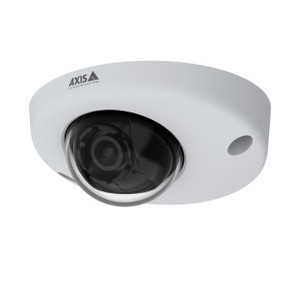
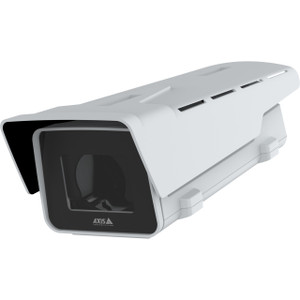
Axis 01932-001 2MP Vehicle IP Camera with M12 Connector
The Axis 01932-001 is a purpose-built 2MP onboard vehicle IP camera engineered for transportation surveillance in buses, trains, emergency vehicles, and mobile security applications. This model combines cinema-grade low-light imaging with industrial durability—delivering forensic-quality footage in conditions where standard cameras fail. The rugged M12 connector and PoE Class 3 power reflect automotive-grade engineering, eliminating the need for separate power supplies and simplifying vehicle integration.
Overview: Low-Light Excellence Meets Vandal Resistance
The 01932-001 addresses a specific deployment gap: capturing usable detail in both sunlit and shadowed cabin environments simultaneously. The 1920×1080 resolution paired with a 110° horizontal field of view covers most cabin activity in a single camera position, reducing installation footprint and cost in space-constrained vehicles. Its Lightfinder technology delivers 0.06 lux minimum illumination in color mode—meaning you capture color detail under moonlight or minimal cabin lighting without switching to infrared or losing investigative context. For comparison, standard vehicle cameras typically require 1–5 lux or higher, forcing reliance on IR (which removes color detail needed for incident documentation).
The Forensic WDR engine processes extreme lighting contrasts in real time, capturing usable detail in both the brightly lit windshield and the shadowed interior simultaneously. This matters in incident investigations: backlit glare from windows no longer erases cabin detail, and you avoid the overexposed or underexposed footage that complicates legal review.
Key Features: Durability and Integration
- M12 Connector with Rotatable Coupling Nut: Rugged, automotive-grade wiring standard that survives vibration and thermal cycling in mobile environments. Eliminates loose RJ-45 connectors that fail under vehicle shock loads.
- IP66 and IK10 Ratings: IP66 blocks dust and water jets from any direction—standard for transit interiors and exterior mounting. IK10 vandal rating absorbs impacts up to 20 joules (equivalent to a 5 kg object dropped 40 cm)—essential for public vehicles where deliberate or accidental damage is routine.
- PoE Class 3 Power (under 13W typical): Single 12VDC-equivalent PoE connection powers the camera through existing vehicle wiring harnesses or standard PoE injectors. No separate 24VDC supplies or relay modules needed, reducing wiring complexity and failure points.
- Built-in Infrared LEDs (Invisible 850nm): Provides illumination in total darkness without visible glow that distracts or alerts occupants. The IR output complements Lightfinder: color mode for ambient light, IR for zero-light scenarios.
- H.264 with Zipstream Compression: Intelligent bitrate optimization reduces bandwidth and storage by 30–50% compared to standard H.264, allowing longer retention on onboard or mobile NVR systems without upgrading storage capacity.
- Audio Capture with Detection: Integrated microphone and audio-triggered alerts support incident investigation without requiring separate microphone modules. Audio analytics can flag voice patterns associated with disturbances.
- Digital I/O and Alarm Inputs: Integrates with vehicle management systems—door sensors, emergency buttons, or vehicle CAN-bus events can trigger recording flags or analytics on the camera itself.
- Enterprise Security (HTTPS, IEEE 802.1X, Signed Firmware): Prevents unauthorized access or firmware tampering, critical for law enforcement and regulated transit operators handling evidence.
Optical and Environmental Specifications
Field of View and Lens: 2.8mm fixed focal length with f/1.6 aperture delivers a 110° horizontal × 62° vertical field of view—wide enough to capture most cabin scenes from a single installation point, reducing per-camera cost in vehicles with space constraints. The 2MP sensor (1920×1080) at 25/30 fps is sufficient for forensic facial recognition at typical cabin distances (2–8 meters) without wasting bandwidth on ultra-high resolution.
Operating Temperature: –40°C to +55°C covers extreme climates without performance degradation—essential for vehicles operating in arctic winters or middle-east heat. Standard cameras typically specify –10°C to +40°C, forcing seasonal maintenance or replacement.
Compliance and Standards: Compliance with EN50155 (rail), EN45545 (rail fire safety), and NFPA 130 (US transit) eliminates custom certification work for operators in regulated transportation sectors. Evidence from tampering alarms and time-stamped footage meets admissibility standards in incident litigation.
Integration with Vehicle and Transit Systems
The 01932-001 supports ONVIF-compliant video management platforms, allowing integration with third-party NVR systems or vehicle-mounted mobile recorders. AXIS Camera Application Platform (ACAP) support enables onboard video analytics—object detection, loitering alarms, or crowd-counting—without offloading processing to a central server. This is particularly useful in vehicles operating in areas with intermittent connectivity (tunnels, remote routes).
When to Choose a Different Model
If your deployment requires higher resolution for license-plate or facial detail at distances beyond 8 meters, consider a higher-megapixel variant in the same Axis vehicle camera family. If you need silent (no audio) operation or cannot accommodate onboard microphones, this model's audio capability is non-removable. If your vehicle environment exceeds +55°C (e.g., non-air-conditioned cabins in direct sunlight), verify thermal performance under those specific conditions before deployment.
Frequently Asked Questions
Q: Is the 01932-001 suitable for exterior mounting (e.g., side-view or bumper-mounted applications)?
A: Yes. The IP66 and IK10 ratings support exterior installation, and the M12 connector design is ruggedized for outdoor vibration. However, verify mounting bracket availability and heat dissipation; extended exposure to high direct sunlight (above +55°C ambient) may require passive thermal management.
Q: What is the maximum IR illumination range of the built-in LEDs?
A: Evidence does not specify a maximum IR range. The 850nm built-in infrared is designed for cabin-level distances (typically 3–10 meters). For longer-range IR requirements, consider external supplemental IR lighting or a variant with higher IR output.
Q: Does the 01932-001 require a separate PoE injector, or can it connect directly to a PoE switch?
A: It draws under 13W (PoE Class 3), so any standard 802.3af or higher PoE switch will power it directly. In vehicles without PoE infrastructure, a passive PoE injector or 12VDC-to-PoE converter is commonly used.
Q: Is the camera compliant with NDAA Section 889 or other US government procurement restrictions?
A: Evidence does not confirm NDAA compliance for this model. Contact the manufacturer or your specialty distributor to verify export control and government procurement eligibility.
Q: Can I use the 01932-001 with Milestone XProtect or other third-party VMS platforms?
A: Yes. The camera supports ONVIF-compliant video management systems. Milestone and other major platforms recognize ONVIF Profile S/T devices. Verify integration with your specific VMS version before large-scale deployment.
Q: What is the warranty period on the 01932-001?
A: Warranty information is not provided in the available evidence. Contact your specialty retailer for warranty terms and support options.
James EverettPerspective based on aggregated IP Security Depot and affiliated engineering team experience.
The Axis 01932-001 fills a genuine gap in onboard vehicle surveillance: cinema-grade low-light performance (Lightfinder at 0.06 lux) paired with industrial durability rated for impact and environmental abuse. The Forensic WDR is the standout feature—it captures usable facial detail in both sunlit and shadowed cabin zones simultaneously, eliminating the either/or tradeoff that plagues standard vehicle cameras. Where competitors force you to choose between color fidelity and dynamic range, the 01932-001 delivers both in a single frame.
Technical Highlights:
- Lightfinder Technology at 0.06 lux: Captures color detail under moonlight or minimal cabin illumination. Standard vehicle cameras require 1–5 lux or higher, forcing reliance on infrared and loss of investigative color context. This is a real differentiator in low-light transit environments.
- Forensic WDR Processing: Simultaneously handles extreme lighting contrasts—bright windshield glare and dark interior shadows in the same frame. Critical for incident documentation where backlit scenes typically render the cabin as a silhouette on competing equipment.
- M12 Connector with Rotatable Coupling: Automotive-grade wiring standard that survives vibration and thermal cycling. RJ-45 connectors fail under vehicle shock loads; M12 is the standard for mobile and rail environments for exactly this reason.
- IP66 / IK10 Ratings: IP66 blocks dust and water jets; IK10 absorbs deliberate or accidental impact (5 kg dropped 40 cm). Combined, they mean the camera survives both environmental exposure and the abuse routine in public vehicles.
- H.264 with Zipstream Compression: Intelligent bitrate optimization reduces storage by 30–50% compared to standard H.264—measurable savings when deploying multi-camera systems on onboard or mobile NVRs with fixed storage.
Deployment Considerations:
- Thermal Management in Non-Air-Conditioned Vehicles: The +55°C operating limit is firm. Parked vehicles in direct sunlight can exceed this; verify passive heat dissipation or active cooling in your climate before deployment to avoid thermal shutdown.
- M12 Connector Availability: While M12 is standard in automotive and rail, ensure your vehicle's existing wiring harness supports M12 or budget for connector adapters. This is not a plug-and-play retrofit on every legacy vehicle.
- Compliance Dependency: EN50155, EN45545, and NFPA 130 compliance is certified, but only relevant if you operate in those regulated sectors. Don't pay for certifications you don't need in commercial or private fleet applications.
Position this camera for transit operators (buses, trains, emergency services) and law enforcement deployments where low-light forensic quality and impact durability are non-negotiable. The 110° field of view and cabin-focused design make it ideal for interior monitoring; exterior mounting is possible but not the primary use case. Skip this model if you need wide outdoor coverage or license-plate capture at distance—higher-resolution or PTZ variants are better choices for perimeter surveillance.
Key Specifications:
Color: White