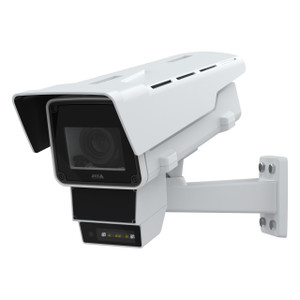
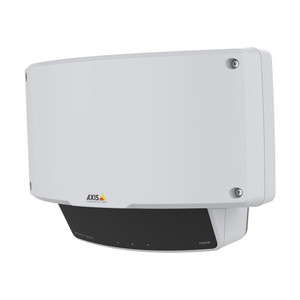
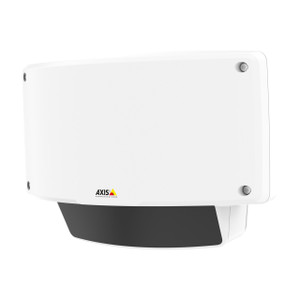
The D2123-VE represents a paradigm shift in perimeter detection by decoupling detection from visible-light imaging. Unlike traditional camera-based systems, FMCW radar propagation physics eliminates dependency on ambient light, fog, rain, or infrared complexity—critical for 24/7 unattended outdoor monitoring. The 270° aperture is a significant operational advantage: it cuts the number of required sensors by roughly one-third compared to 180° alternatives while maintaining edge coverage quality, directly reducing total cost of ownership.
AI classification at the edge—distinguishing humans from vehicles from environmental clutter—is computationally demanding. Axis delegates this to ARTPEC-9's dedicated DPU, meaning analytics run locally without cloud latency or bandwidth tax. The 0.9 m distance accuracy and 3 m spatial differentiation are industry-standard for FMCW radar; tightly grouped crowds or bumper-to-bumper vehicle columns may blur into single targets, a limitation inherent to the physics, not a design flaw.
Integration with PTZ cameras via radar autotracking bridges the detection-to-identification gap: radar finds the threat; the camera verifies and documents it. This dual-layer architecture is essential for SOC workflows where false positives carry operational cost. PoE+ simplifies deployment in remote locations with no local power infrastructure. Specify mounting height carefully—every meter of elevation extends range proportionally, but mounting higher than 10 m introduces gimbal stability challenges and angle-of-incidence effects on low-profile targets.