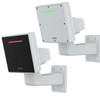
Build Your Complete System
Manufacturer-verified compatible cameras, recorders, mounts, accessories, and licenses for this product. Adjust quantities and add the entire bundle to your cart in one click.
No Bots, Just Experts
Questions about this product? Free pre-sales support from a senior specialist — product questions, compatibility checks, BOM quotes, price confirmation — typically answered within one business day. Need camera placement or system design work? Engineering time is $175 per hour (qty 1 = 1 hour). Hardware buyers get up to one hour ($175) credited back on their order.
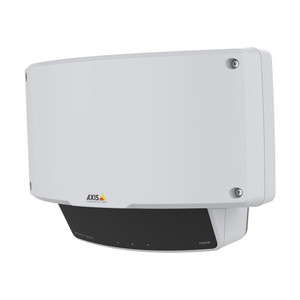
Axis 02955-001 D2210-VE Radar Detection System
The Axis 02955-001 is an FMCW (frequency-modulated continuous-wave) radar detection system engineered for perimeter security, area monitoring, and road surveillance. Unlike traditional motion detection or passive infrared, this millimeter-wave radar operates in the license-free 61 GHz band regardless of lighting, weather, or visual obstructions—meaning it delivers reliable object detection in fog, rain, darkness, and behind obstacles where video cameras fail.
Detection Capability & Coverage
The D2210-VE ships with two selectable detection profiles. Area Monitoring Profile detects humans up to 60 m (200 ft) and vehicles up to 90 m (300 ft), supporting speeds up to 55 km/h (34 mph)—fit for warehouse perimeters, parking lots, and access gates. Road Monitoring Profile extends vehicle detection to 150 m with speed tracking up to 200 km/h (125 mph), making it suitable for traffic control and highway access points. A 95° horizontal field of view reduces blind spots and minimizes the number of units needed to cover a site.
Object classification happens in real time: the system automatically sorts detections into humans, vehicles, or unknown objects, then reports range, direction, and velocity. With a 10 Hz refresh rate and ±2 km/h speed accuracy, the 02955-001 tracks fast-moving threats with precision. Spatial differentiation down to 3 m means two vehicles approaching close together are reported as separate objects, not merged into a single alert.
Processing & Integration
Onboard processing uses Axis' ARTPEC-8 processor (1 GB RAM) paired with a dedicated deep learning processing unit (DLPU) for edge-based analytics. This means threat classification and filtering happen locally—you don't pay for bandwidth shipping raw radar data upstream. The unit supports up to 8 coexisting radar sensors within a 350 m radius without interference, thanks to dual-channel frequency configuration (61.00–61.50 GHz).
Integration options include configurable detection zones, line crossing detection, and smart filtering to ignore short-lived objects (blowing debris, birds). Event-driven actions trigger I/O relay control, MQTT publishing, HTTP/HTTPS notifications, and email alerts. The system includes AXIS Speed Monitor for vehicle speed enforcement and AXIS Radar Integration for Microbus; third-party applications deploy via ACAP support. For PTZ camera setups, the 02955-001 supports autotracking via Slew to Cue integration, allowing cameras to automatically frame detected threats.
Video output is auxiliary: the unit streams up to 20 concurrent H.264/H.265 streams (1920×1080 down to 640×360, up to 10 fps) for visualization and archive. A dynamic RGB LED indicator with 60 m daylight visibility provides local alarm signaling visible across large outdoor areas.
Rugged Outdoor Deployment
The D2210-VE is rated IP66 (dust-tight, high-pressure jets) and IP67 (temporary submersion), with an aluminum casing meeting IK10 impact resistance—vandalism and weather won't stop it. Operating temperature range spans -40 °C to 60 °C (-40 °F to 140 °F); wind-rated to 75 m/s (168 mph). A single PoE connection supplies power and network; the unit also provides PoE output for external devices. MicroSD/microSDHC/microSDXC storage includes AES-256 encryption for local video archive, with NAS recording also supported. Axis recommends mounting at 3.5–12 m height with a 15° tilt for optimal detection geometry.
Security & Standards
Enterprise security includes signed firmware, OAuth 2.0 authorization, IEEE 802.1X/802.1AE network authentication, and TLS 1.2/1.3 encryption. The unit complies with ONVIF Profile G, ensuring vendor-neutral VMS integration. Certifications span UL/cUL, CE, CSA, RCM (Australia/NZ), FCC Part 15 Class A, and ICES-3(A) (Canada)—full North American and European compliance.
Frequently Asked Questions
Q: Does the Axis 02955-001 work in snow, fog, or heavy rain?
A: Yes. FMCW radar operating at 61 GHz penetrates precipitation and fog far better than visible-light cameras or passive infrared. This makes it ideal for unattended outdoor perimeters in variable weather.
Q: Can I use multiple D2210-VE units without interference?
A: Yes. Up to 8 coexisting units operate within a 350 m radius using dual-channel frequency configuration (61.00–61.50 GHz). This allows large-area coverage with overlapping detection zones without crosstalk.
Q: Does the 02955-001 require a separate NVR or VMS?
A: No. The D2210-VE is self-contained: it processes detections locally, logs events, and can output alerts via HTTP, MQTT, or email directly. It can also stream H.264/H.265 video to an NVR or VMS for centralized archiving, but that's optional based on your workflow.
Q: What's the maximum range for vehicle detection?
A: In Road Monitoring Profile, vehicles are detected up to 150 m (492 ft). Area Monitoring Profile detects vehicles to 90 m. The actual range depends on vehicle size and radar cross-section; larger vehicles are detected at greater distance than motorcycles.
Q: Is the D2210-VE compatible with autotracking PTZ cameras?
A: Yes. The system supports AXIS Radar Autotracking via Slew to Cue integration. When the radar detects a threat, it can command a PTZ camera to pan/tilt toward the target for visual confirmation and recording.
Q: What power does the 02955-001 consume?
A: Power delivery is a single PoE connection (IEEE 802.3af/at compatible), eliminating the need for separate 12VDC supplies. Exact wattage depends on configuration; consult the datasheet or contact pre-sales engineering for your exact setup.
The Axis 02955-001 solves a specific problem most integrators face: perimeter coverage in poor visibility. Traditional cameras + motion detection fail in fog, heavy rain, or darkness unless you add expensive thermal or dual-spectrum hardware. Radar doesn't care. The 61 GHz FMCW band is license-free and poses no health risk, yet penetrates weather and obstacles that blind video. For warehouse or port perimeters where you need all-weather detection independent of lighting, this is materially different from layering cameras with outdoor cameras.
Technical Highlights:
- 95° horizontal FOV + 60 m human / 90 m vehicle range (Area Profile): Single-unit coverage of roughly 2,700 m² for persons—that's an entire large parking lot or warehouse perimeter with one install. Compare that to deploying five wide-angle cameras to achieve similar area.
- Dual-channel 61.00–61.50 GHz with 8-unit coexistence: Not a single narrow frequency. The frequency agility means you can scale from one radar to a multi-unit perimeter fence without redesigning cabling or retuning. Eight units within 350 m is plenty for most large sites.
- 10 Hz refresh rate + ±2 km/h speed accuracy: This is real-time tracking, not post-event analysis. You catch moving threats within 100 ms, not seconds. Speed accuracy down to ±2 km/h matters for road profiles—you distinguish a slow-rolling truck from a speeding vehicle reliably.
- Local DLPU processing with ONVIF Profile G: Detection classification (human vs. vehicle) happens on the 02955-001 itself. You don't stream unfiltered radar data to a server farm. ONVIF compliance means you plug it into Milestone, Axis Camera Station, or generic VMS without custom drivers.
Deployment Considerations:
- Mount height matters: Axis recommends 3.5–12 m at 15° tilt. Too low and ground clutter (puddles, small objects) trigger false positives. Too high and short humans blend into background. Plan your tower or pole height during site survey.
- Weather rating is IP66/IP67, not hermetic: IP67 means brief submersion, but this isn't a submarine sensor. Heavy salt spray (coastal installations) may require periodic inspection of connectors. Budget for corrosion-resistant mounting hardware in marine environments.
- PoE power is sufficient for radar + video streaming: A single Ethernet run covers both data and power—no separate 12VDC feed needed. But if you plan to daisy-chain external sensors or heaters via the PoE output, verify total load doesn't exceed your switch's power budget.
- False alarms drop significantly with zone configuration: The 02955-001 supports multiple zones with different sensitivity profiles. Configuring zones to ignore short-lived detections (birds, leaves) and focusing on sustained motion reduces nuisance alerts vs. an unconfigured default.
The 02955-001 is a natural fit for unattended perimeters (warehouses, construction sites, utility compounds) where weather is a daily reality and you need detection that works 24/7 regardless of daylight or lens fogging. It's also ideal for integrators who need to add detection to an existing camera system without rewiring—mount the radar, plug in PoE, and let it feed threat coordinates to your PTZ cameras for visual confirmation via autotracking.
Videos Hide Videos Show Videos
Axis D2210-VE Radar Detection System - 02955-001
Build Your Complete System
Manufacturer-verified compatible cameras, recorders, mounts, accessories, and licenses for this product. Adjust quantities and add the entire bundle to your cart in one click.
Looking for more Axis products? Shop the full Axis catalog →
System Design, Deployment & Technical Support
Support services and planning resources for commercial surveillance, access control, and infrastructure deployments.
Fixed scope • Fixed price
System Design Assistance
- Get help validating product compatibility
- Coverage requirements
- Storage planning and deployment architecture before you buy.
Deployment & Configuration Support
- Access fixed-scope support for rollout planning
- User setup guidance
- Migration and system standardization across single-site or multi-site deployments
Guides, Tools & Calculators
- PoE requirements
- Storage retention
- Camera selection and deployment methodology