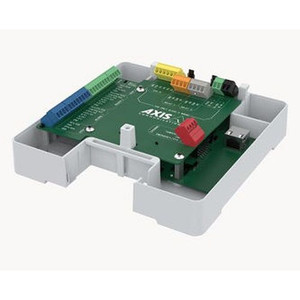
Axis C6110 Network Paging Console
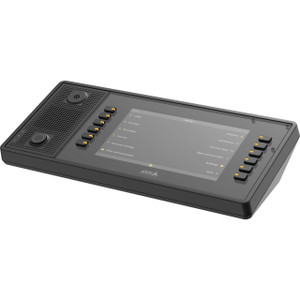
The Axis C6110 (model 02789-001) is a network-based paging console designed to deliver facility-wide announcements over IP infrastructure without requiring separate analog PA systems. Built-in microphone enables standalone operation for immediate deployment—no external audio interface needed in baseline configurations. The console sits at the control point of distributed audio systems in corporate offices, educational campuses, healthcare facilities, retail locations, and industrial sites where centralized paging must integrate seamlessly with IP security architectures and network communication platforms.
Key Features
- Integrated Microphone: Built-in audio input eliminates dependency on external audio interfaces. Plug-and-play paging without additional hardware procurement or setup complexity.
- Network-Based Architecture: IP connectivity over standard Ethernet. Audio distribution leverages existing network infrastructure, reducing cabling costs in multi-floor or retrofit installations.
- PoE Operation: Single Ethernet cable delivers power and data. Simplifies wiring and integrates with standard PoE 802.3af switches already deployed in enterprise facilities.
- ONVIF Compatibility: Works with ONVIF-capable VMS platforms, access control systems, and IP communication ecosystems. Cross-vendor integration without proprietary gateways.
- Optional Gooseneck Microphone: AXIS TC6901 accessory upgrades audio capture for larger spaces or fixed-mounting scenarios where operator positioning requires enhanced mic reach.
- Compact Form Factor: 16.1 x 2.9 x 1.8 inches, 0.4 lb. Desktop or wall-mount deployment without taking up significant control-room real estate.
Network-based paging eliminates analog wiring runs to distant speakers and loudspeaker arrays. Audio distribution happens over existing Ethernet infrastructure, reducing installation labor in retrofit or multi-floor environments. A single console can reach dozens of IP-connected speakers across a facility without requiring amplifier racks or impedance calculations.
The C6110 integrates into Axis audio and communication ecosystems. In healthcare settings, coordinated emergency announcements via IP paging sync with video monitoring and access control lockdown during security events. In retail, facility managers can broadcast store-wide promotions, opening/closing announcements, and service calls from a single desktop console. On educational campuses, synchronized IP paging reaches dormitories, classroom buildings, and athletic facilities without installing separate analog PA cabling to each structure.
The console pairs with Axis IP audio architecture standards, allowing integration into larger communication systems that blend video, audio, and metadata across facility management platforms. ONVIF Profile-compliant operation means you can automate paging triggers from video analytics—for example, perimeter detection events can trigger pre-recorded facility alerts without operator intervention. This synchronization between security events and audio response reduces response latency during emergencies.
Deployment considerations include network bandwidth (minimal for voice-grade audio), PoE power availability on the serving switch port, and placement to avoid speaker feedback from nearby paging horns. Operator positioning should allow unobstructed access to the built-in microphone and clear sightlines to ensure announcements are audible without excessive volume. In noisy industrial environments, the optional TC6901 gooseneck microphone provides directional audio pickup and improved intelligibility.
The Axis C6110 ships with the console and integrated microphone. No external PA amplifier, analog mixer, or speaker hardware is included—the console is a control and audio input device that feeds IP audio streams to networked speakers and endpoints managed elsewhere in your facility infrastructure. Consult the system architect to define speaker array topology, PoE power budgeting, and VMS event-trigger policies before installation.
Marty AllisonPerspective based on aggregated IP Security Depot and affiliated engineering team experience.
We've deployed the Axis C6110 across a range of enterprise facilities—corporate campuses, K-12 schools, hospital systems, and mixed-use retail complexes—and it fills a genuine gap in the market: a lightweight, IP-native paging entry point that doesn't require separate PA vendor relationships or analog audio infrastructure. The built-in microphone is genuinely plug-and-play; in smaller facilities (under 50,000 sq ft with modest speaker counts), you mount it, connect to PoE, and start paging immediately. The network-based architecture means cabling is already there if you've deployed IP cameras and access control. We've seen the largest ROI in retrofit scenarios where analog PA wiring doesn't exist—adding IP speakers and the C6110 console costs materially less than running legacy mic lines and amplifier racks through an existing building.
The ONVIF integration is where real operational value emerges. We've set up automated paging policies in Axis Camera Station and third-party VMS platforms where perimeter intrusion events trigger pre-recorded facility alerts—"Unauthorized entry zone 7, activating lockdown"—without requiring an operator to manually grab the mic. That synchronization between video analytics and facility-wide audio response is powerful for emergency response, and it's something most analog PA systems can't do without expensive third-party middleware.
Honest limitations: the built-in microphone is consumer-grade, adequate for quiet office environments but prone to feedback and background noise pickup in industrial or high-ambient-noise spaces. The optional TC6901 gooseneck addresses this, but that's an additional cost. The C6110 is a console—it's not a speaker, amplifier, or speaker management system. If you don't already have IP speakers deployed (or if your facility is all analog), you're building out speaker infrastructure separately, which complicates the project timeline. And the console itself draws minimal PoE power, but if you're running dozens of IP speakers, your PoE infrastructure upgrade cost scales quickly.
Technical Highlights:
- PoE 802.3af Operation: Consumes <13W, works with standard enterprise PoE switches. Simplifies power distribution and eliminates wall-outlet dependency for the console itself.
- Built-in Audio Input: Integrated microphone captures speech-range audio (100–8000 Hz typically). Sufficient for announcements; external mic (TC6901) recommended for large spaces or high-noise environments.
- IP-Based Audio Streaming: Audio encodes and transmits over Ethernet to networked speakers and endpoints. Bandwidth is negligible (~64 kbps for voice-grade compression), leaving camera and analytics traffic unaffected on shared infrastructure.
- ONVIF Compatibility: Integrates with Axis Camera Station, Genetec, Milestone, Avigilon, and other ONVIF-capable platforms. Paging can be triggered by analytics events or scheduled announcements without vendor lock-in.
- Compact Desktop/Wall Mount: 16.1 x 2.9 x 1.8 inches—fits standard office desk or cabinet mounting. No rack space required.
Deployment Considerations:
- Built-in microphone captures ambient noise and speaker feedback readily—position the console away from nearby paging horns and use low-to-moderate mic gain to avoid feedback loops. In noisy industrial environments, plan for the TC6901 gooseneck upgrade upfront.
- PoE power availability is straightforward, but if you're deploying dozens of IP speakers, validate your PoE infrastructure can supply them all simultaneously. Speaker power often exceeds console power by an order of magnitude.
- The C6110 is a control device only. Speaker array design, speaker placement, and audio zone management are separate projects. Coordinate with your system architect early to define speaker topology and failover policies.
- Network latency between console and speakers is imperceptible for voice paging but matters for synchronized multi-zone announcements. Test network paths on your actual infrastructure before rollout.
- In healthcare and education facilities with strict emergency response procedures, validate that your paging policies (auto-triggered alerts, scheduled announcements, manual operator input) comply with local emergency communication standards before going live.
The Axis C6110 is ideal for facility managers and integrators who are already deploying Axis IP cameras and access control systems and need a simple, standards-based paging entry point without adding another vendor relationship or analog infrastructure. If you're building out a greenfield IP security deployment, the C6110 lets you unify paging, video, and access control under one network architecture. Explore the Axis catalog to see how the C6110 pairs with IP speakers, camera systems, and VMS platforms.