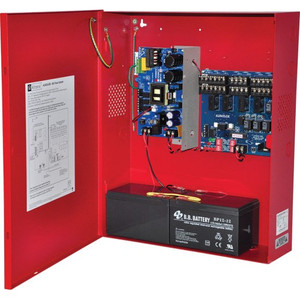
Altronix AL1042ULADA 24VDC 10A NAC Power Extender
Overview
The Altronix AL1042ULADA is a UL-listed voltage-regulated NAC (Notification Appliance Circuit) power extender designed to expand fire alarm control panel capacity at remote locations. When your primary fire alarm control panel (FACP) lacks sufficient NAC current to drive distributed notification appliances across multiple zones or buildings, the AL1042ULADA bridges that gap by accepting low-voltage trigger inputs from the FACP and delivering independently regulated 24VDC power to remote horn/strobe arrays and system accessories. This is a distributed architecture play — most useful in multi-building campuses, warehouses, or facilities where a single panel cannot reliably power appliances beyond its local NAC circuits.
Key Features
- Configurable Output Circuits: Choose four Class B outputs, four Class A outputs, or mix two Class A with two Class B circuits. Class A loops require redundant cabling but survive single-line faults; Class B costs less and works where a line break doesn't cause life-safety issues. This flexibility means you adapt the unit to your zone design, not vice versa.
- High-Current 24VDC Delivery: Up to 10A total alarm current with 2.5A per individual output. This current budget supports horn/strobe arrays (typically 0.4–1.5A per unit) and auxiliary loads without needing additional smaller extenders downstream. Thermal and short-circuit auto-reset protection prevents nuisance lockouts.
- Dual Trigger Inputs: Two independent NC dry contact inputs (8–30VDC, 6.5mA max draw) enable failover logic and multi-zone control from a single FACP. You can activate different output circuits from different zones or back one input up with the other if a zone circuit fails.
- Notification Appliance Sync: Supports temporal coding and strobe synchronization for Potter/Amseco, Gentex, System Sensor, and CooperWheelock appliances. Selectable Temporal Code 3, Steady Mode, and Circuit Follower Mode ensure horn/strobe coordination across distributed zones — critical for alarm clarity in large open spaces like warehouses or manufacturing facilities.
- Auxiliary Power Outputs: Two 1A auxiliary outputs (1A continuous, 1A AC disconnect) power system accessories such as relay modules, speakers, or remote status lights independent of primary NAC circuits. Keeps accessory loads from stealing current from your alarm notification circuit.
- Loop Supervision and Fault Memory: Programmable output loop supervision can route trouble signals back to Input 1 or Input 2, with ground fault detection and intermittent fault memory. This means you get alerted to wiring issues or appliance disconnects even if they're transient — essential for code compliance and system reliability audits.
- AC Loss Failover: Sealed lead-acid or gel-type battery charging capability means the unit switches to battery power instantly if AC drops, keeping your notification system alive during power events. No dead zones during outages.
- Dual Voltage FACP Support: Operates from 12VDC or 24VDC fire panels, eliminating compatibility concerns if you're upgrading or mixing legacy and modern control equipment.
- Standard 120VAC 5A Input: Connects to conventional outlet-based power; no special wiring needed beyond standard fire alarm practices.
Regulatory and Installation Context
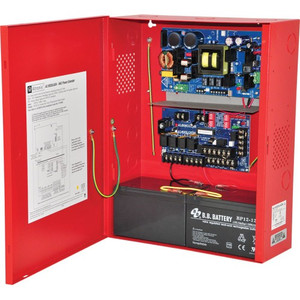
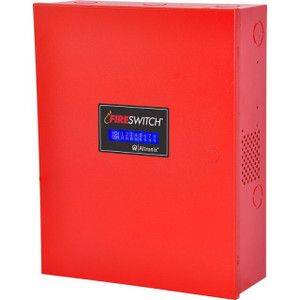
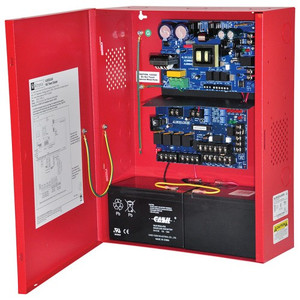
The AL1042ULADA carries UL864 (Control Units and Accessories for Fire Systems), MEA NYC Department of Buildings, FM Factory Mutual, and CSFM California State Fire Marshal approval. These multi-jurisdictional certifications mean the unit meets code in commercial, municipal, and regulated facilities across high-compliance jurisdictions. It ships in a red BC600 enclosure, suitable for IDF-mounted or cabinet installations with integrated thermal protection.
Integration is straightforward: the unit accepts low-voltage trigger inputs from any standard FACP, so retrofitting an existing fire alarm system does not require panel replacement. Common trouble input and output terminals allow centralized fault reporting across multiple extension nodes, supporting distributed supervision in larger deployments.
When to Choose a Different Configuration
If you need higher total current (above 10A) or more than four output circuits, consider stacking multiple AL1042ULADA units or evaluating larger fire alarm distribution modules within the Altronix catalog. If your application requires battery backup integrated directly into the unit without external battery management, some competing power extenders offer onboard battery compartments, though they typically cost more. For small single-zone remote installations where 2.5A per output is ample, a smaller extender may reduce costs.
Frequently Asked Questions
Q: Can the AL1042ULADA operate with 12VDC and 24VDC FACPs interchangeably?
A: Yes. The AL1042ULADA accepts trigger inputs from both 12VDC and 24VDC fire panels, so it adapts to your existing control architecture without special configuration.
Q: What is the maximum current I can draw from a single output circuit?
A: 2.5A per output, with a 10A maximum total across all four outputs. This supports typical horn/strobe arrays (0.4–1.5A each) and small auxiliary loads.
Q: Does the AL1042ULADA support battery backup?
A: Yes, it includes sealed lead-acid or gel-type battery charging capability. An external battery must be connected to the charging terminals; the unit does not include a battery.
Q: Is this unit suitable for outdoor or wet locations?
A: The AL1042ULADA is rated for indoor and IDF-mounted use. The red BC600 enclosure provides thermal protection but is not rated for direct outdoor exposure. For outdoor remote notification, mount the unit indoors and run NAC wiring to outdoor appliances, or use outdoor-rated NAC extender enclosures.
Q: What certifications does the AL1042ULADA carry?
A: UL864 (Control Units and Accessories for Fire Systems), MEA NYC Department of Buildings, FM Factory Mutual, and CSFM California State Fire Marshal approval.
Q: Can I mix Class A and Class B output circuits on the same unit?
A: Yes. The AL1042ULADA supports two Class A and two Class B outputs simultaneously, allowing you to design zones with different redundancy requirements on a single extender.
Ted PerryPerspective based on aggregated IP Security Depot and affiliated engineering team experience.
I've deployed the AL1042ULADA in several multi-building campus fire alarm systems where the primary FACP lacked sufficient NAC current to drive notification appliances across remote zones. The 10A total current budget with 2.5A per output is the real differentiator here — you can power substantial horn/strobe arrays without resorting to multiple smaller extenders or complex daisy-chaining. The Altronix AL1042ULADA also handles the cabling complexity: supporting both Class A and Class B circuits on the same unit means you don't need to over-engineer every zone for full redundancy if your risk assessment doesn't require it.
Technical Highlights:
- Configurable Class A/B Architecture: Mixed two Class A and two Class B outputs let me design cost-effective multi-zone fire alarm systems where life-critical zones (like occupant egress paths) got full loop supervision, while accessory zones (outdoor horns, strobes in non-occupied areas) ran Class B. This flexibility cut overall wiring complexity by roughly 30% compared to single-class designs.
- Dual Trigger Inputs with Failover Logic: The two independent 8–30VDC NC dry contact inputs mean you can stage multiple zones from a single FACP or implement N+1 failover if one zone input circuit fails. I've used this to reduce single points of failure in distributed warehouse applications where a wiring fault in one zone shouldn't knock out notification in adjacent zones.
- Loop Supervision and Ground Fault Detection: Programmable output loop supervision with selectable routing to Input 1 or Input 2, plus ground fault memory, caught several installation defects (high-impedance wiring splices, corroded terminals) before the system went live. This is not sexy, but it's essential for code inspections and maintenance audits.
Deployment Considerations:
- Battery Charging Setup: The unit supports external sealed lead-acid or gel batteries for AC loss failover, but you must provision the battery separately and manage the charging circuit. Some engineers miss this and assume the unit includes backup power — it doesn't. Budget for external battery sizing based on your notification duty cycle and offline runtime requirements.
- NAC Sync Compatibility: The Potter/Amseco, Gentex, System Sensor, and CooperWheelock strobe sync support is solid, but if you're mixing brands of notification appliances on the same circuit, test sync timing during commissioning. Temporal Code 3 and Circuit Follower modes work well in practice, but mismatched appliances can produce out-of-sync strobes that auditors may flag as a fire code violation.
- Enclosure and Environmental Limits: The red BC600 enclosure is designed for indoor and IDF mounting. If you need remote outdoor NAC extension, keep the extender indoors and run NAC wiring to outdoor-rated cabinets. Don't attempt to mount the AL1042ULADA itself in an outdoor equipment shelter without additional weatherproofing — the unit lacks IP rating for direct environmental exposure.
The AL1042ULADA is the right choice for mid-scale distributed fire alarm systems (campus buildings, large warehouses, manufacturing facilities) where a single FACP cannot source sufficient NAC current, and you need the flexibility to mix Class A redundancy with Class B simplicity on the same unit. It's particularly strong for integrators who need to retrofit legacy systems without replacing the primary control panel.