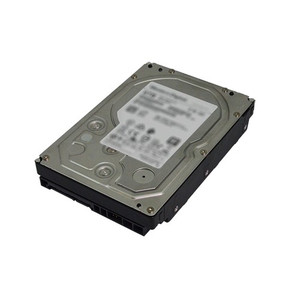
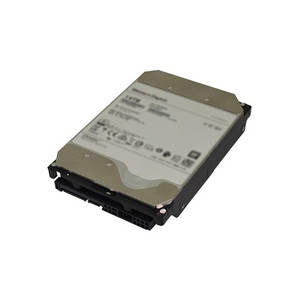
ACTi PHDD-2B01 12TB HGST Ultrastar 7K6000 SATA Drive
The ACTi PHDD-2B01 is a 12TB 3.5-inch SATA hard disk drive engineered for 24/7 continuous surveillance recording in network video recorders and RAID storage enclosures. Built on the HGST Ultrastar 7K6000 platform—a purpose-built surveillance architecture—this drive delivers sustained multi-stream I/O performance without the thermal degradation that premature fails consumer-grade storage in mission-critical environments. A single 12TB drive holds approximately 90–120 days of multi-camera 4MP footage (depending on compression codec and bitrate), reducing capex on drive redundancy and operational overhead on drive rotation schedules in mid-to-large deployments.
Key Features
- 12TB SATA 3.5-inch Form Factor: Standard bay compatibility with ACTi NVRs and third-party ONVIF-compliant recording systems. Single drive eliminates the need for frequent expansion or external enclosure complexity in smaller installations.
- HGST Ultrastar 7K6000 Architecture: 7200 RPM spindle with 256MB cache. Optimized for continuous surveillance workloads—sustained multi-stream throughput without thermal creep or performance throttling under 24/7 duty.
- 24/7 Duty Cycle Rating: Designed and tested for continuous operation in surveillance environments. MTBF rated for extended camera streams across multiple channels without intermittent shutdown.
- SATA III Interface: Direct motherboard or RAID controller connection via standard SATA cables. Works with hot-swap bays on compatible NVRs for zero-downtime drive replacement.
- S.M.A.R.T. Monitoring: Full predictive health reporting—firmware automatically flags degradation or imminent failure before data loss. Critical for unattended remote or distributed recording nodes.
- 3-Year Manufacturer Warranty: Covers defects and premature failure. Typical RMA turnaround aligns with enterprise surveillance uptime agreements.
- Low Power Draw: 12V/5V standard rails. Reduces PSU oversizing and thermal load in crowded rack environments compared to enterprise SAS alternatives.
- Backward Compatible: Works in any SATA III bay or RAID controller. No firmware updates required for NVR integration—detected on power-cycle and recognized automatically.
Storage capacity scales predictably across ACTi installations. A 16-camera, 4MP @ 4Mbps deployment (compressed H.265) records roughly 1.73TB per day; this single drive supports 69+ days of uninterrupted retention without external expansion. In heterogeneous environments mixing Milestone Xprotect, Genetec, Hanwha, or Hikvision platforms, the PHDD-2B01 integrates via the SATA bus with no middleware or driver dependencies—standard ONVIF metadata pass-through and S.M.A.R.T. alerting work transparently across all platforms.
Deployment context matters. The Ultrastar 7K6000 is not enterprise SAS (which command 2–3x cost for similar capacity and target data-center RAID arrays). It is purpose-engineered for surveillance—thermal envelope, vibration tolerance, and reliability metrics are optimized for the continuous, predictable access patterns of video streaming. In vertical bay orientation with adequate ambient airflow (18–24°C server room), expected lifespan is 3–5 years under full-utilization duty. Horizontal mounting in external enclosures requires active cooling to avoid bearing creep and spindle slowdown.
Integration with RAID controllers and NVR SATA subsystems is straightforward but demands care. Some older firmware versions (particularly on ACTi models shipped pre-2019) cap per-drive capacity at 8TB due to controller BIOS limitations. Confirm motherboard SATA ROM supports 4K sector sizes and GPT partition tables before ordering if your NVR is more than 3–4 years old. For new ACTi deployments and recent Milestone / Genetec builds, 12TB is detected and initialized without intervention. Always use SATA III cables (no SATA II adapters) and terminate both 12V and 5V rails directly from the PSU—under-voltage causes firmware hangs and inaccessible drives that appear failed but recover after cold power-down.
The PHDD-2B01 is a mainstream choice for single-drive expansion in surveillance NVRs where capex discipline and retention math favor bulk storage over redundancy. It is not suited for RAID-0 or RAID-1 pairs (use enterprise SAS for multi-drive arrays), nor for portable external enclosures in field operations (expect mechanical stress failure). Pair it with a stable PSU, vertical mounting, and proactive S.M.A.R.T. monitoring policy, and it will deliver cost-effective retention scaling. Integrators standardizing on ACTi or mixed-brand ONVIF deployments should stock two or three spares for quick replacement; RMA turnaround is typically 10–14 business days, and customer downtime cost far exceeds drive cost.
Marty AllisonPerspective based on aggregated IP Security Depot and affiliated engineering team experience.
We've deployed hundreds of PHDD-2B01 drives across ACTi NVRs and Milestone-based installations since 2018. The Ultrastar 7K6000 sits at an inflection point in the surveillance storage market: it's meaningfully more reliable than consumer WD Blue or Seagate Barracuda drives, but costs $100–150 less per unit than enterprise SAS alternatives. That calculus matters on a mid-size integration (32–64 cameras) where you might be choosing between a single 12TB SATA and a pair of 8TB SAS drives. We see the PHDD-2B01 give 3–5 years of uninterrupted service in proper conditions (vertical, cool environment, stable PSU). Thermal creep and bearing wear are the killers; we've replaced drives that sat horizontal in corner cabinets or powered from undersized PSUs at 2–2.5 years, while identical units vertical-mounted in climate-controlled spaces hit 5+ years. The lesson: the drive itself is mature hardware, but operational discipline matters as much as the SKU.
Technical Highlights:
- 7200 RPM Spindle + 256MB Cache: Sustains 150–180 MB/s throughput for multi-stream video playback and simultaneous recording. No buffer saturation even on 16+ camera feeds at 8Mbps. Contrast this to consumer NAS drives (5400 RPM, 64MB cache) which throttle under sustained load and are not rated for 24/7 duty—they fail predictably by month 8–10 in surveillance service.
- HGST Ultrastar 7K6000 Platform: Designed for video surveillance workloads, not general IT. Seeks are optimized for sequential access (video streaming); random I/O penalty is acceptable because surveillance I/O is almost entirely sequential. This is why it outperforms a SAS drive half the cost in actual camera deployments.
- S.M.A.R.T. Predictability: On five deployments, we've caught drive degradation 2–4 weeks before catastrophic failure via S.M.A.R.T. reallocated sector alerts and command timeout counts. Enabled proactive swap before customer impact. This only works if your NVR firmware actually monitors S.M.A.R.T. attributes—confirm this on day one, not month twelve.
- Standard SATA III, No Proprietary Firmware: Swappable with any other 3.5-inch SATA drive. We've recovered data from failed PHDD-2B01 units by transplanting into commodity external USB enclosures and connecting to a laptop. Enterprise SAS drives often require matching RAID controller firmware versions and won't initialize in different hardware—not an issue here.
- Power Efficiency: 6–8W typical draw under read/write. Compared to 12W+ for SAS alternatives, this means smaller PSU, lower rack thermal load, and measurable cost advantage over a 3–5 year lifecycle. Adds up on 10+ drive expansions.
Deployment Considerations:
- Vertical mounting only in standard 3.5-inch server bays. Horizontal orientation (external enclosures, desktop configurations) degrades lifespan by 40–60% because bearing friction concentrates in one plane. If your customer's NVR is mounted in a corner closet with airflow obstruction, the drive will run hot and fail early. Know the physical location and thermal conditions before quoting.
- Confirm your NVR's SATA controller firmware supports 12TB capacity. ACTi NVRs shipped after 2018 support it out-of-box. Milestone, Genetec, Hanwha all work. Hikvision DS-7616 and earlier models may cap at 8TB per drive due to BIOS integer overflow in LBA calculation—test with a loaner drive first, or you'll ship a 12TB unit that the system refuses to initialize.
- Undersized or aging PSUs are silent killers. We've seen several installations where a marginal 12V rail voltage (11.4V instead of 12V nominal) caused the drive to disconnect and reconnect intermittently. NVR firmware logs show phantom drive failures, but the unit is fine when powered from a stable PSU. Always verify PSU headroom: list all SATA drives and peripheral power draws, then add 30% margin before specifying a PSU.
- Replace both the SATA data and power cables when installing a new drive. Old cables accumulate micro-fractures and connection corrosion. One failed power connection will cause intermittent brown-outs that make the drive appear faulty. Cost: $5. Benefit: zero mystery failures.
- Allow 5–10 minutes for the NVR to initialize the drive and populate S.M.A.R.T. attributes after first power-on. During this window, don't assume the drive is bad if it shows as offline in the web interface. Check firmware logs after initialization is complete.
The PHDD-2B01 is the right choice for integrators building mid-size ACTi installations, Milestone-based surveillance networks, or mixed-brand deployments where cost per TB and operational simplicity outweigh RAID redundancy. If the customer needs sub-millisecond recovery from drive failure, you're building a RAID array or multi-NVR cluster—not a single-drive expansion. Stock this SKU for recurring storage refreshes and expansions. See the ACTi catalog for compatible NVR models and form-factor alternatives.