What size power supply do I need for my system?
Add up the current draw (in milliamps or amps) of every device connected to that supply—cameras, locks, readers, intercoms. Multiply by 1.25 (safety factor) and round up to the next standard supply size (e.g., 5A, 10A, 20A, 40A). Always verify supply and load voltage match exactly.
Can I use one power supply for mixed 12V and 24V devices?
No. Single outputs are isolated; mixing voltages risks damage. Use separate regulated supplies for each voltage, or a multi-output supply with isolated rails. If you must share a cabinet, use a buck converter (24V down to 12V) downstream of a 24V primary supply, but size the primary for total current demand.
What's the difference between a regular power supply and a UPS-backed supply?
A regular regulated supply converts AC to clean DC and stops when AC fails. A UPS-backed supply includes integral or stackable battery modules that maintain DC output for minutes after AC loss, allowing orderly shutdown or switchover to backup power. Essential for access control and emergency intercoms.
Do I need a PoE injector if my switch already has PoE?
Not necessarily, but injectors solve two common problems: (1) extending PoE to non-PoE switches, and (2) supplementing insufficient switch PoE budget. A 24-port PoE+ switch can only deliver ~375W total; dense deployments often need additional injectors per camera cluster. Plan your PoE budget carefully upfront.
What does ±5% voltage regulation mean?
The supply guarantees output stays within ±5% of rated voltage (e.g., 24V ±1.2V = 22.8–25.2V) across load and input variations. Tighter specs (±3%) cost more but reduce noise and improve camera image stability. Cameras typically tolerate ±10%; locks are pickier (±5% or better).
How do I mount a power supply in an outdoor cabinet?
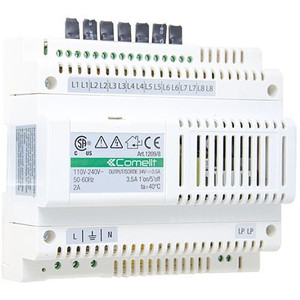
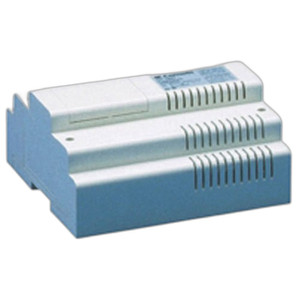
Use a DIN-rail mounted supply inside an IP65-rated enclosure. Ensure the enclosure has ventilation or a thermostat fan to keep internal temperature below the supply's rating (typically 70°C max). Add a surge protector or SPD at the AC input, and run conduit from the cabinet to devices using conduit adapters and gang plates for strain relief.