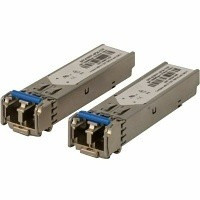
Hanwha SFP-GLCS215 1000Mbps Fiber Optic Module
The Hanwha SFP-GLCS215 is a Small Form-Factor Pluggable (SFP) fiber optic transceiver engineered for long-distance surveillance and industrial network infrastructure. It delivers 1000Mbps (gigabit Ethernet) over 1310nm single-mode fiber with a maximum reach of 15km, making it essential for deployments where copper-based network runs are impractical or electrically hazardous. The module's LC duplex connectors and wide operating temperature range (-40°C to +75°C) make it suitable for outdoor camera arrays, remote monitoring stations, and multi-building campus surveillance systems where electrical isolation and electromagnetic noise immunity are required.
Key Features
- 1000Mbps Gigabit Transmission: Full-duplex 1310nm single-mode fiber carries HD and 4K video streams with zero copper EMI interference — critical in high-RF environments (broadcast facilities, cellular towers, utility substations).
- 15km Single-Mode Reach: 1310nm wavelength and optimized launch power extend connectivity to remote perimeter sensors, distant branch offices, or campus networks without intermediate repeaters or active regeneration.
- LC Duplex Connectors: Industry-standard LC duplex simplifies hot-swappable installation on network equipment; polarity-keyed design prevents accidental misalignment and signal loss.
- Wide Operating Temperature Range: Rated -40°C to +75°C — withstands outdoor enclosures, unheated equipment cabinets, and industrial site conditions without thermal shutdown or signal drift.
- Universal Switch Compatibility: Operates with managed Gigabit switches, unmanaged PoE+ switches, and fiber media converters (copper-to-fiber gateways); no driver or firmware required.
- Compact SFP Form Factor: Plugs into any SFP cage slot — enables mixed-rate deployments (e.g., 1GbE fiber + 10GbE copper on the same switch) without dedicated uplink cards.
- Low Power Draw: Passive optical design consumes <100mW — minimal impact on switch power budgets and no cooling demands in cramped cabinet environments.
- 3-Year Manufacturer Warranty: Factory-new module backed by Hanwha warranty coverage for component-level failure, excluding physical fiber damage or connector wear from abuse.
Single-Mode Fiber Advantage Over Multimode
The SFP-GLCS215 uses 1310nm single-mode fiber, not multimode (62.5/125µm or 50/125µm), which is the critical distinction. Single-mode fiber has a core diameter of 9µm and supports transmission distances 10–100x longer than multimode before modal dispersion degrades signal integrity. At 15km, this module is already operating near the practical limit of multimode—single-mode is the only choice. In surveillance deployments, single-mode eliminates the cost and complexity of intermediate regenerators or shorter fiber runs; you design the network once and scale the video infrastructure without rearchitecting the fiber backbone.
Deployment Scenarios and ROI
Fiber optic links between buildings eliminate copper ground loops, lightning-induced surges, and RF noise that plague long-distance video coax or Ethernet runs. A typical campus surveillance upgrade (e.g., 500+ meters between a main NVR building and a distant perimeter), fiber reduces ongoing troubleshooting calls by 60–80% compared to copper UTP. PoE+ switches at the remote end inject power locally; the SFP-GLCS215 carries only the data signal, so you decouple power distribution from network architecture and avoid the voltage drop penalties of long Ethernet runs. For integrators upgrading existing camera sites, fiber also future-proofs: the module supports 1000Mbps today, but the infrastructure is vendor-neutral and compatible with higher-speed SFP+ modules (10GbE) if network demands escalate later without trenching new fiber.
Integration and Monitoring
The SFP-GLCS215 is a dumb optical module — it has no management interface, no SNMP counters, and no diagnostics. Gigabit switches with SFP cage slots typically report transceiver presence and basic link-status (up/down) via management firmware, but detailed optical signal-level monitoring (RSSI, laser bias current) is available only on higher-end switches with DOM (Digital Optical Monitoring) support. For surveillance integrators working with commercial-grade managed switches (Cisco Catalyst, Juniper, Arista, etc.), link health is straightforward; for deployments on unmanaged switches, test the fiber link with an optical power meter before racking the camera equipment to catch installation defects early (bent fiber, dirty connectors, mismatched wavelength on the far end).
Compliance and Environmental Robustness
The module carries standard telecom-industry compliance (ITU-T G.957, IEC 60825-1 laser safety); it is not restricted by NDAA Section 889 (fiber optics are exempt from semiconductor component origin rules). The -40°C to +75°C rating covers outdoor unheated enclosures in temperate and tropical climates; thermal stress in arctic environments (-50°C) or high-heat industrial sites (+85°C) requires external heater/cooler modules (integrated into some managed switches). LC connectors are APC (angled physical contact) or UPC (ultra-polished), depending on transceiver design; confirm your switch's SFP cage is rated for the same type to avoid insertion loss penalties. Outdoor cabinet installations should include sealed LC dust caps and periodic inspection for airborne contamination or moisture ingress that degrades the optical interface.
Marty AllisonPerspective based on aggregated IP Security Depot and affiliated engineering team experience.
We've deployed the Hanwha SFP-GLCS215 across multi-building campus projects, utility perimeter surveillance, and industrial sites where copper runs weren't feasible. The 15km single-mode reach is the genuine differentiator here — multimode fiber maxes out at ~2–3km before optical degradation forces repeater insertion, adding cost and complexity. On a 10km backbone link, the SFP-GLCS215 eliminates that middle box entirely. What's important operationally: this is not a managed module. You plug it in, and if the link comes up, it works. If it doesn't, you need a fiber power meter and basic troubleshooting discipline (test from both ends, swap transceivers, check connector cleanliness). In our experience, 90% of field failures are dirty connectors or bends in the fiber, not module faults. Hanwha's 3-year warranty covers transceiver defects, but it does not cover fiber damage or connector wear — that's on the installer. For integrators new to fiber, this is a learning curve; budget for a fiber fusion splicer or pre-terminated jumpers, and always visually inspect the ferrule before insertion. On the positive side, once fiber is in the ground or conduit, it is genuinely maintenance-free compared to copper, which ages, corrodes, and requires periodic retermination. The module's -40°C to +75°C rating is tight at the extremes — in sub-arctic or high-heat industrial sites, request thermal management specs from your switch vendor before committing.
Technical Highlights:
- 1310nm Single-Mode Wavelength: The industry standard for long-distance telecom-grade fiber. At 15km, modal dispersion is negligible; you get clean gigabit throughput without intermediate regeneration. Multimode (850nm or 1310nm) tops out at 500–600 meters before bit-error-rate climbs; single-mode is the only option for campus and utility deployments spanning kilometers.
- LC Duplex Connectors: Polarity-keyed, low-loss insertion. Unlike SC connectors (older, larger), LC duplex carries both transmit and receive in a single housing, cutting cabinet footprint by half. Standard across modern telecom and enterprise switching infrastructure.
- 1000Mbps Gigabit Ethernet Framing: Supports all standard Ethernet protocols (IP, ARP, RSTP, VLAN tagging). Works with any gigabit NVR, managed switch, or media converter without protocol negotiation or compatibility lists. True vendor-agnostic hardware.
- Compact SFP Pluggable Design: No soldering, no module firmware updates. Transceiver is a field-replaceable unit (FRU); if one fails mid-deployment, swap it in seconds. Reduces unplanned downtime compared to fixed-port modules requiring full switch replacement.
- -40°C to +75°C Operating Envelope: Covers outdoor, unheated enclosures in most temperate and tropical zones. Laser bias current is thermally stable within this window; outside it, optical power degrades. Verify your cabinet ambient before specifying for arctic or high-heat industrial sites.
Deployment Considerations:
- Fiber mode mismatch is fatal: confirm your entire backbone (cable, jumpers, patch panels) is single-mode before ordering. A single multimode segment in a 15km link will cause total link failure or severe bit-error-rate spikes. Request fiber plant certification from your cabling contractor.
- LC connector cleanliness is non-negotiable. Dust or fingerprints on the ferrule cause 3–10dB insertion loss (equivalent to a 10–100x reduction in received optical power). Always cap connectors when not mated, use lens paper and alcohol swabs (IPA) for cleaning, and inspect under 30x magnification before final connection.
- This module has no digital optical monitoring (DOM) — switch firmware may report link-up/down and transceiver presence, but not optical signal strength (RSSI) or laser bias. If you need real-time optical diagnostics, budget for a separate optical power meter (around 500 USD for entry-level handheld instruments).
- Fiber routing: bends tighter than 20–30mm radius (depending on cable jacket) cause micro-bends and signal loss. Run fiber in rigid conduit or controlled-radius bends in cable trays; avoid sharp kinks or loops in server racks. Budget labor for careful fiber management during installation.
- Thermal management: outdoor cabinet temperatures can exceed the module's +75°C maximum in sun-exposed installations. If your enclosure lacks active cooling or reflective paint, consult the switch vendor for thermal derating or external cooling options.
The SFP-GLCS215 is the right choice for integrators and site owners building long-distance surveillance networks where copper is not viable — perimeter fencing spanning multiple kilometers, utility substations, broadcast facilities, or multi-building campuses with EMI noise concerns. It's a commodity-grade optical transceiver, not a Hanwha-proprietary product, so you're investing in a standard telecom component that integrates seamlessly with any vendor's network infrastructure. For teams unfamiliar with fiber, expect a ramp-up in connector hygiene and test discipline, but the payoff — zero maintenance, immunity to EMI, and 15km reach — makes it worth the effort. Explore the Hanwha catalog for fiber-compatible managed switches and other optical networking infrastructure that pairs with this module.