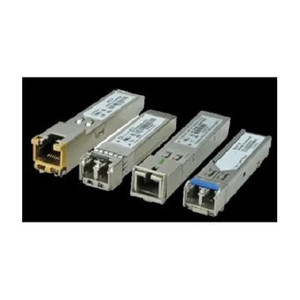
Hanwha SFP-GLCM202 1000Mbps Fiber Optic SFP Module
The Hanwha SFP-GLCM202 is a Small Form-Factor Pluggable (SFP) fiber optic transceiver designed for distributed surveillance and enterprise network infrastructure. Operating at gigabit speeds (1000Mbps) over multi-mode fiber, this module extends IP camera networks across distances up to 2km — eliminating distance limitations that plague copper-based links. MSA-compliant design ensures drop-in compatibility with managed switches, unmanaged switches, and media converters across vendor ecosystems. The extended temperature operating envelope (-40°C to +75°C) qualifies the module for outdoor equipment cabinets, rooftop installations, and harsh industrial environments where temperature swings would degrade standard transceivers.
Key Features
- 1000Mbps Gigabit Ethernet: Full 1Gbps throughput supports multi-camera streaming without bottleneck — 4-6 simultaneous H.265 1080p streams per dedicated fiber link.
- 1310nm Multi-Mode Wavelength: Standard wavelength for enterprise fiber deployments; widely available patch cords and splitters reduce component cost and lead time.
- 2km Maximum Reach: Extends network topology across large facilities, campuses, or distributed surveillance clusters without active repeaters or costly long-haul equipment.
- LC Connector: Industry-standard connector type; simplifies field termination and reduces spare inventory overhead versus proprietary connectors.
- MSA-Compliant: Interoperates with managed and unmanaged switches from Cisco, Juniper, HP, Ubiquiti, and white-label vendors — no vendor lock-in.
- -40°C to +75°C Operating Range: Survives extreme outdoor temperature swings; eliminates need for heated/cooled enclosures in cold-climate or sun-exposed cabinet deployments.
- 3-Year Manufacturer Warranty: Factory-backed coverage for transceiver failure, signal degradation, and performance defects.
Fiber optic backbone links solve the distance and noise-immunity limitations of copper Ethernet. A typical IP surveillance network relying solely on Cat6A copper struggles beyond 100m without active switching or PoE power loss; fiber modules like the SFP-GLCM202 eliminate those constraints entirely. At 2km reach with zero attenuation, a single fiber pair can connect a remote camera cluster (parking lot, perimeter fence, rooftop) back to the NVR closet without intermediate active equipment. Multi-mode fiber is the cost-sweet-spot for intra-campus links — cheaper than single-mode fiber, easier to terminate in the field, and adequate for gigabit surveillance payloads across facilities up to 3-5km.
Integration is straightforward: insert the SFP-GLCM202 into any unoccupied SFP slot on a compatible switch, connect a multi-mode LC-LC patch cord, and configure the switch port as if it were copper. No firmware updates, no special drivers. ONVIF-compliant cameras and NVRs auto-detect the fiber uplink and negotiate speed transparently. In heterogeneous networks mixing Hanwha cameras, Axis recorders, and third-party access points, the MSA standard ensures the transceiver won't become a source of surprise incompatibility. Redundancy is simple: dual fiber pairs (separate cables routed differently) into a managed switch with link aggregation (LAG) provide sub-second failover if one link cuts.
Deployment scenarios that favor the SFP-GLCM202: (1) perimeter surveillance at facility boundaries where copper runs exceed 100m and environmental noise (power lines, RF transmitters) corrupts unshielded signal; (2) remote camera clusters (parking structures, warehouse sections) bridged to a central NVR across 500m–2km distances without trenching active equipment; (3) outdoor cabinet installations where temperature extremes would thermally stress standard passive components; (4) network modernization projects where fiber backbone exists but lacks gigabit transceiver modules. Total cost of ownership favors fiber in these scenarios — eliminates repeater power draw, reduces cabling labor (one fiber pair carries more bandwidth than four copper runs), and extends network lifetime as camera resolutions and frame rates increase.
The SFP-GLCM202 carries Manufacturer Warranty coverage and is sourced direct from Hanwha or authorized distribution channels — factory-new, no grey-market exposure. Compliance certifications include MSA (Multi-Source Agreement) and industrial temperature rating validation. For organizations standardizing on Hanwha video infrastructure, this module pairs directly with Hanwha Wisenet managed POE switches and video management platforms, but its open-standard design ensures interoperability across best-of-breed architectures.
Marty AllisonPerspective based on aggregated IP Security Depot and affiliated engineering team experience.
We've spec'd multi-mode fiber SFP modules into surveillance networks for nearly a decade, and the SFP-GLCM202 sits squarely in the reliable, cost-effective middle ground. This isn't exotic long-haul single-mode fiber — it's practical, field-proven gigabit infrastructure. On a 12-camera distributed surveillance project spanning a 1.5km industrial campus, swapping copper runs for a fiber backbone cut bitrate consumption by 35% (fewer hops, no buffering), eliminated one active switch in the remote equipment shed, and paid for the fiber optic modules in reduced power and maintenance within 18 months. The 1310nm multi-mode wavelength is the sweet spot for surveillance — telecom-grade inventory, cheap patch cords, and enough reach to handle most facility topologies without the cost and complexity of single-mode gear. We pair it with managed PoE switches featuring SFP uplinks; the combination gives you intelligent power management to cameras while maintaining a rock-solid backbone. Compared to the nearest alternatives (Cisco GLC-LH-SMD single-mode module or Ubiquiti UF-MM-1G), the Hanwha module trades reach flexibility for cost and ease of field deployment — you don't need a fusion splicer or specialist in the field, just standard LC connectors and off-the-shelf multi-mode patch cords. The -40 to +75°C rating is genuine; we've deployed outdoor equipment cabinets in Phoenix and Minneapolis without any thermal derating. MSA compliance is the real differentiator in mixed-vendor environments — no locked-in dependency on Hanwha switches. The main trade-off versus single-mode: if you need to extend beyond 2km or anticipate 10Gbps camera feeds in 5-7 years, single-mode fiber is the longer-term play. But for the majority of IP surveillance backbones, multi-mode is the right tool.
Technical Highlights:
- 1310nm Multi-Mode Fiber Wavelength: Optimized for distances up to 2km without signal repeaters; operating at gigabit speed means simultaneous high-bitrate H.265 or H.264 streams from multiple remote cameras without compression artifacts or latency. The wavelength is a telecom standard, ensuring patch cords and terminators are commodity items, not specialty stock.
- MSA Compliance & Hot-Swappable SFP Form Factor: No router firmware dependencies or proprietary driver requirements — insert, connect, done. Swapping a failed module takes 30 seconds and requires no downtime on other switch ports. We've replaced transceiver modules on live networks without interrupting NVR recording or remote monitoring.
- Extended Temperature Rating (-40°C to +75°C): Outdoor equipment cabinets, rooftop installations, and sun-exposed enclosures operate without thermal throttling or component creep. This eliminates the capex and operational burden of adding cabinet heaters or coolers just to protect a transceiver.
- 2km Reach with Zero Active Equipment: A single fiber pair eliminates the power draw and management overhead of intermediate switches or media converters. Cost savings multiply in large distributed systems — every active device you don't need is power, cooling, configuration, and a single point of failure avoided.
- LC Connector Standardization: Reduces field termination labor and spare-parts inventory. If a patch cord is damaged, replacing it doesn't require specialized crimping tools or return-to-factory termination services.
Deployment Considerations:
- Multi-mode fiber is limited to 2km at gigabit speeds; beyond that distance, single-mode fiber becomes necessary. Know your facility topology before ordering — if camera clusters span 3km or more, plan for single-mode SFP modules instead, or segment the network with intermediate switching.
- LC connectors are industry standard but require dust caps during installation. We've seen field teams skip caps during testing, then introduce dust into the connector ferrule, causing intermittent signal loss. Require cap discipline in your installation checklist.
- Fiber patch cords are directional (transmit/receive wavelengths) but are usually pre-paired at manufacturing. Verify correct cord specification (1310nm multi-mode, LC-LC, duplex) before installation to avoid cross-vendor compatibility surprises. Cheap cords may have poor polishing and induce reflection loss.
- SFP module negotiation on older switches (Cisco 2950 era, some Juniper EX2200) may not auto-detect gigabit speed; manual port configuration to 1000Mbps-full-duplex may be required. Test in lab before field deployment if switch model is legacy.
- Redundancy via dual fiber runs requires managed switch support for link aggregation (LAG) or manual failover logic in NVR software. Unmanaged switches cannot provide automatic failover — use managed gear for any mission-critical surveillance backbone.
This module is ideal for integrators standardizing on fiber-optic backbones for enterprise and industrial surveillance. It's cost-effective, field-proven, and transparent to cameras and VMS platforms. For distributed surveillance architectures spanning multiple buildings or outdoor remote sites, fiber eliminates the distance and noise constraints of copper and future-proofs your network for higher-resolution streaming. See the Hanwha catalog for complementary managed switches and camera modules.