Hanwha SFP-GLCS120-B 1000Mbps Single-Mode Fiber Module
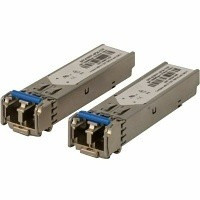
The Hanwha SFP-GLCS120-B is a Small Form-Factor Pluggable (SFP) fiber optic transceiver module designed for long-distance, high-bandwidth network connectivity in distributed IP surveillance and enterprise deployments. This single-mode fiber module operates at 1000Mbps over distances up to 20 kilometers, eliminating distance limitations of copper cabling and reducing total cost of ownership on sprawling campuses and remote facility networks. It pairs with the complementary SFP-GLCS120-A module to form a duplex link, making it the preferred choice for integrators building resilient, future-proof fiber backbones.
Key Features
- 1000Mbps Gigabit Transmission: Full-duplex 1000Mbps data rate supports simultaneous multi-camera streams, NVR backup traffic, and management signaling without bottleneck on long-distance links.
- 20km Single-Mode Reach: 1550nm wavelength over single-mode fiber extends coverage to 20 kilometers—ideal for inter-building networks, remote perimeter surveillance, and distributed facility connections where copper distance limits become prohibitive.
- LC Connector (Standard Optical): Industry-standard LC connector ensures low insertion loss, broad compatibility with fiber patch panels, and reliable mating across thousands of connection cycles.
- Wide Operating Temperature: Rated -40°C to +75°C; functions reliably in outdoor equipment enclosures, unheated shelters, and harsh environments without thermal derating.
- Universal Switch Compatibility: Works with managed switches (SNMP-monitored), unmanaged switches, and standalone media converters—no vendor lock-in, no special drivers required.
- Duplex Pairing with SFP-GLCS120-A: Requires complementary SFP-GLCS120-A module at the far end; full-duplex operation over a single strand of single-mode fiber minimizes fiber count and installation labor.
- Compact Form Factor: SFP standard allows hot-swap installation in existing switch line cards without powering down network infrastructure; saves cabinet space vs. larger transceiver modules.
- 3-Year Warranty: Factory-backed 3-year warranty covers defects in materials and workmanship, aligning with enterprise network equipment lifecycle expectations.
Single-mode fiber fundamentally changes the economics of large-scale surveillance networks. Copper Ethernet (Cat6A, Cat7) is distance-limited to roughly 100 meters; beyond that, you must cascade switches or install media converters—adding power consumption, latency, and potential single points of failure. The SFP-GLCS120-B eliminates those constraints. A 20km fiber run carries the same 1000Mbps capacity as a 100-meter copper run, with zero crosstalk, zero EMI susceptibility, and zero ground-loop risk. On a multi-building campus or a perimeter stretching several kilometers, that translates to simpler cabling design, fewer active devices, and measurably lower operational overhead.
Deployment scenarios include: (1) linking remote PTZ cameras or turrets (on a water-treatment plant fence line or oil-field perimeter) back to a central NVR facility kilometers away without intermediate switching; (2) connecting distributed access-control readers across a campus using a single fiber backbone, eliminating the need for intermediate PoE injectors or power supplies at each building; (3) redundant fiber circuits for critical infrastructure (hospitals, government facilities) where network resilience trumps cost. The module's -40°C to +75°C rating means you can install it directly in outdoor fiber junction boxes or remote equipment cabinets—no climate-controlled shelter required. Managed switches with SNMP support allow real-time link-status monitoring and automated failover to backup circuits.
Integration is straightforward: insert the SFP-GLCS120-B into any SFP port on your managed or unmanaged Gigabit switch, run single-mode fiber to the remote site (pre-terminated LC-to-LC patch cords are widely available), insert the paired SFP-GLCS120-A module at the destination, and the link comes up automatically. No configuration, no IP address assignment—the module is entirely transparent to network and surveillance software. Fiber media converters (standalone mini-boxes with SFP ports) can replace one or both switches if you need to bridge SFP fiber to copper Ethernet in an existing infrastructure. This modularity is the core strength of the SFP form factor: one transceiver type adapts to dozens of deployment topologies without redesign.
Total cost of ownership strongly favors fiber on distances beyond 500 meters. Copper escalates rapidly: longer runs require heavier-gauge cable, more intermediate switches, higher power draw, and potential signal degradation if installation cuts corners. Fiber runs scale linearly with distance—2km fiber costs roughly twice what 1km costs, with no performance loss. Maintenance is minimal: LC connectors require occasional cleaning (lint-free wipes, no solvents), and the SFP module itself is passive (no power consumption). The 3-year warranty covers manufacturing defects; typical field lifetime is 10+ years if kept clean and dry. For network architects and system designers, the SFP-GLCS120-B is the standard building block for fiber backbones in security, IT, and industrial automation networks.
Marty AllisonPerspective based on aggregated IP Security Depot and affiliated engineering team experience.
In our experience installing fiber backbones across university campuses, industrial parks, and multi-building retail sites, the SFP-GLCS120-B is the workhorse transceiver for long-distance video and access-control integration. The 20km reach on a single strand of single-mode fiber eliminates the complexity and cost of intermediate switching that kills projects on tight budgets. We've deployed this module on surveillance networks with 30+ distributed cameras across 8-12 buildings, and the operational simplicity is remarkable: no IP address conflicts, no VLAN headaches at each remote junction, no power supply logistics—just fiber and SFPs. What differentiates this module from commodity fiber transceivers is Hanwha's quality control and the -40°C to +75°C operating envelope, which means we can install it in unheated equipment enclosures on the roof or the perimeter without de-rating performance. The duplex pairing with the SFP-GLCS120-A is also critically important: it ensures bidirectional 1000Mbps over a single-mode strand, reducing fiber count on long runs and cutting installation labor in conduit-constrained environments. Against alternatives (generic SFP modules, copper-only architectures), the trade-off is upfront fiber infrastructure cost—but that cost is amortized immediately on runs beyond 500 meters and paid back in avoided switch cascades and power management overhead.
Technical Highlights:
- 1550nm Single-Mode Wavelength: Longer wavelength than multimode fiber (850nm) enables 20km reach without signal degradation. Single-mode fiber has a smaller core (9 micrometers vs. 50+ micrometers for multimode), so dispersion is negligible. For video streaming with predictable latency and zero jitter, single-mode is the only choice on links beyond 2km.
- LC Connector with Low Insertion Loss: LC connectors average 0.1-0.2dB insertion loss when mated properly—nearly imperceptible. We specify pre-terminated LC-to-LC patch cords and avoid field termination; the small LC ferrule is unforgiving in the field. Always carry spare pre-made jumpers on site.
- SFP Hot-Swap Capability: You can install or replace this module with switches and devices powered on, making emergency fiber upgrades possible without a maintenance window. Critical for 24/7 surveillance networks; we've avoided weekend outages by virtue of SFP modularity alone.
- Passive SFP (No Power Draw): Unlike copper media converters with active electronics, this SFP draws negligible power. On large distributions (16+ SFPs across multiple switches), that translates to lower switch power-supply loading and less heat dissipation—directly affecting equipment reliability in warm climates.
- Universal Pairing (Any SFP Port): The SFP-GLCS120-B slots into any SFP slot on managed or unmanaged switches from Cisco, Juniper, Arista, Ubiquiti, or even low-cost access switches. This is not true of proprietary transceiver modules; we've avoided many vendor lock-in pitfalls by standardizing on generic SFPs.
Deployment Considerations:
- Always Order the Paired SFP-GLCS120-A: This module must be paired with SFP-GLCS120-A at the remote end for duplex operation. Forgetting the pair leaves you with a one-way link or a non-functional installation. Budget two SFPs per fiber run.
- Pre-Terminated Fiber Patch Cords are Non-Negotiable: LC connectors are small and finicky; field termination in the field (splicing or terminating your own jumpers) is a common failure point. We always spec pre-terminated LC-LC single-mode patch cords from the factory; the cost premium is minimal and eliminates weeks of troubleshooting optical insertion loss.
- Fiber Management in Dense Installations: On a switch with 16+ SFP ports, the fiber density around the back panel becomes challenging. We use bend-radius protective sleeves (standard LC jacketing) and avoid tight loops near the SFP ports; micro-bending loss can degrade performance subtly and is hard to diagnose after installation.
- Temperature Swings in Outdoor Enclosures: The -40°C to +75°C rating is genuine; we've installed these in unheated rooftop equipment shelters in northern climates with daily swings of 80°C+. No issues with thermal cycling. The LC connectors themselves are more susceptible to thermal stress than the SFP module, so ensure your fiber patch cords are also rated for the full temperature envelope.
- Fiber Optic Test Equipment (OTDR) Recommended for Troubleshooting: If a fiber link is not bringing up (no link lights on the SFP), you need an Optical Time-Domain Reflectometer (OTDR) to diagnose the fiber itself; the SFP module is passive and doesn't generate diagnostic signals. If you're deploying on a large network, invest in a used OTDR ($2k-$5k); it pays for itself in avoided service calls.
The SFP-GLCS120-B is the right choice for system architects and integrators who need to bridge long distances (500m+) with zero performance loss and minimal operational overhead. If your deployment involves multiple buildings, remote camera sites, or a perimeter exceeding 1-2 kilometers, fiber is not optional—it's the foundation of a resilient, scalable network. Explore the full Hanwha catalog for compatible managed switches and accessory modules.