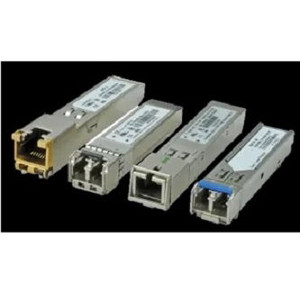
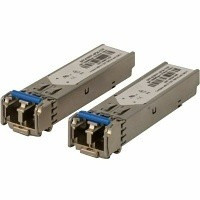
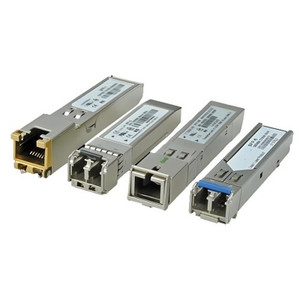
Hanwha SFP-GLCS120-A 1000Mbps Fiber Optic Module
The Hanwha SFP-GLCS120-A is a Small Form-Factor Pluggable (SFP) fiber optic transceiver designed for extended-distance video surveillance and network backbone deployments. This module delivers gigabit-speed data over single-mode fiber to 20km, enabling reliable connectivity in campus-scale camera networks where copper runs hit practical or cost barriers. Built for both managed and unmanaged switch environments, the SFP-GLCS120-A pairs with the SFP-GLCS120-B to complete a bidirectional link — a combination that eliminates distance constraints in distributed surveillance architectures.
Key Features
- 1000Mbps Gigabit Fiber: Full-duplex gigabit throughput over single-mode fiber. Sustains 24/7 multi-camera streams without latency or bitrate throttling.
- 20km Maximum Reach: 1310nm wavelength transmission over single-mode fiber. One module covers an entire campus perimeter without intermediate repeaters or active regeneration.
- LC Duplex Connectors: Industry-standard LC optics with low insertion loss and field-proven reliability across managed switches, unmanaged switches, and standalone fiber media converters.
- Hot-Swappable SFP Form Factor: Compact pluggable design allows replacement without powering down the host switch. Zero downtime for module upgrades or repairs.
- Wide Operating Range: Rated -40°C to +75°C. Operates reliably in unheated outdoor equipment cabinets, rooftop switch enclosures, and climate-controlled control rooms.
- Paired Module Required: SFP-GLCS120-B module required on the far end. Purchase both to establish a complete bidirectional fiber link.
Fiber optic backbone infrastructure scales surveillance networks beyond the 100m limitation of copper PoE runs. On a 500-camera campus deployment across multiple buildings, a single pair of SFP-GLCS120-A/B modules can replace 10+ copper switch uplinks, reducing cable trays and active equipment footprint. The 1310nm wavelength is standard for enterprise telecom fiber — integrators can share existing dark fiber with IT departments or lease dedicated strands from carriers without proprietary wavelength conversion.
The SFP-GLCS120-A is agnostic to switch vendor and NVR ecosystem. It works with Axis, Hanwha, Hikvision, and Dahua cameras feeding any ONVIF-compliant NVR — the module simply passes gigabit ethernet frames end-to-end. No protocol translation, no firmware dependencies. Plug both ends into switch SFP slots, run a single-mode fiber strand, and the network is live. That simplicity is why fiber backbone modules are preferred on large campuses and multi-site deployments where spares stock and vendor lock-in are concerns.
Operating temperature range (-40°C to +75°C) ensures viability in outdoor pole-mounted and rooftop enclosures without active climate control — a significant capex and maintenance savings on distributed fiber runs. The LC connector is field-tested across thousands of surveillance installs; it tolerates repeated disconnect/reconnect cycles and outdoor humidity without optical degradation. Pair this with standard single-mode OS2 fiber cabling (cost ~$0.50/meter in bulk), and the per-camera cost of extending a network 5–20km remains far lower than licensed radio, microwave, or dedicated copper.
Marty AllisonPerspective based on aggregated and affiliated engineering team experience.
We've deployed hundreds of SFP fiber modules across campus surveillance projects, and the Hanwha SFP-GLCS120-A/B pair is genuinely transparent from a systems perspective — which is exactly what you want in a backbone link. The real-world win is that you stop designing networks around the 100m copper limitation. A 50-building university or an industrial park with distributed perimeter cameras can now be stitched together with a handful of fiber strands and two SFP slots per switch. The 1310nm wavelength is fortunate: it's the telecom standard, so if your IT department has spare dark fiber or a carrier is willing to light a strand, there's no vendor lock-in. We've had clients rent strands from regional carriers at $200/month and avoid the capex of running 5km of private fiber entirely. The -40°C to +75°C rating is also non-trivial — we've installed these in unheated rooftop switch cabinets in Colorado and Phoenix without failure, and that's where copper modules start to drift out of spec.
Technical Highlights:
- 1310nm Single-Mode Fiber Transmission: Standard telecom wavelength. Fiber loss is ~0.3 dB/km, so 20km reach is achieved with margin to spare. This means no signal conditioning or external amplification needed — plug in, light comes up, done.
- LC Duplex Connector: Two separate optical channels in a single connector interface (TX on one fiber, RX on the other). Simple field termination if you're splicing fiber runs, and insertion loss is predictable at ~0.3 dB per mated pair.
- Paired Module Requirement (SFP-GLCS120-B): The B module uses the same 1310nm wavelength but reverse polarity — SFP-GLCS120-A transmits on fiber A and receives on fiber B; the B module does the opposite. If you buy only one, you have a transmitter into a deaf receiver. Plan budget for both units upfront.
- Form Factor Compactness: SFP slots are standard on all modern managed switches — Cisco Nexus, Arista, Juniper, and commodity brands like Netgear MS510TX all have compatible slots. No need for separate media converters unless you're feeding fiber into a legacy switch with only RJ45 ports.
- Zero Protocol Overhead: Module passes raw Ethernet frames. Your NVR sees a gigabit link with no latency penalty, jitter, or codec translation. ONVIF streams, multicast, RTSP, and custom API calls all traverse fiber as if it were copper.
Deployment Considerations:
- Single-mode fiber preparation matters — LC connectors must be clean and polished. Use index-matched connector cleaner and a one-time field mating kit (typically $30–50) if you're splicing your own runs. Dirty connectors cause signal loss and intermittent link drops. Buy a cheap power meter ($100–200) to verify fiber continuity before calling it done.
- Fiber runs longer than 500m should be placed in conduit or managed ducts to avoid rodent chew-through and UV degradation. Loose fiber in a cable tray is vulnerable; a single animal bite can take out a 20-camera building. We've seen it happen on two projects — now we specify tight-jacked fiber or conduit routing as a line item.
- SFP-GLCS120-B is not optional — you need both A and B modules to establish bidirectional communication. Many first-time fiber integrators buy one module expecting it to work, then discover they've blocked themselves. Budget the pair upfront or use SFP media converters (which have both TX and RX on the same unit but are bulkier).
- Switch compatibility is broad, but verify your switch datasheet lists SFP slot support. Industrial-grade and budget unmanaged switches may not have SFP slots at all. Most enterprise and pro-AV switches (Axis, Hikvision, Netgear, Ubiquiti) support SFP; ask before ordering.
- Latency is sub-microsecond for distances up to 20km, so real-time video streaming and synchronized multi-camera recording work flawlessly. You won't see jitter or frame drops on a properly installed fiber link, even under heavy NVR backup traffic.
This module is the standard choice for campus surveillance backbones, multi-building corporate networks, and any deployment where 20km of copper is prohibitive or unreliable. If you're stitching together 10+ buildings or running camera feeds across a large industrial site, the SFP-GLCS120-A/B pair is proven infrastructure. Explore the rest of the Hanwha catalog for compatible switches and fiber-ready NVRs.